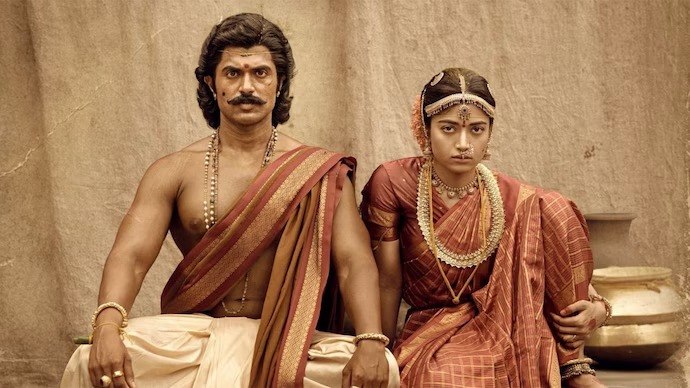
Namit Malhotra’s ambitious cinematic adaptation of the ancient Indian epic, Ramayana, is set to embark on an unconventional global journey, premiering internationally on November 6, 2026. This date precedes its highly anticipated release in India, slated for Diwali on November 8. The two-day gap for a film deeply rooted in India’s cultural and spiritual fabric has already sparked considerable discussion among audiences and industry observers, raising questions about the strategic priorities of its makers.
The Global Vision Behind the Release
From its inception, the creators of Ramayana have positioned it not merely as another Indian mythological film, but as a global cinematic spectacle. Producer Namit Malhotra has been particularly vocal about his aspiration for the epic to transcend geographical boundaries, introducing Indian mythology to a worldwide audience. He articulated a strong desire for Western audiences to embrace the film, even stating that he would consider it a "failure" if it did not resonate globally, emphasizing its "meant for the world" ethos.
The film, reportedly boasting a combined budget of around Rs 4,000 crore, features visual effects by DNEG, IMAX and 3D presentations, and music by AR Rahman and Hans Zimmer. Sony Pictures is handling its international distribution, underscoring the project’s grand scale and global ambitions.
Commercial Imperatives and Auspicious Timing
The decision to stagger the release dates is not without its commercial rationale, according to industry experts. Trade analyst Taran Adarsh suggests the strategy accounts for differing international and domestic release calendars, aligning with auspicious dates in India. November 6, a Friday, serves as a conventional opening day for international theatrical markets. In contrast, the Indian release on November 8 coincides with Diwali, a period traditionally considered highly auspicious for film releases.
Komal Nahta, another prominent trade analyst, offers a more pragmatic commercial explanation. He points out that the two days immediately preceding Diwali are typically weak for cinema attendance in India. During this period, families are often preoccupied with festive preparations, shopping, and religious ceremonies, making movie-going a lower priority. For a film reportedly budgeted at an colossal Rs 4,000 crore, optimizing the domestic opening weekend is a critical financial consideration, making the Diwali holiday a strategic choice.
Cultural Ownership and Public Sentiment
Despite the commercial justifications, the staggered release has acquired an emotional charge, particularly given the profound cultural significance of the Ramayana. Unlike a typical commercial film, this epic holds deep sentimental value for millions across India and the Indian diaspora, who feel a strong sense of ownership over the narrative and its characters. The two-day delay for the home audience, coupled with Malhotra’s repeated emphasis on Western reception, has led some to perceive the strategy as prioritizing global validation over domestic sentiment.
Independent film critic Anmol Jamwal has been particularly critical of this approach, describing it as "pandering to the white gaze." He argues that the assumption of exponentially higher Western interest compared to the Indian subcontinent and Southeast Asian countries, where the Ramayana is deeply ingrained, lacks basic market research. Jamwal contends that global phenomena like ‘Dune’ or ‘Avatar’ are not "reverse-engineered" but typically achieve unanimous celebration in their native countries first, before expanding globally.
The Shadow of Piracy and Early Reactions
Beyond the emotional and cultural debates, a practical concern looms large: the risk of piracy. A two-day gap between international and domestic releases creates a window for pirated copies to emerge and for early international reviews, reactions, and clips to circulate widely online. By the time Ramayana reaches Indian screens on November 8, a significant portion of the audience may already be exposed to global opinions on the film’s narrative, performances, and interpretation of beloved characters.
While trade analysts like Taran Adarsh suggest that the film’s grand theatrical experience – featuring IMAX, 3D, and advanced VFX – might deter audiences from opting for pirated versions, the internet’s unforgiving nature regarding leaks remains a tangible threat. This early exposure could either generate immense positive buzz if initial reactions are euphoric or, conversely, dampen enthusiasm if the reception is mixed or critical.
Lessons from India’s Global Cinematic Successes
The recent history of Indian cinema offers compelling counterpoints to the notion that Western validation must precede global success. Aamir Khan’s ‘Dangal,’ released in India in December 2016, achieved its most significant international breakthrough months later in China, grossing approximately $193 million. Its success was not predicated on being introduced as India’s answer to a Hollywood sports drama; rather, its intensely Indian story about wrestling, family, and female empowerment resonated unexpectedly across cultures.
Similarly, S.S. Rajamouli’s Telugu epic ‘RRR,’ which opened in India in March 2022, went on to earn about $151.4 million internationally, with Japan alone contributing a substantial $14.5 million. The film’s global appeal was intrinsically linked to its distinct Indian exuberance, emotional excess, mythology-inflected storytelling, and sheer spectacle. Neither ‘Dangal’ nor ‘RRR’ required an international-first release to achieve widespread global acclaim, complicating the idea that global success must be reverse-engineered from the West.
The Diaspora as a Crucial Bridge
A critical aspect often overlooked in the ‘overseas market’ discussion is the significant role of the Indian and Indian-origin diaspora in countries like the US, UK, Canada, Australia, and the Middle East. This audience already possesses an intimate familiarity with the Ramayana narrative and is highly likely to embrace a large-scale theatrical spectacle based on their cultural heritage. The diaspora could serve as a vital bridge, connecting ‘Ramayana’ with a wider international audience.
This makes the current release strategy somewhat paradoxical. The very segment of the global audience most likely to champion the film and help it transcend cultural barriers is also among those who might feel most strongly that India should not have to wait. Balancing commercial pragmatism with the emotional resonance of such a culturally significant project remains a delicate act for the filmmakers.
Editorial Context: Redefining Global Ambition for Indian Cinema
The debate surrounding Ramayana’s release strategy transcends mere scheduling; it touches upon fundamental questions about the identity and global positioning of Indian cinema. While the ambition to create world-class spectacles and introduce Indian mythology to new audiences is commendable, this approach highlights a tension between commercial aspirations and cultural sensitivities. The pursuit of ‘global’ appeal, if perceived as prioritizing external validation over the sentiments of the home audience, risks alienating the very foundation of the film’s cultural power.
In an interconnected world, the success of films like ‘Parasite’ or ‘RRR’ demonstrates that authentic, deeply rooted cultural narratives can achieve global resonance without diluting their essence or seeking validation from traditional Western markets first. For Indian cinema, the long-term implications of this strategy will be closely watched. It will determine if future large-scale productions continue this delicate balance, or if a new paradigm emerges where the inherent strength of Indian stories is trusted to find their global audience on their own terms. The Ramayana saga, in its marketing and reception, is poised to offer invaluable lessons on how India’s rich cultural heritage can truly conquer the world stage.
TL;DR
- Namit Malhotra’s Ramayana is set to premiere internationally on November 6, 2026, two days before its India release on Diwali, November 8.
- Producer Namit Malhotra has expressed a strong desire for the film to be a "global cinematic spectacle," prioritizing Western audience reception.
- Commercial justifications for the staggered release include aligning with conventional Friday international openings and avoiding traditionally weak pre-Diwali cinema days in India.
- The "West-first" strategy has sparked significant debate among Indian audiences and critics, raising concerns about cultural ownership and a perceived hierarchy over domestic sentiment.
- Past Indian global successes like ‘Dangal’ and ‘RRR’ achieved international acclaim *after* their India releases, demonstrating that global appeal doesn’t necessarily require a reverse-engineered approach.
- The two-day gap poses a practical risk of piracy and allows international reviews and reactions to circulate, potentially influencing Indian audiences before the domestic premiere.