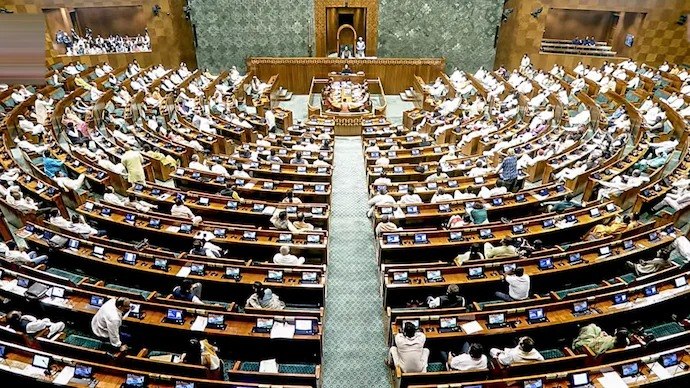
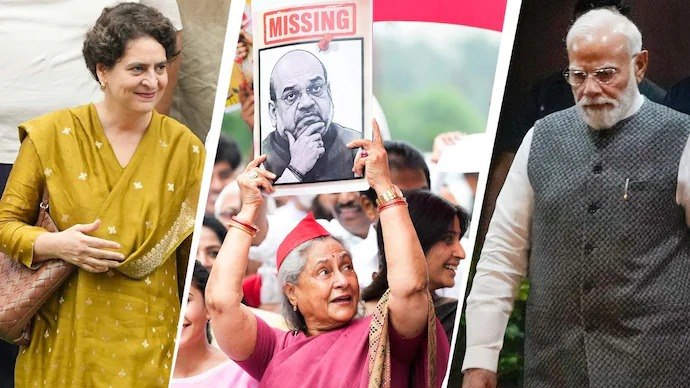
The Monsoon session of India’s Parliament is nearing its conclusion, largely marred by a persistent deadlock between the government and the opposition. Key issues at the heart of this impasse include widespread student protests, allegations of donation embezzlement concerning the Ram Temple, and proposed amendments to the Foreign Contribution Regulation Act (FCRA).
Amidst calls for Union Home Minister Amit Shah to address the House, the government has indicated its willingness to facilitate a discussion. However, it has set specific terms, insisting that any debate on student agitations must also encompass protests occurring in opposition-ruled states like Punjab and Jharkhand, not solely those in Delhi.
The Genesis of the Impasse
Parliamentary proceedings have been severely disrupted since July 20, following a significant police crackdown on student protesters during their ‘Sansad Chalo’ march in central Delhi. The demonstration, spearheaded by groups like the Cockroach Janta Party (CJP), demanded the resignation of then-Education Minister Dharmendra Pradhan over alleged exam paper leaks.
The protests escalated, leading to injuries among both students and police personnel. Although Pradhan resigned on July 30, the opposition, particularly the Congress, intensified its protests, citing alleged police excesses against students. Visual evidence, including videos and images, later emerged, depicting protesters with pellet injuries, further fueling public outrage and parliamentary confrontation.
Since the incident, the opposition has maintained that the parliamentary deadlock will persist until Home Minister Amit Shah delivers a comprehensive statement on the police action. Leader of the Opposition Rahul Gandhi has been particularly vocal, demanding that Shah clarify who authorized the "firing against students" on July 20, dismissing any "fantasy conversations" and insisting on direct accountability.
Gandhi has also pressed for an apology from Prime Minister Narendra Modi to the affected students. Additionally, he has called for transparency and accountability regarding alleged donation theft at the Ram Mandir in Ayodhya. These three demands—Shah’s statement, Modi’s apology, and Ram Mandir accountability—have been termed "non-negotiables" by the Congress MP for breaking the parliamentary impasse.
The Ram Temple Controversy
The government has reportedly shown willingness to discuss the alleged embezzlement of donations at the Ram Temple, though it prefers this debate to follow discussions on other pressing issues. This controversy carries significant political weight for the ruling Bharatiya Janata Party (BJP), which has positioned the construction of the Ram Mandir as a central pillar of its political and ideological narrative.
The timing of this issue is particularly sensitive, with crucial Uttar Pradesh assembly elections just months away. The Ram Temple project, a long-standing promise of the BJP, resonates deeply with its core voter base, making any allegations of financial impropriety a potent political challenge.
Foreign Funding Legislation at Crossroads
Another contentious issue contributing to the parliamentary stalemate is the proposed amendments to the Foreign Contribution Regulation Act (FCRA). This legislation governs foreign funding for non-governmental organizations (NGOs) and other entities in India. The government has offered a concession, with Parliamentary Affairs Minister Kiren Rijiju indicating a readiness to send the bill to a Joint Parliamentary Committee (JPC) for detailed scrutiny.
The primary sticking point in the FCRA bill is a provision proposing the creation of a designated authority to oversee foreign contributions and assets of organizations whose FCRA registration has been cancelled. Critics, including various opposition parties and civil society groups, argue that this provision would significantly increase government control over non-profit work, potentially stifling independent civil society operations and dissent.
Interestingly, the opposition itself appears divided on the FCRA bill. While the Congress party has unequivocally demanded the complete withdrawal of the bill, other parties have adopted varied positions. The Trinamool Congress (TMC) initially favored referring the bill to a JPC but later shifted its stance, aligning with the Congress in demanding its withdrawal.
The Dravida Munnetra Kazhagam (DMK) has taken a more nuanced approach, suggesting either the bill’s withdrawal or its referral to a JPC. Meanwhile, Naveen Patnaik’s Biju Janata Dal (BJD) has consistently advocated for the legislation to be sent to a JPC for thorough examination. This internal division within the opposition complicates efforts to present a united front against the government’s legislative agenda.
Government’s Strategic Maneuvers
By demonstrating a willingness to compromise on the FCRA bill, the government aims to foster a more cooperative environment in Parliament. Its broader strategic objective is to secure the opposition’s support for other key legislative priorities, notably the Women’s Reservation Bill and the delimitation of parliamentary constituencies. These bills are significant for the government’s long-term agenda and require cross-party consensus for smooth passage.
With only two days remaining in the Monsoon session, the clock is ticking for both sides to find common ground. The unresolved issues threaten to conclude a session that has been largely unproductive, highlighting the deep fissures in India’s political landscape and the challenges of legislative governance amidst intense political contestation.
Editorial Context
The ongoing parliamentary deadlock transcends mere political bickering; it represents a significant challenge to India’s democratic functioning and legislative efficiency. A prolonged washout of a parliamentary session, especially one meant to address critical national issues, undermines the very purpose of representative democracy. It prevents crucial debates, delays essential legislation, and erodes public trust in the institutions designed to serve them.
The government’s conditional approach to addressing the opposition’s demands, while seemingly a step towards resolution, also highlights the intricate power dynamics at play. The insistence on broadening the scope of discussion on student protests to include opposition-ruled states can be seen as an attempt to diffuse blame or to frame the issue as a national concern rather than a specific failure of the central administration.
Furthermore, the internal divisions within the opposition on the FCRA bill underscore the complexities of forging a united front against the ruling party. While a strong opposition is vital for holding the government accountable, a fragmented one can inadvertently aid the government in pushing through its agenda, or conversely, prolong impasses without clear resolution. The long-term implications include potential delays in critical reforms, a weakening of parliamentary oversight, and a growing perception of political gridlock that could impact governance and public policy for years to come.
TL;DR
- India’s Parliament faces a deadlock over student protests, Ram Mandir donation allegations, and the FCRA bill, with the Monsoon session nearing its end.
- The government has offered to discuss student protests, but insists on including agitations in opposition-ruled states like Punjab and Jharkhand.
- Opposition Leader Rahul Gandhi demands Home Minister Amit Shah clarify who ordered police action on July 20, an apology from PM Modi, and accountability for Ram Mandir donation theft.
- The government is willing to discuss Ram Mandir donation issues, a politically sensitive topic for the BJP ahead of Uttar Pradesh elections.
- The FCRA bill, which proposes a new authority for cancelled registrations, has divided the opposition, with Congress demanding withdrawal while others like BJD prefer a JPC review.
- The government hopes concessions on FCRA will pave the way for passing other key legislation, including the Women’s Reservation Bill and delimitation.