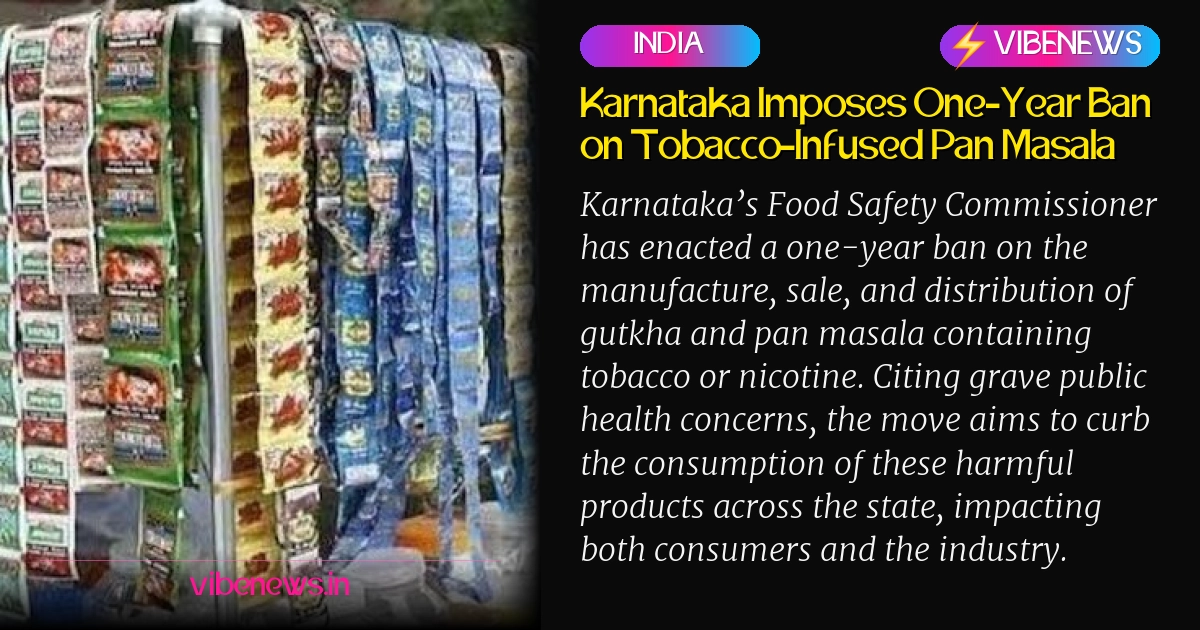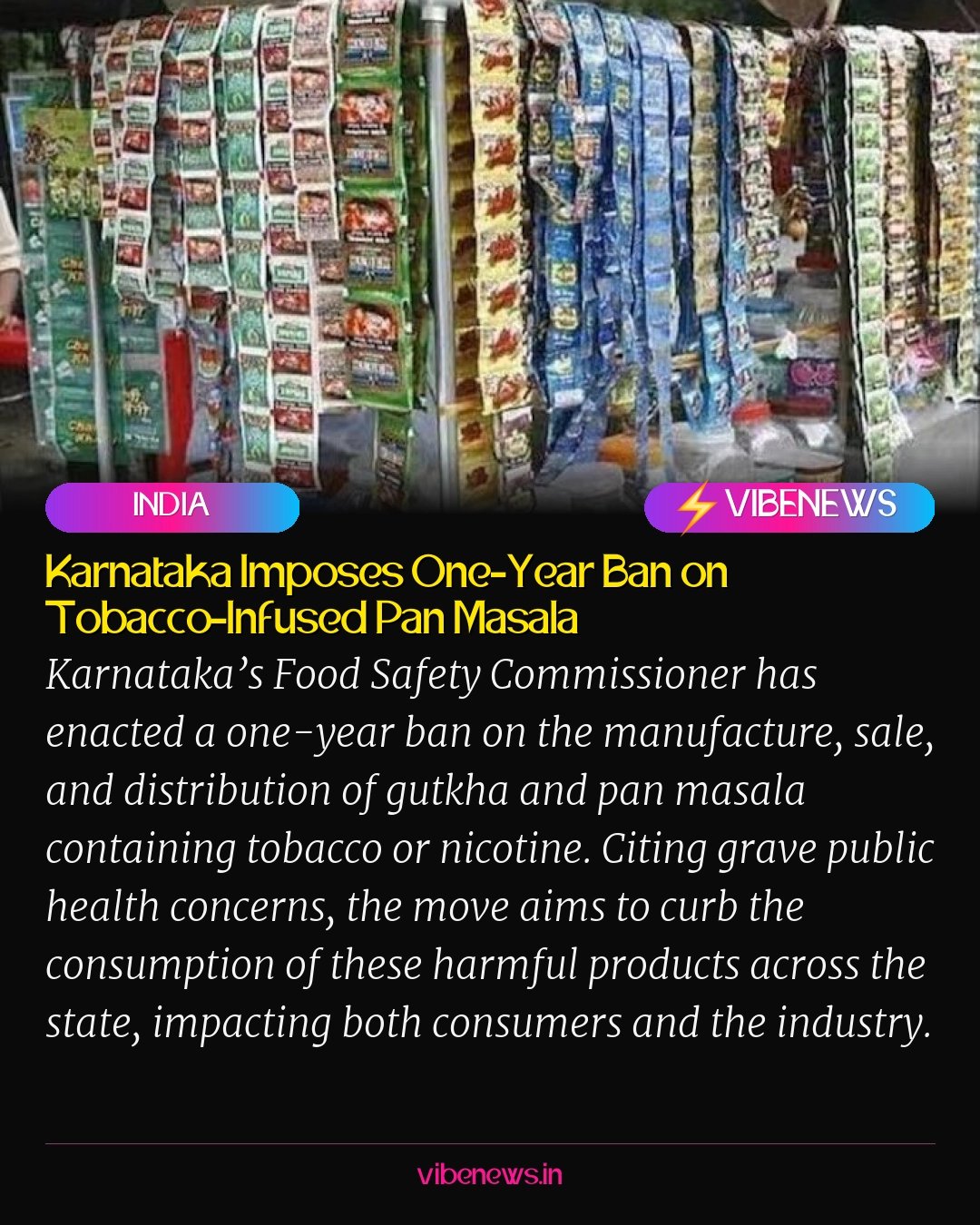

The state of Karnataka has officially implemented a comprehensive one-year prohibition on the manufacture, storage, distribution, transportation, and sale of gutkha and pan masala containing tobacco or nicotine. This significant regulatory measure, effective from June 15, 2026, stems from profound public health concerns regarding the widespread consumption of these harmful products across the state.
Issued by the Commissioner of Food Safety, Karnataka State, the notification underscores the government’s commitment to safeguarding its citizens from the detrimental health effects associated with smokeless tobacco. The ban encompasses not only gutkha and pan masala explicitly containing tobacco and/or nicotine but also any other products marketed separately that, when combined, deliver these addictive substances to the consumer, irrespective of their packaging or nomenclature.
The Legislative Foundation for Public Health
The legal framework underpinning this statewide prohibition is robust, drawing authority from clause (a) of Sub-section (2) of Section 30 of the Food Safety and Standards Act, 2006. This is further reinforced by Regulation 2.3.4 of the Food Safety and Standards (Prohibition and Restrictions on Sales) Regulations, 2011. These provisions empower food safety authorities to restrict or prohibit the sale of food articles deemed unsafe or injurious to health.
The Food Safety and Standards Authority of India (FSSAI) has consistently advocated for stringent measures against products that combine food items with tobacco or nicotine. Their stance is rooted in the understanding that such combinations blur the lines between food and intoxicants, often leading to increased consumption and addiction, particularly among younger demographics.
A Growing Health Crisis in Focus
The decision by Karnataka’s authorities reflects a broader national and global recognition of the severe health risks posed by smokeless tobacco products. Gutkha and pan masala, often chewed, are potent carcinogens and are directly linked to a high incidence of oral cancers, sub-mucous fibrosis, and other debilitating oral diseases. Beyond oral health, their consumption contributes to cardiovascular issues, respiratory problems, and adverse reproductive outcomes.
In India, oral cancer is a significant public health burden, with a substantial portion attributed to smokeless tobacco use. States like Karnataka, with diverse populations and varying socio-economic strata, often see a disproportionate impact on vulnerable communities who may be less aware of the long-term health consequences or lack access to cessation support.
Precedent and Persistence in Tobacco Control
Karnataka is not the first Indian state to impose such a ban. Several states, including Maharashtra, Bihar, and Uttar Pradesh, have previously implemented similar prohibitions on gutkha and pan masala containing tobacco or nicotine. These bans, often challenged in courts by manufacturers, highlight the persistent struggle between public health imperatives and commercial interests.
The FSSAI’s regulations specifically target products that combine tobacco or nicotine with food ingredients, aiming to prevent manufacturers from circumventing tobacco control laws by marketing these products under the guise of ‘food.’ This regulatory approach has been crucial in providing a legal basis for states to act decisively against these harmful mixtures.
Challenges on the Path to Implementation
While the ban is a commendable step, its effective implementation will face several challenges. Enforcement agencies will need to vigilantly monitor manufacturing units, storage facilities, and retail outlets to ensure compliance. The illicit trade of banned products often emerges in response to such prohibitions, necessitating robust surveillance and punitive measures.
Public awareness campaigns will also be crucial to inform consumers about the ban and reinforce the health risks associated with these products. Engaging local communities, health workers, and educational institutions can help foster a culture of tobacco avoidance and support cessation efforts among existing users.
Editorial Context: A Long-Term Vision for Health
This one-year ban in Karnataka represents more than just a temporary restriction; it signifies a critical step in the state’s long-term public health strategy. By targeting the availability of gutkha and pan masala with tobacco and nicotine, the government aims to disrupt consumption patterns, particularly among youth, and reduce the incidence of preventable diseases.
The move sets a precedent for sustained regulatory action and sends a clear message to manufacturers about the state’s unwavering commitment to public welfare. Over time, such bans, if effectively enforced and coupled with comprehensive awareness and cessation programs, can lead to a significant decline in tobacco-related morbidity and mortality. It underscores the evolving role of food safety regulations in addressing broader public health challenges, moving beyond mere food contamination to encompass harmful ingredients that exploit regulatory loopholes.
TL;DR
- Karnataka has imposed a one-year ban on the manufacture, storage, distribution, transportation, and sale of gutkha and pan masala containing tobacco or nicotine.
- The prohibition is effective from June 15, 2026, and was issued by the Commissioner of Food Safety, Karnataka State.
- The ban is driven by grave public health concerns regarding the severe health risks associated with smokeless tobacco products.
- It covers all products, packaged or unpackaged, that combine tobacco or nicotine, even if sold separately but intended for mixing by the consumer.
- The legal basis for this statewide ban is derived from the Food Safety and Standards Act, 2006, and the Food Safety and Standards (Prohibition and Restrictions on Sales) Regulations, 2011.
- This regulatory action aligns with broader national efforts to curb smokeless tobacco use and prevent associated diseases like oral cancer and sub-mucous fibrosis.