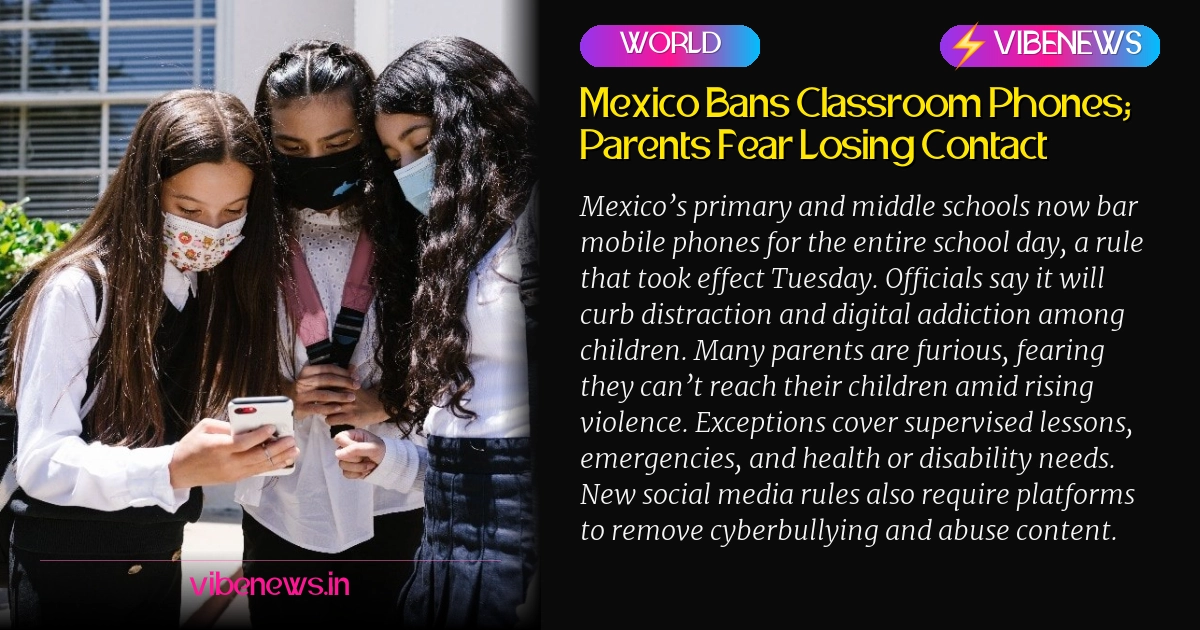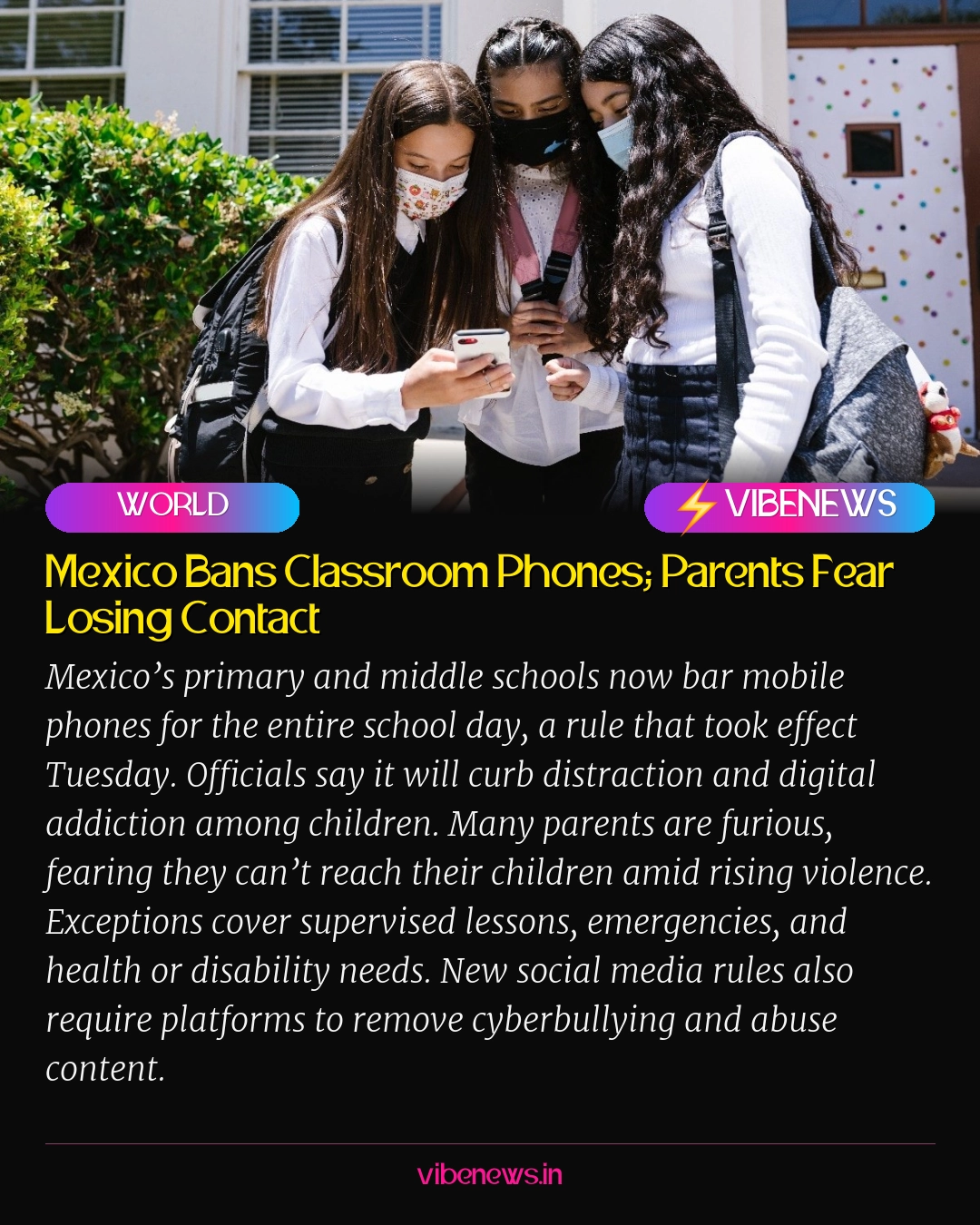
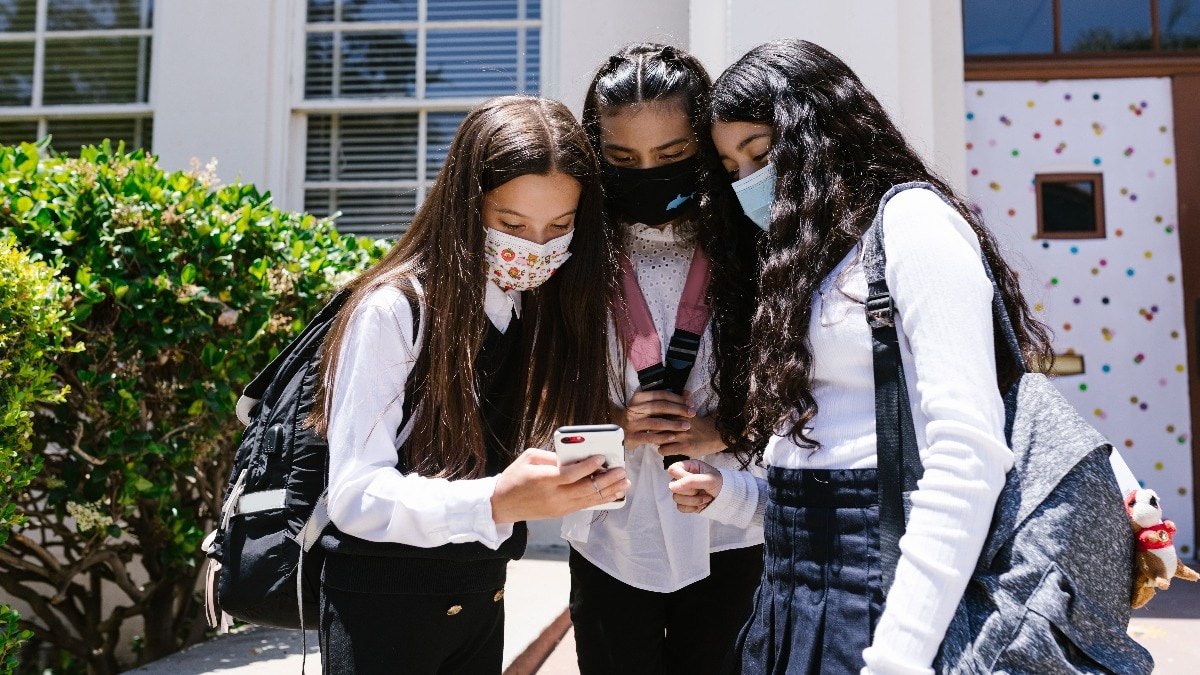
Mexico’s primary and middle schools have banned mobile phones and other electronic devices for the entire school day, and the rule took effect Tuesday. The government says the move will keep students focused on their lessons and reduce their dependence on mobile devices. Parents are pushing back, and not over screen time. They are afraid they will lose the ability to reach their children at school.
What the new rule actually does
Under the policy, phones and other electronic devices cannot be used anywhere in primary and middle schools during school hours. The rule is not absolute. Devices can still be used for learning under a teacher’s supervision, in emergencies, and for needs linked to disability or health.
Students are also allowed to carry their phones on the way to and from school. The ban applies inside the school day, not to the commute.
Why the government backs it
The initiative is led by the government of President Claudia Sheinbaum, and it has won support from experts. Their argument is that heavy mobile use can increase stress, anxiety and distraction in children and teenagers. The government’s stated goal is to protect young people from the pull of digital platforms and the problems that come with it.
Education Minister Mario Delgado has framed the policy in those terms, presenting it as a way to shield children from digital addiction and the harm that follows.
The government’s goal is to protect children from the addiction to digital platforms and the problems it causes.
Parents say safety comes first
The loudest objections are coming from parents, and their concern is practical. Many say violence is rising in Mexico, and they want to be able to contact their children if something goes wrong. For these families, a phone is not a distraction. It is a safety tool.
Some parents have gone further and accused the government of ignoring their concerns. The reporting does not detail how officials have responded to that charge, which leaves the dispute unresolved for now.
The violence figures behind the fear
The parents’ anxiety is tied to a hard number. According to REDIM, an organization that works for children’s rights in Mexico, one in every 10 children up to age 17 faced an incident linked to organized crime in the first half of this year.
That statistic changes the debate. It is not only about classroom focus. It is about whether a school day leaves families cut off from their children at the moments they most want to be reachable.
Digital platforms face their own rules
The government is not stopping at the classroom door. It is also moving to tighten rules for digital platforms. Social media and other online services will be required to remove content involving hate speech, abuse, sexual violence, harassment and cyberbullying.
Taken together, the two measures show a broader push. The government wants less exposure to harmful content online and less mobile use in schools, and it is treating both as part of protecting young people.
The open questions
The policy raises practical questions that the reporting does not answer. It does not explain how the school-day ban will be enforced, or what steps schools will take when a parent cannot reach a child during the day. It also does not describe how officials plan to address the specific fears of families in areas affected by violence.
What is clear is that a rule meant to reduce distraction has become a flashpoint over safety. Mexico’s schools now sit in the middle of that tension, with the government arguing for focus and parents arguing for a way to stay in touch.
TL;DR
- Mexico bans mobile phones and electronic devices in primary and middle schools for the entire school day, effective Tuesday.
- The government says the rule will improve focus and reduce mobile addiction among children.
- Exceptions apply for teacher-supervised learning, emergencies, and disability or health-related needs.
- Students can keep phones with them on the way to and from school.
- Some parents oppose the rule, fearing they cannot reach their children amid rising violence.
- REDIM reports one in 10 children up to age 17 faced an organized crime-linked incident in the first half of this year.