Price Hike Announcement
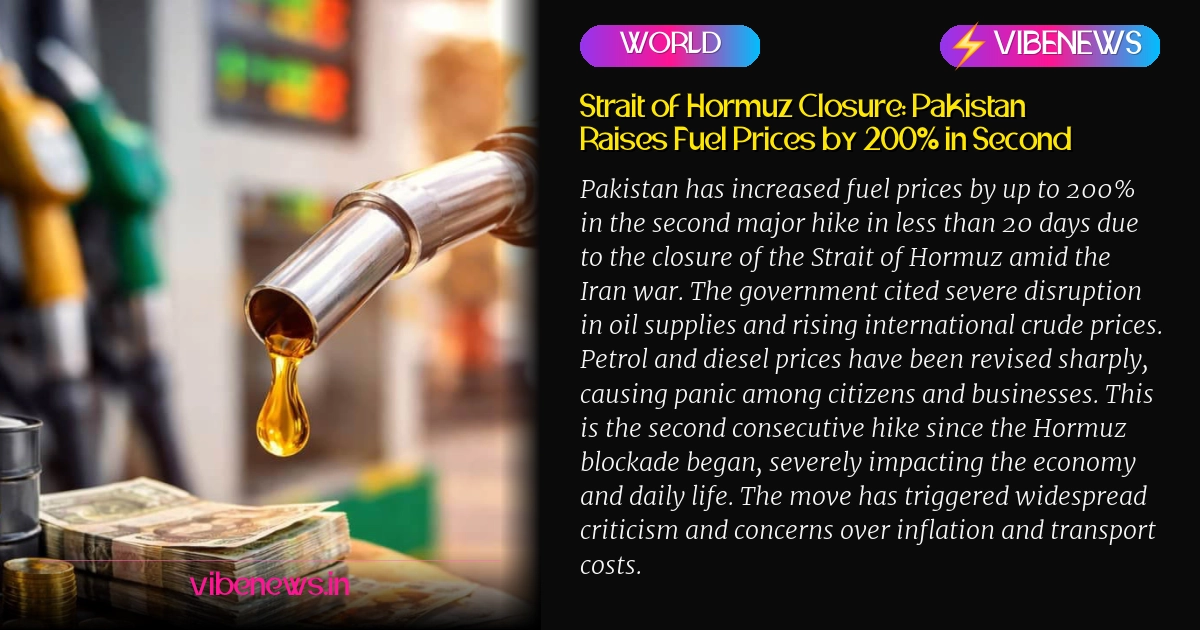
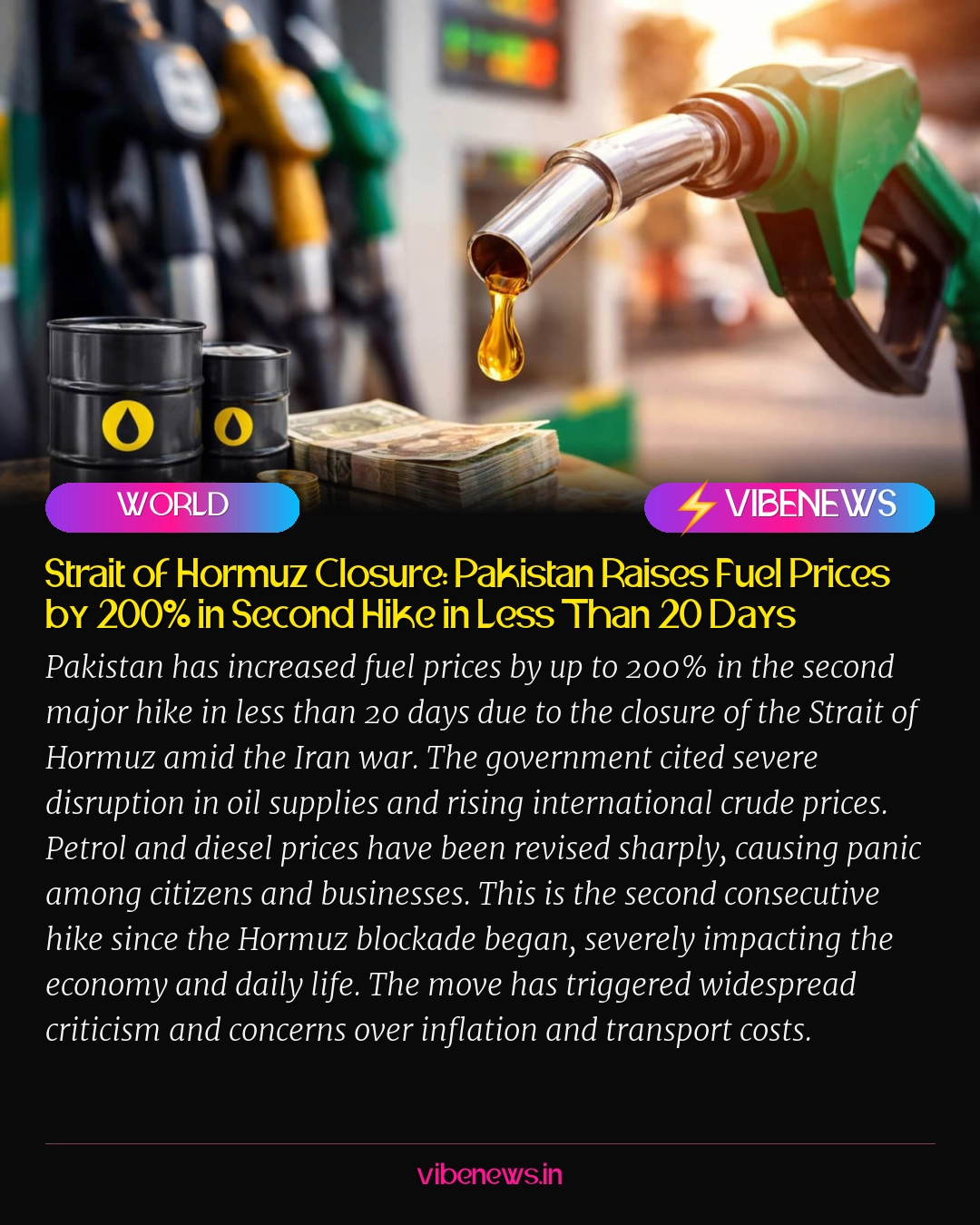
Pakistan has announced a sharp increase in fuel prices, with hikes of up to 200% in some categories, marking the second major revision in less than 20 days. The decision is directly linked to the closure of the Strait of Hormuz by Iran in response to the ongoing US-Israel-Iran conflict. The blockade has severely disrupted Pakistan’s oil imports, as a significant portion of its crude and petroleum products come through this critical waterway.
Government Rationale and Panic
The government stated that the revision was necessary due to the sharp rise in international crude oil prices and the complete halt in supplies through the traditional route. Petrol and diesel prices have been increased substantially, with some reports indicating diesel prices rising by nearly 200% in certain segments. This has led to immediate panic buying at petrol stations, long queues, and reports of black marketing in several cities.
Economic and Social Impact
The first hike was announced just 18 days ago, and the cumulative effect of the two revisions has put immense pressure on the transport sector, agriculture, and common households. Public transport fares have already started rising, and industries dependent on diesel are warning of production cuts and job losses.
Political and Diplomatic Response
Opposition parties and civil society have criticized the government for failing to anticipate the crisis and for not building adequate strategic reserves. The Pakistan government has appealed for calm and said it is in talks with Saudi Arabia and other Gulf nations for emergency supplies, but no concrete agreement has been announced yet.
Long-Term Economic Warnings
The repeated fuel price hikes are expected to fuel inflation, which was already high, and may force the central bank to consider further rate adjustments. Economists warn that prolonged disruption in the Strait of Hormuz could push Pakistan’s economy into a deeper crisis, with ripple effects on food prices, power generation, and overall growth.
Regional Context
The development comes as the Iran war continues to disrupt global energy markets, with several countries in the region facing similar challenges. Pakistan, being heavily dependent on imported oil, is among the worst affected in South Asia.
TL;DR
- Pakistan increased fuel prices by up to 200% in the second major hike in less than 20 days.
- The decision is due to the closure of the Strait of Hormuz amid the Iran war.
- The blockade has severely disrupted Pakistan’s oil imports.
- Petrol and diesel prices have been revised sharply, causing panic buying and long queues.
- The first hike was announced 18 days ago, with cumulative effect putting pressure on transport and households.
- Public transport fares have started rising, and industries warn of production cuts.
- Opposition parties criticized the government for failing to build strategic reserves.
- The government is in talks with Saudi Arabia and other Gulf nations for emergency supplies.
- Economists warn of higher inflation and possible rate adjustments by the central bank.
- Pakistan is among the worst affected in South Asia due to heavy dependence on imported oil.