Students in India and France have led some of the largest protests this fall, and both movements are aimed at the same target: the failed promises of education itself. The anger is not confined to a single exam or a single school district. It reflects a broader sense that the ladder young people were told to climb has been rotting for years.
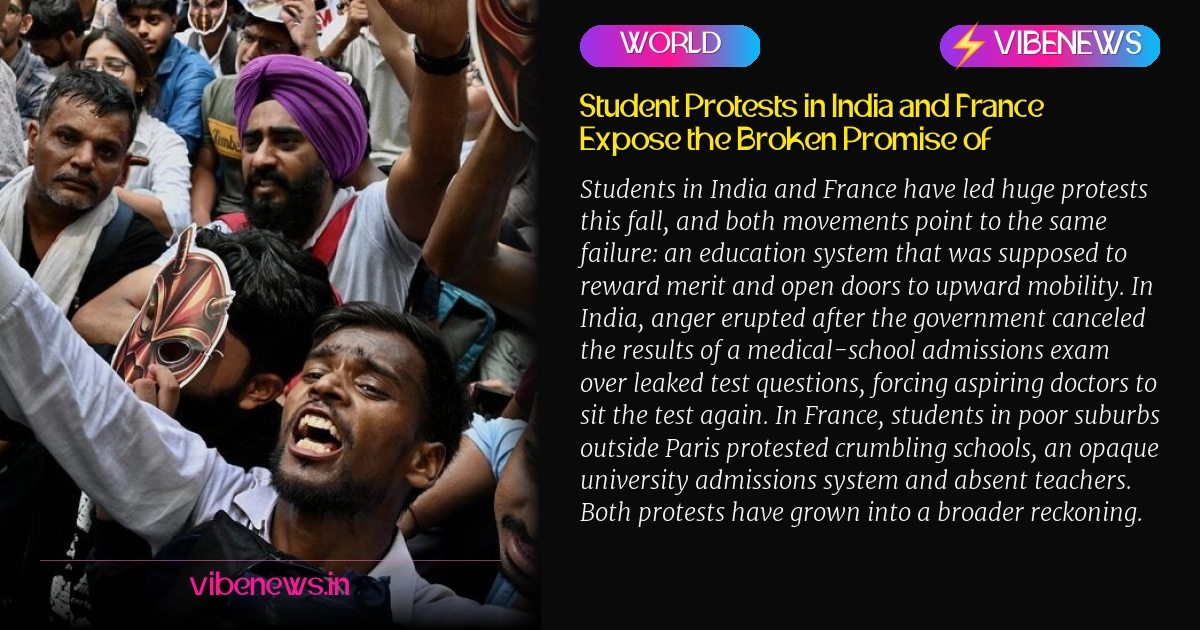
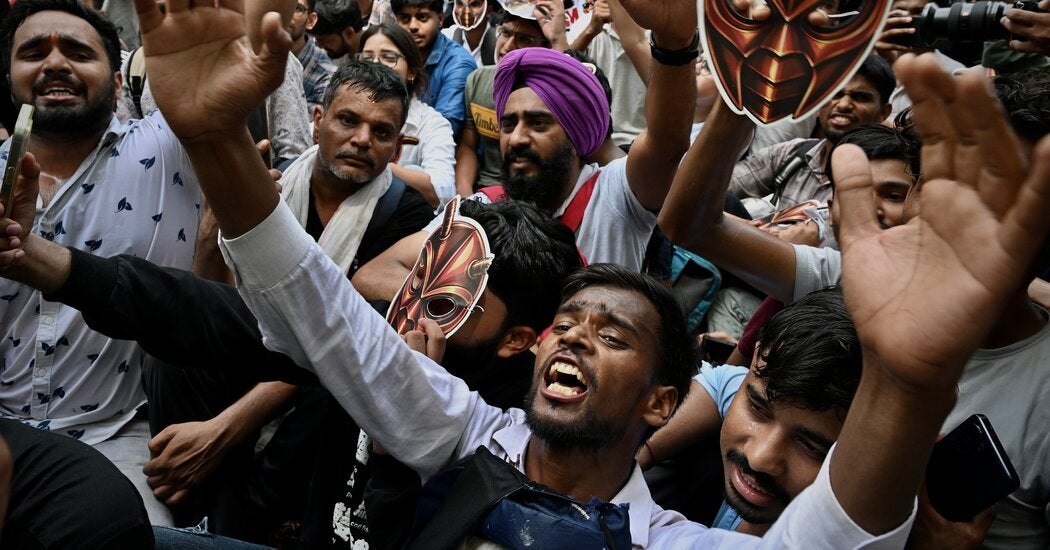
In India, students poured into the streets after the government abruptly canceled the results of a medical-school admissions exam. The reason was simple and infuriating. Test questions had been leaked online. Aspiring doctors were told they would have to take the test again, after many had spent years studying for up to 12 hours a day in pursuit of one of the coveted seats. Those seats represent more than a degree. They carry the chance of upward mobility for families who have bet everything on it.
Across the country, young people did not see the scandal as a one-off administrative blunder. They saw a system that had already broken, and they were furious about it.
A Social Elevator Stuck Between Floors
In France, the protests started in poor suburbs outside Paris. Students there objected to the decrepit physical condition of their schools, an opaque university admissions system and teachers who were often absent. French education has long been described as a “social elevator,” a route that lets young people rise in society regardless of where they start. Students in the suburbs now say that elevator has fallen into disrepair.
The demonstrations did not stay local for long. They spread across the country, and in some cities they spiraled into rioting. The scale and speed of that escalation tells you how deeply the grievance runs.
In both countries, the anger shows no sign of fading. France and India could hardly be more different in history, politics and daily life. Yet their unrest was sparked by a similar source: the collapse of what could be called the meritocratic bargain.
The Bargain Behind the System
The meritocratic bargain sits at the heart of many nations’ political compacts. The details vary from place to place, but the core idea is consistent. A fair society rewards merit. Education is a good measure of merit because it is open to everyone and builds valuable skills. So education should lead to social and economic advancement.
That promise carries a hidden weight. Meritocracy does more than sort people by ability. It also provides a justification for the hierarchy that results, including the question of who ends up at the bottom. If the system is fair, then those at the bottom have only themselves to blame. When students see the rules bent by leaked exam papers, or a university admissions process they cannot understand, that justification starts to crack.
The protests in India and France show what happens when that crack widens. Young people who did everything asked of them, studying for long hours and playing by the rules, find that the game itself may not be fair. That realization hits harder than any single policy failure.
No System Is Free of Losers
Nicholas Kuipers, a professor at Princeton University who studies the politics of meritocracy, puts the dilemma plainly. Every system that selects people will create winners and losers. The real debate is about which outcome a society is willing to accept, and whom it is willing to accept it from.
“All selection mechanisms generate losers,” said Nicholas Kuipers. “The question is, Who do you want to be a loser, and who do you want to be a winner?”
That question is now being asked in lecture halls, exam centers and city streets far from the offices where education policy is written. Students in Indian exam halls and French suburban classrooms are answering it in their own way, and their answers are loud.
For many of these young people, the promise that hard work would be enough has already been tested and found wanting. The protests suggest they are no longer willing to accept losing as the natural result of a system they never got to shape.
TL;DR
- Students in India and France have led major protests this fall over failures in education.
- In India, a medical-school admissions exam was canceled after test questions leaked online, forcing a retest.
- Aspiring doctors had spent years studying up to 12 hours a day for coveted seats.
- In France, students in poor Paris suburbs protested decrepit schools, opaque admissions and absent teachers.
- Protests in France spread nationwide and in some cities escalated into rioting.
- Both movements reflect the breakdown of the meritocratic bargain that education leads to advancement.