Tarique Rahman's Oath and Political Comeback
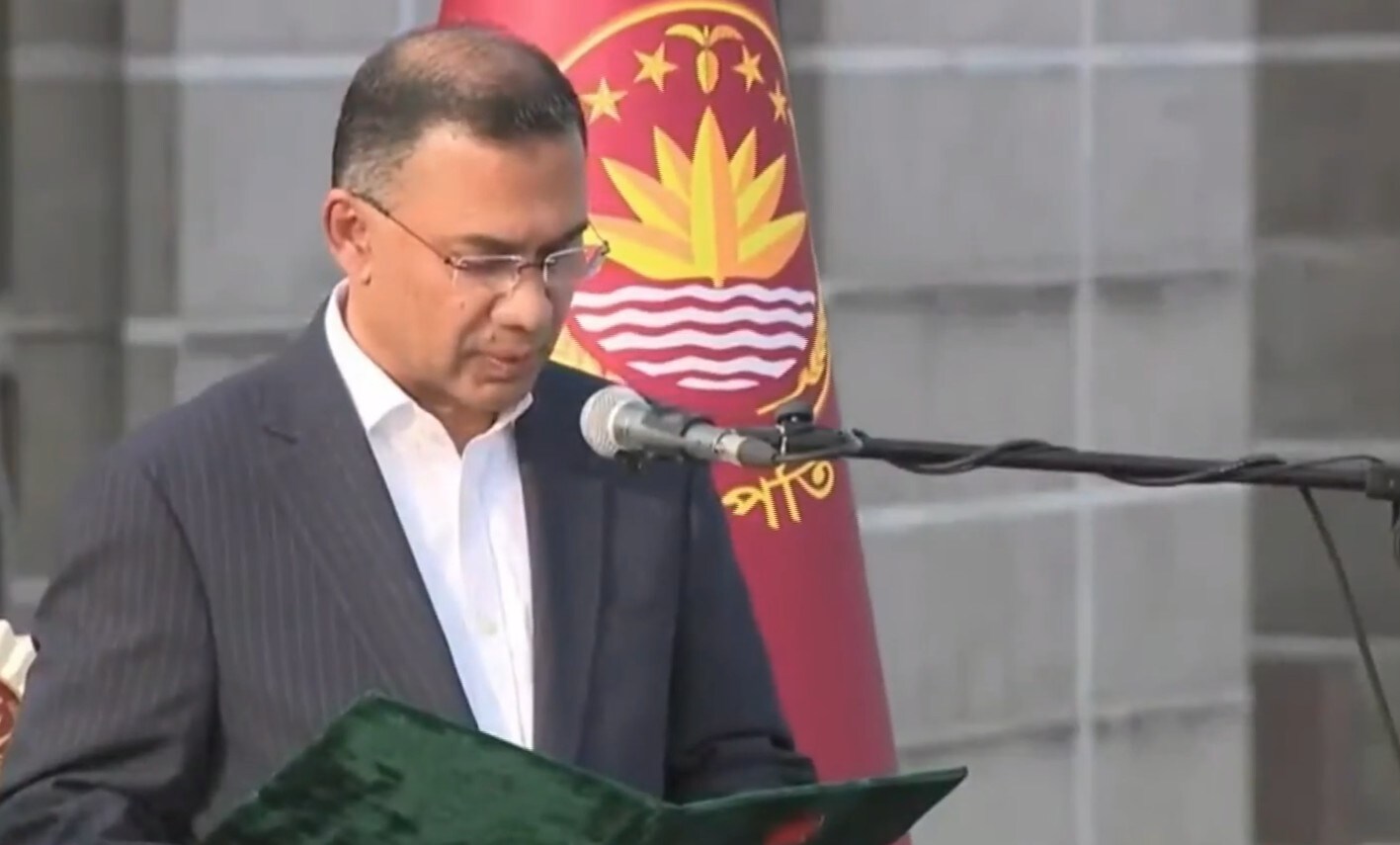
Tarique Rahman, son of former Prime Minister Khaleda Zia, took oath as Prime Minister of Bangladesh on February 17, 2026, marking the Bangladesh Nationalist Party (BNP)'s return to power after their victory in the February 12, 2026, elections to the Jatiya Sangsad. Having returned from exile in December 2025, Rahman's leadership represents a significant shift following the ouster of Sheikh Hasina in 2024 amid student-led protests. The oath ceremony included 25 Cabinet ministers, with portfolios not yet allocated, reflecting BNP's focus on forming an inclusive government in a politically volatile post-Awami League era.
Cabinet Composition and Minority Inclusion
The BNP Cabinet under Rahman comprises 25 ministers alongside the Prime Minister, with deliberate representation from minority communities to address ongoing concerns about communal harmony and minority safety. Nitai Roy Chowdhury is the sole Hindu minister, while a Buddhist Chakma leader from the hill tracts is also included. This composition is seen as a strategic move to reassure religious minorities, particularly Hindus, whose population has declined from 28% in 1947 to 7.95% in 2022 amid reports of persecution and violence during previous regimes.
Nitai Roy Chowdhury's Profile and Career
Nitai Roy Chowdhury, born in 1949 in Magura District, completed his early education at Magura Government College and pursued law at the University of Dhaka. His political career began in student politics, leading to his election to Parliament from Magura-2 in 1988. He briefly served as Minister of Youth and Sports for three months in 1990 under Hussain Muhammad Ershad's government. After Ershad's fall, he joined BNP and rose to become Vice Chairman of the Central Committee, a senior role involving strategy and advising party leadership. In the February 12, 2026, election, he won Magura-2 on a BNP ticket, defeating a Jamaat-e-Islami candidate by a large margin. He remains a practicing lawyer.
Family and Political Statements
Roy Chowdhury's family is deeply embedded in politics. He was married to Jhuma, and they have three children: daughter Nipun Roy Chowdhury, an active BNP politician and executive committee member who has held district-level leadership roles and is married to Amitav Roy (son of senior BNP leader Gayeshwar Chandra Roy); son Debasish Roy Chowdhury, a High Court judge in Bangladesh; and son Mithun. His brother Gyan Roy also won a seat in the February 12 election on a BNP ticket.
Roy Chowdhury has been a vocal critic of the Awami League. In a 2023 interview, he accused them of orchestrating communal violence: "By doing a case study, you will see that Sheikh Hasina's party Awami League is involved in all the communal violence that has happened in the country. Awami League is the biggest enemy of Hindus." He criticized China's economic influence: "China is lending to Bangladesh to expand its market. Hasina government accepts it and says it is developing. But the basis of this development is foreign debt." On India-Bangladesh relations, he stated: "Bangladesh is at the belly of India. That is why India wants the well-being of Bangladesh in its interest. BNP understands this," adding that BNP realizes "the relationship should go deeper." He acknowledged "isolated attacks" on Hindus during BNP-Jamaat's 2001 rule.
Implications for Minorities and Politics
Roy Chowdhury's inclusion as the only Hindu minister could signal a shift in BNP's approach to minorities, especially given historical tensions and recent violence. The Hindu population decline from 28% in 1947 to 7.95% in 2022 has fueled concerns about safety and representation. BNP's alliance with Jamaat-e-Islami in the past has raised questions, but the current Cabinet composition aims to rebuild trust and project inclusivity in a post-Awami League Bangladesh.
Vibe View:
The vibe of Tarique Rahman's oath and inclusion of Nitai Roy Chowdhury is optimistic political renewal mixed cautious minority reassurance—like BNP's return signaling inclusivity amid past tensions vibe hopeful transition energy, you know? Rahman oath 25 ministers portfolios pending vibe new chapter post-election victory vibe structured governance start. Sole Hindu minister Roy Chowdhury Buddhist Chakma vibe minority representation emphasis vibe symbolic protection gesture. Roy Chowdhury veteran Vice Chairman Magura-2 big win vibe experienced leadership vibe reliable continuity. Family Nipun executive Gayeshwar son-in-law Debasish judge brother Gyan MP vibe deep political roots vibe influential network. Statements Awami enemy Hindus China debt trap India deeper ties vibe vocal critique strategic alignment vibe balanced foreign policy. Overall vibe rebuilding trust minorities Hindu decline 28% 1947 to 7.95% 2022 vibe data-driven concern address. Positive vibe hope fosters harmony diverse communities. It's that lingering vibe renewal vigilance intertwined where Cabinet diversity meets historical sensitivities diverse Bangladesh politics. Hoping vibe leads inclusive policies minority safety.
TL;DR
- Tarique Rahman took oath as Prime Minister of Bangladesh on February 17, 2026.
- He was sworn in alongside 25 Cabinet ministers with portfolios yet to be assigned.
- Nitai Roy Chowdhury is the only Hindu minister in the Cabinet.
- A Buddhist Chakma leader is also included in the ministry.
- Roy Chowdhury is BNP Vice Chairman and elected from Magura-2.
- He won against a Jamaat-e-Islami candidate by a large margin.
- Born in 1949 in Magura, he studied law at University of Dhaka.
- He served as Youth and Sports Minister in 1990 under Ershad for three months.
- His daughter Nipun is a BNP politician married to Amitav Roy.
- Roy Chowdhury criticized Awami League for communal violence and China for debt traps.