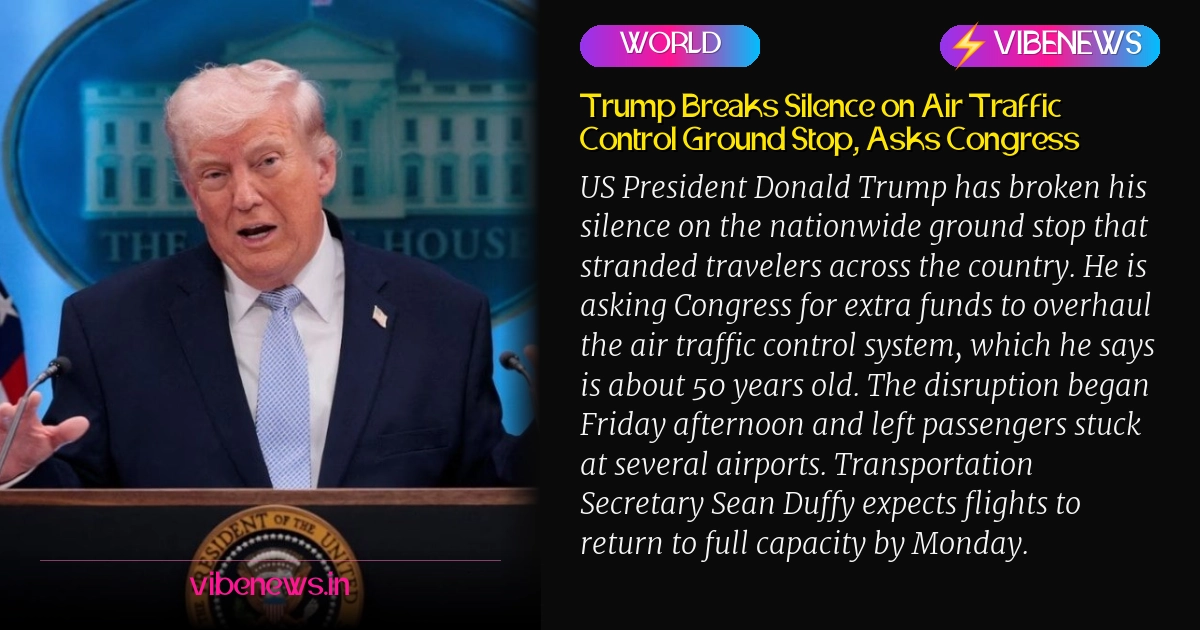
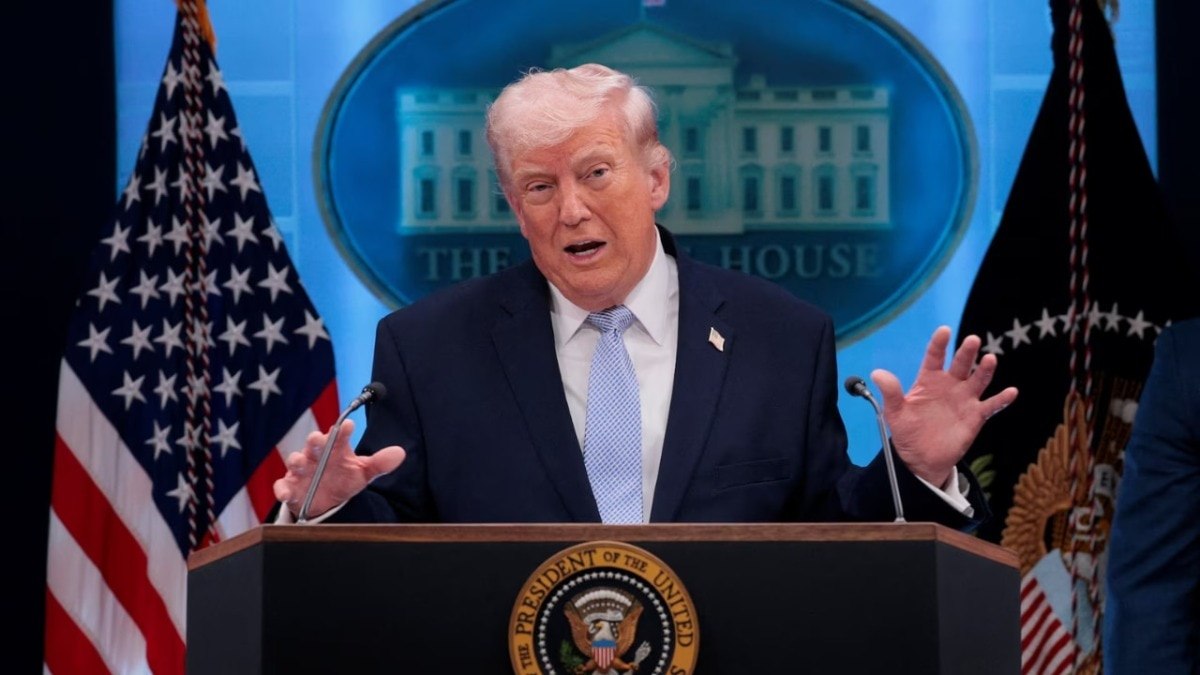
US President Donald Trump has publicly addressed the nationwide ground stop that disrupted air travel across America, and he wants Congress to pay for a full overhaul of the air traffic control system.
The ground stop started Friday afternoon. Flights were held on the ground, passengers were stuck at several airports, and the government and airlines spent days working to get planes moving again. Trump said nothing publicly about the disruption during that stretch, even as he kept posting on social media about other subjects.
On Sunday, that changed. In a post on his social media platform, Trump said his administration had already started upgrading the air traffic control system. He was clear that the work should not happen in small, scattered steps. It needs a complete plan.
“If Congress approves the absolutely essential funding for air traffic control, we can build it quickly and efficiently. This will be the best system in the world. Our current air control system is largely 50 years old. It is ridiculous.”
The timing of that message matters. Trump is not just complaining about old equipment. He is putting a price tag on the fix and asking lawmakers to approve it.
Where the money stands
Last year, the Republican-controlled Congress approved $12.5 billion for the Federal Aviation Administration as part of a large tax-cut package. Transportation Secretary Sean Duffy has described that sum as an early amount toward a major change in the system. Trump’s request for additional money signals that the government sees that figure as a starting point, not the finish line.
Trump also turned his fire on former President Joe Biden. He accused the Biden administration of failing to take proper care of the FAA and the air traffic control system, saying it made an already bad setup even worse.
Biden’s record includes a major infrastructure bill he signed during his first year in office. That law gave the FAA $25 billion for improvements at airports and air traffic control towers, terminal redevelopment, and modernization of the air traffic control system. Whether that money fully addressed the system’s needs is a question the current debate now puts back in the spotlight.
What went wrong
Duffy became the government’s main public voice on the outage. He went on several news channels on Sunday to press Congress for billions of dollars. He also explained the technical trigger on X.
According to Duffy, the contractor L3Harris Technologies has taken two routers from FAA facilities in Texas and Arkansas, and the company is examining them closely. The problem began while L3Harris was replacing old copper wire with new fiber wire. During that process, the system suddenly took on far more load than it could handle.
After the wire was changed at El Dorado, Arkansas, and a router was switched back on, a similar problem appeared at a center in Amarillo, Texas. From there, the trouble spread through the network until the ground stop covered the country. Duffy’s account shows how a single equipment transition can ripple outward when the system is already stretched thin.
When flights get back on track
Duffy acknowledged that some flights are still delayed. He expects air traffic to return to full capacity by the end of Sunday and through Monday. Even after restrictions are lifted, though, aircraft and crews have to be moved back into position, so airlines need time before they can run at full strength again.
For travelers, the immediate concern is whether Monday goes smoothly. The longer question is whether Congress moves on the money Trump is requesting, and how quickly any upgrade can happen on a system that Trump describes as decades old.
TL;DR
- Trump broke his silence on the nationwide US air traffic ground stop that began Friday afternoon.
- He is asking Congress for extra funds to fully modernize a system he says is about 50 years old.
- Transportation Secretary Sean Duffy says a rewiring project run by contractor L3Harris triggered a sudden overload.
- Duffy expects air traffic to return to full capacity by the end of Sunday and through Monday.
- Congress approved $12.5 billion for the FAA last year as part of a major tax-cut package.