Car owners who opened their insurance renewal notices this year may have found a bill higher than the one they paid last time, and many will assume the tax has gone up. The source material says that is not always the case. A higher total can come from changed coverage, a reduced no-claim bonus, an add-on that renewed without much notice, or a vehicle detail that was entered wrongly.
The fix starts with a simple habit: stop reading the total and start reading the components. Every renewal is built from several charges, and each one moves for its own reason.
Where your premium money actually goes
The total premium depends on the coverage you selected. Based on the breakdown, a policy can include three main layers.
Third-party cover pays for covered liability towards other people or their property. Its base premium follows prescribed rates for the vehicle category, which means you cannot negotiate that part down.
Own-damage cover protects your own car against insured events such as accidents, theft and fire. This is the part that moves most with the vehicle and the cover you choose.
Optional add-ons such as zero depreciation or engine protection raise the premium when you select them. Many buyers pick these at a dealer counter or during an online checkout and forget about them by the next renewal.
GST sits on top of all of it. Tax is added to the taxable premium, including applicable add-ons. That means every rupee of add-on cost also carries tax.
One detail matters for anyone comparing numbers. A quote shows the proposed amount before purchase. The tax invoice records what was actually charged after the policy was issued. Keep both documents, because they can differ.
Why your renewal may cost more
A higher bill does not always mean the tax has increased. The guidance points to several specific causes that car owners should check against their previous policy.
The first is the no-claim bonus. If you made an own-damage claim, your renewal discount may have reduced or disappeared entirely. That discount applies to the own-damage portion, not to third-party cover, so a claim can cost you more than the repair itself would suggest.
The second is the Insured Declared Value, or IDV. This is the agreed value used for a total loss or theft claim. Changing it changes the own-damage premium, sometimes without the owner realising the link.
The third is added protection. An add-on that renewed automatically, or a new one you selected, can push the total upward. Check whether it was there because you asked for it.
The fourth is vehicle details. An incorrect variant or registration location can affect the quote. A small data-entry error at the start can flow through to every renewal after it.
The fifth is comparing unlike products. Setting a basic policy beside comprehensive insurance and calling the price difference a rip-off is not a fair comparison. The protection is different, so the price is different.
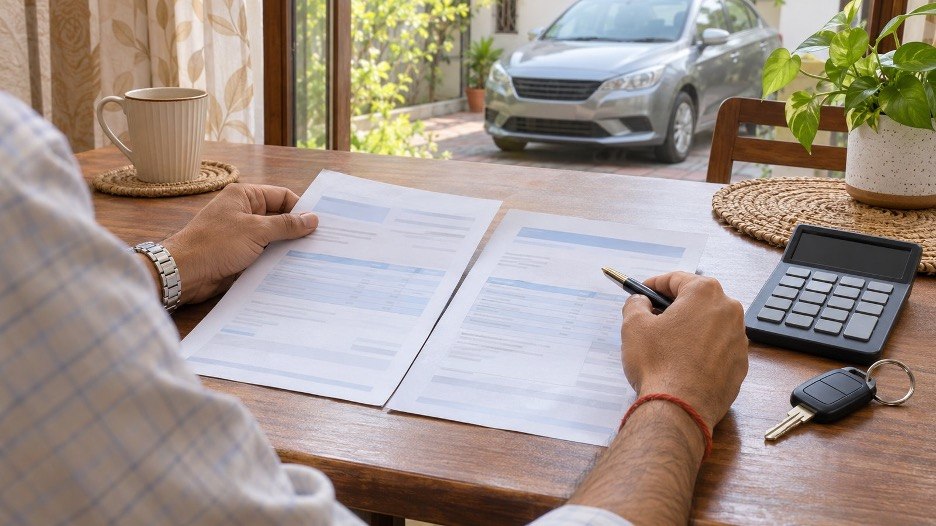
The fastest check: put the previous and current policy schedules side by side. That usually explains the gap faster than comparing totals ever will.
The GST line most buyers never verify
Car insurance generally attracts 18% GST in India. The tax applies to third-party cover, own-damage cover and applicable add-ons. That makes it a routine cost on every renewal, and it is the one line many policyholders skip.
Before you pay, check four things on the invoice. Confirm the GST rate applied to your premium is correct. Confirm the tax breakdown shows either CGST and SGST or IGST, depending on the place of supply. Confirm GST has been calculated correctly on any add-ons in your policy. Finally, confirm the premium, applicable taxes and other charges add up to the amount you are being asked to pay.
The source also flags a point that catches people out. GST exemptions available for certain life and health insurance policies do not apply to car insurance. Assuming that a lower tax bill is coming because insurance is partly exempt elsewhere is a mistake.
What a valid tax invoice should show
Once you have paid, download the invoice rather than relying only on a payment message. A payment confirmation proves money moved. It does not prove the tax was calculated correctly.
The invoice should show the insurer’s legal name, address and GST registration number. It should carry a unique number and an issue date. Your name and relevant billing information must be correct. The taxable value, discounts, GST rate and tax amount should be clearly stated. The invoice should show the correct tax type and the final amount paid, and it should include the insurance service description or classification code.
Your car’s registration number, policy dates and selected cover are not always on the tax invoice. They usually appear on the policy schedule, so match them there as well.
If the numbers do not match
When the figures do not line up, the process is straightforward. Compare the quote, the payment receipt, the invoice and the policy schedule. Look for three things in particular: an unexpected add-on, a missing discount, or a wrong vehicle detail.
If the invoice amount differs from what you paid, ask the insurer for a written explanation. Request a corrected document where necessary. Do not change tax figures yourself, and do not rely on an edited screenshot as proof of anything. Keep the original invoice and every related email. Those records are your evidence if the dispute drags on.
Before you switch or accept
A high premium deserves a closer look. It does not automatically justify switching to cheaper cover, because cheaper cover may simply give you less protection. Check the protection, the discounts and the vehicle details first. Then confirm the GST breakdown and the invoice information.
When you compare renewal quotes from different insurers, use the same cover and the same IDV. Otherwise the prices do not mean anything, and you may end up paying for a policy that does less than the one you already had.
You should know what you are paying for before you accept the bill.
That is the core of the advice. A renewal notice is not a final verdict. It is a set of charges, taxes and choices, and most of them can be checked before the money leaves your account.
TL;DR
- A higher renewal bill does not always mean the tax has increased, so check the premium breakdown first.
- Car insurance generally attracts 18% GST in India, applied to third-party cover, own-damage cover and applicable add-ons.
- A lower no-claim bonus reduces only the own-damage portion, not third-party cover.
- Changing your IDV, adding an add-on or entering wrong vehicle details can all push the premium up.
- Verify the GST rate, tax breakdown, add-on tax and final amount against your payment before you pay.
- Compare the previous and current policy schedules side by side, not just the totals.