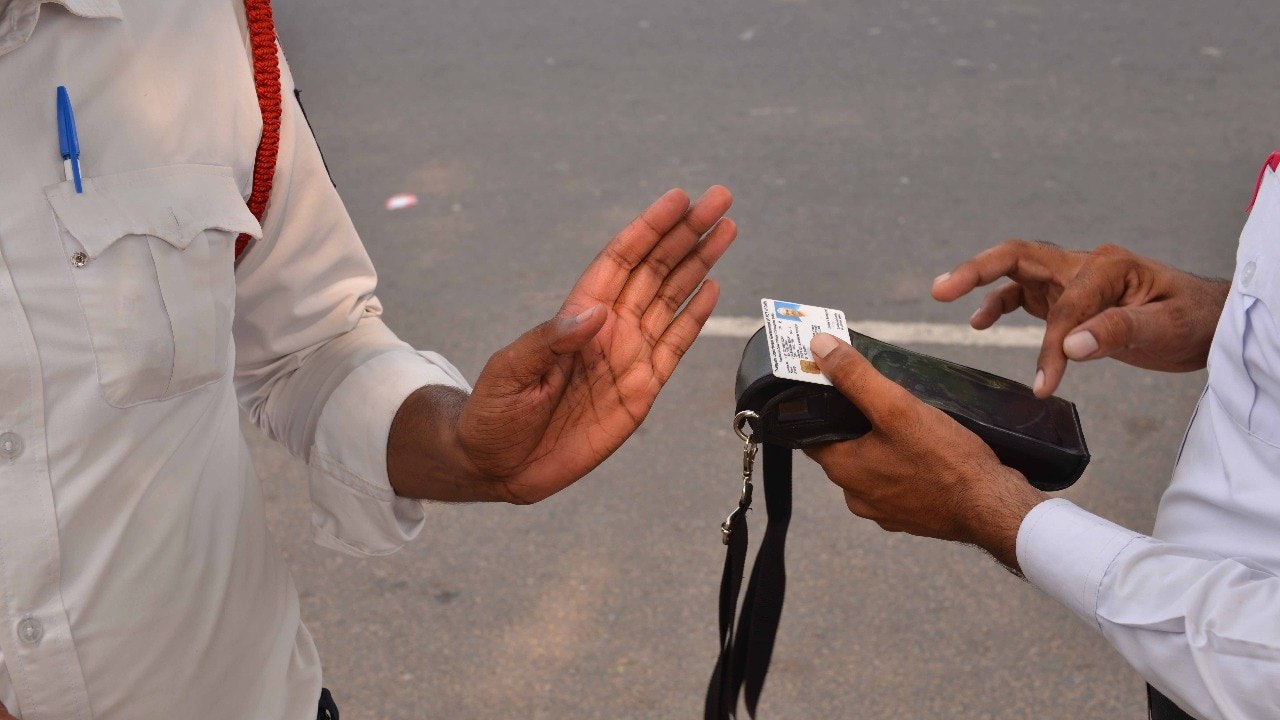
Traffic police in Gurugram seized two motorcycles on Tuesday after checks showed that the bikes carried 73 pending challans, with a combined fine of Rs 2.78 lakh. The bikes were stopped during a routine check, and neither rider could show the papers the police asked for.
The checking team was run by a zonal officer at Vazirabad Chowk, ASI Yuddhveer, who led a group of traffic personnel on the stretch. Officers stopped the two motorcycles, asked for documents and went through the challans that were still unpaid. The first bike had 44 pending challans, and the fines on it came to Rs 1.77 lakh, or Rs 1,77,500. The second motorcycle had 29 challans, with dues of Rs 1,00,500.
Put together, the numbers look like this: 73 challans and Rs 2.78 lakh on two vehicles. That works out to an average of roughly Rs 3,800 per challan, but the real story is in the way the fines piled up. A single bike accumulated dozens of tickets, and nobody cleared them. Each challan represents a separate violation that was recorded at some point and never settled.
What the challans were for
According to a senior traffic official, most of the challans were issued for riding without a helmet, driving without valid insurance and operating a vehicle without a pollution under control certificate, commonly called a PUC certificate. These are among the most routine offences on Indian roads, and they are also the ones that police can check quickly during a roadside stop. A rider who cannot produce an insurance document or a PUC certificate on the spot gives officers a clear reason to act.
The riders of both bikes failed to show the necessary documents during the check. Police said that because of this, the two motorcycles were seized under legal provisions. The reports do not say whether the riders were arrested or whether any further case was registered against them, so that remains unclear from the available information.
Why this matters beyond one check
The case is a reminder of how quietly traffic fines can build up. A challan that is ignored does not disappear. It stays on the record, and over time it can add up to a sum far bigger than most riders would expect. In this case, the total for two bikes crossed Rs 2.78 lakh before the police took the vehicles away.
For ordinary commuters, the lesson is simple. Keeping a helmet on, carrying a valid insurance policy and getting a PUC certificate renewed are not optional extras. Police in Gurugram have made it clear that the same message will be pushed out on the roads.
Every vehicle must have valid insurance, a PUC certificate and other necessary documents, police said.
That message is the one the department wants drivers to remember. Police have said action against repeat violators will continue, and they have urged people to wear helmets and keep the documents for their vehicles with them at all times.
The episode also shows what enforcement looks like when it reaches the bottom of the pile. A routine check on a single day turned up 73 unpaid tickets across two vehicles. For the officers on the spot, it was an ordinary stop. For the riders, it meant losing their motorcycles and facing a bill that most people would struggle to pay in one go.
Gurugram’s traffic police have not announced any new drive or special campaign in the report. What they have described is continued checking of vehicles, especially those with a history of repeated violations. Whether that leads to more seizures in the coming days will depend on how often such checks happen and how many riders still have unpaid challans.
For now, the two motorcycles are off the road, and the 73 challans remain on record. The message from the police is that the bikes will not be returned to riders who cannot prove their papers are in order.
TL;DR
- Gurugram traffic police seized two motorcycles after finding 73 pending challans on them.
- The combined fines on the two bikes total Rs 2.78 lakh.
- One motorcycle alone carried 44 challans worth Rs 1.77 lakh.
- Most challans were for riding without a helmet, valid insurance or a PUC certificate.
- The riders could not produce the required documents during the routine check.
- Police have said action against repeat violators will continue.