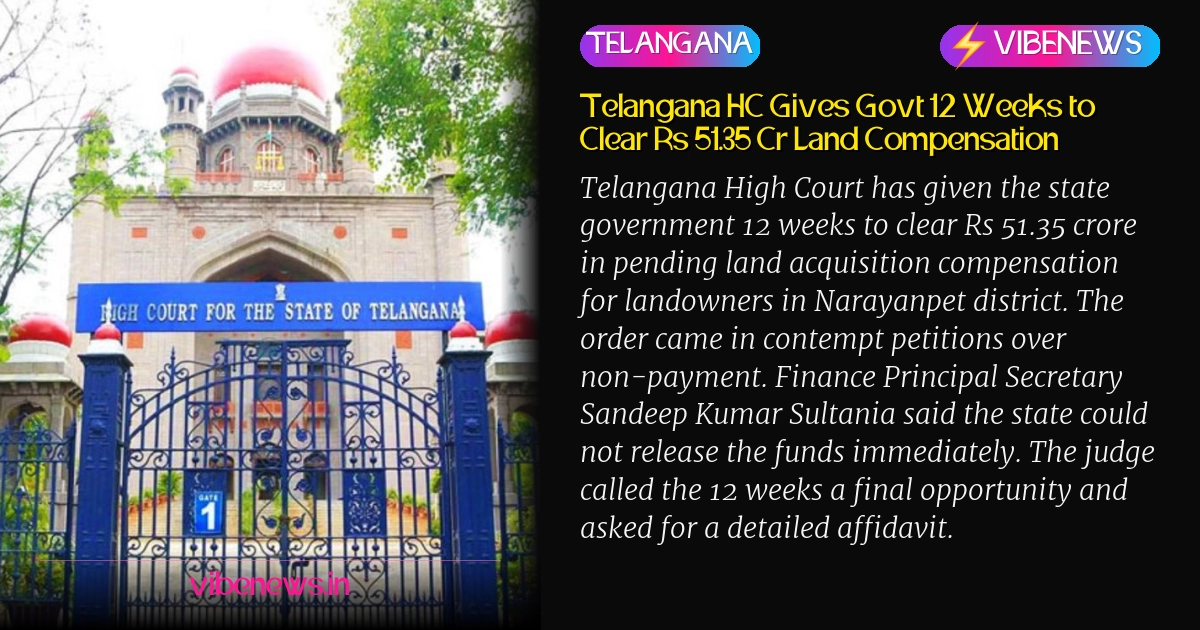
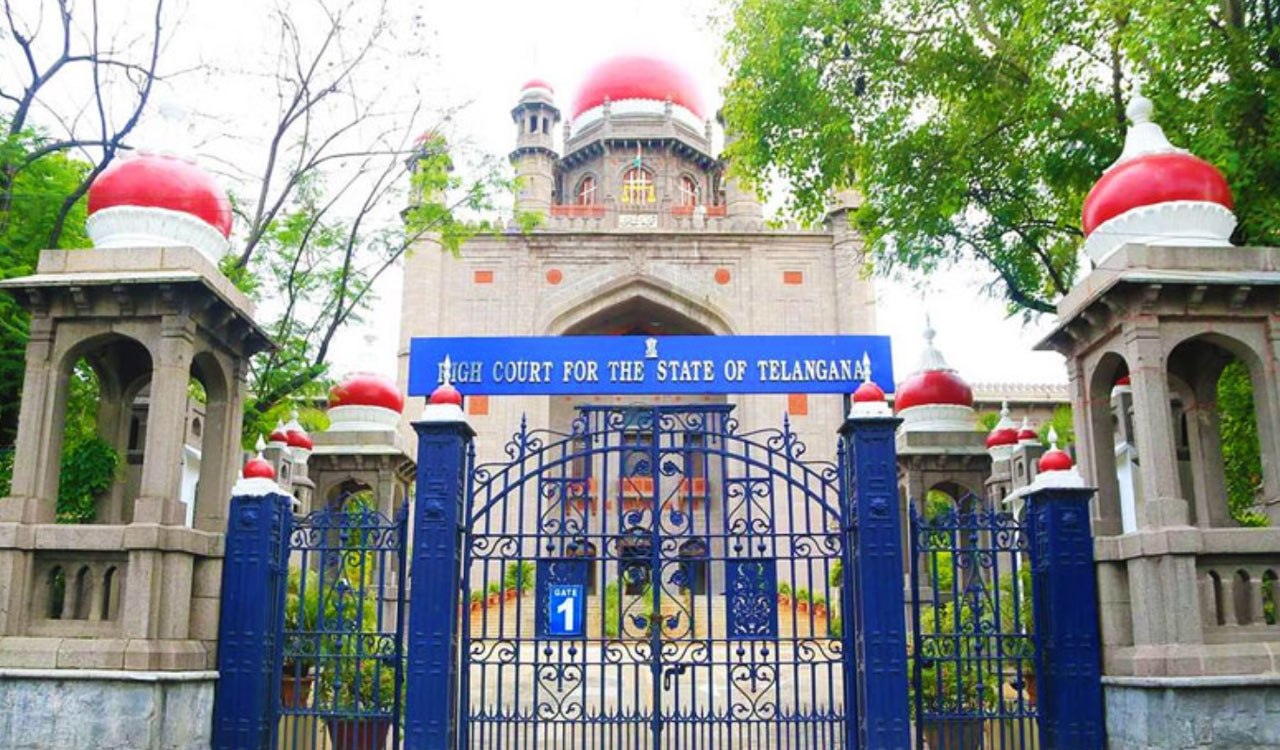
The Telangana High Court on Wednesday gave the State government 12 weeks to clear Rs 51.35 crore in pending compensation owed to landowners whose land was acquired for government projects in Narayanpet district. Justice N.V. Shravan Kumar made the order while hearing a batch of contempt petitions over payments that the government had failed to make despite earlier court orders.
The state did not walk into court empty-handed. Sandeep Kumar Sultania, Principal Secretary of the Finance Department, appeared virtually and told the bench that the government had issued payment tokens for more than Rs 40,000 crore. Those tokens are payable to several categories of beneficiaries, including landowners whose properties were taken for public projects. The problem, in his words, was cash. The government was not in a position to release the amounts immediately.
Sultania then made a remark that will likely be quoted for some time:
“Paying compensation for lands acquired is the top priority. But, even if we desire (to pay), I am not in a position to pay (do so). That is my inability.”
He assured the court that land acquisition compensation would be taken up on priority and cleared at the earliest. He also asked for six months. The judge did not agree to that timeline. Instead, Justice Shravan Kumar granted 12 weeks and described it as a final opportunity to clear the pending Rs 51.35 crore. He then told the officer directly, “See that you keep (up) your promise.”
The tone of the hearing was sharp well before the compensation question came up. The judge had already expressed strong displeasure over Sultania’s absence from the earlier proceedings. He also objected to the application seeking exemption from personal appearance, pointing out that it had been filed without valid reasons. In the judge’s view, officials were treating contempt matters with a casualness that bordered on indifference. He said they appeared to have “scant respect to (for) the court.”
“Courts cannot be casual in contempt cases, particularly while dealing with matters involving payment of compensation to land losers,” the judge observed. That line goes to the heart of the case. These are people who gave up their land for public works and then had to return to court just to get paid.
The judge went further. She did not say so explicitly, but the sense from the bench was that citizens were being pushed into litigation by careless handling of their grievances. The judge said officials showed the same attitude even inside courtrooms. The remark was blunt, and it was meant to be.
Sultania appeared again later the same day and explained the financial pressure in more detail. He described the difficulty of clearing payments owed to various categories of claimants at once. The judge acknowledged the state’s position but was not persuaded that it justified the delays. She pointed to repeated time-bound assurances that had not been met, and to what she described as inordinate delays and non-compliance with court orders.
Her clarification was careful but pointed. “We are not telling you how to pay, but are worried about the citizens’ rights and also (the) increasing pendency in courts due to such matters,” she said. In other words, the court was not dictating a budget plan. It was insisting that the money be found and paid, and that the state stop forcing landowners to wait for orders before they receive what they are owed.
What the state has to produce
Beyond the 12-week window, the judge directed the government to file a comprehensive additional affidavit. The affidavit must detail the compensation already paid for lands acquired for various purposes. It must also specify how much time the government needs to clear the remaining payments. That last requirement matters. It forces the state to put a number on its own delays, rather than relying on general assurances.
The matters have been adjourned for further hearing. Twelve weeks from the November 11 order puts the deadline in early February 2027.
The open question: where the money comes from
Readers looking for a clear answer on how the Rs 51.35 crore will actually be paid will not find one in the court record reported so far. The source material shows that the state has issued payment tokens worth more than Rs 40,000 crore across several categories. It also shows that the government cannot release those amounts immediately. What it does not show is how the state plans to pull the Rs 51.35 crore out of that pipeline, or whether it will be paid in full or in stages. The judge’s comment that the court was not telling the government how to pay suggests the bench is leaving that decision to the executive. The deadline, and the affidavit, will be the test of whether the government has a real plan.
Why Narayanpet landowners are watching closely
For the families who lost land to government projects in Narayanpet district, the hearing is less about legal procedure and more about a simple question: when will the money arrive? The court has now made clear that repeated promises will no longer be accepted as a substitute for payment. The state has been given a final opportunity, and the judge has said she expects the promise to be kept.
The case also reflects a wider problem the bench flagged directly. Each unpaid claim that has to be enforced through contempt proceedings adds to the court’s workload. The judge linked the rising pendency in courts to the same pattern of delay. Whether the government responds with a funding schedule, a clear affidavit, or a payment drive will determine whether this order ends the cycle or simply sets the next hearing date.
For now, the state has 12 weeks, a detailed affidavit to file, and a judge who has said plainly that the courts will not treat compensation delays casually.
TL;DR
- Telangana High Court gave the state government 12 weeks to clear Rs 51.35 crore in pending land acquisition compensation for Narayanpet district landowners.
- Finance Principal Secretary Sandeep Kumar Sultania told the court the government could not release the funds immediately despite issuing payment tokens worth over Rs 40,000 crore.
- Sultania sought six months, but Justice N.V. Shravan Kumar called the 12-week window a final opportunity and warned officials to keep their promise.
- The judge criticised officials for casual handling of contempt cases and said citizens were being forced to approach courts due to their carelessness.
- The government must file a comprehensive additional affidavit detailing compensation paid for various land acquisitions and the time needed to clear the rest.
- The matters have been adjourned for further hearing.