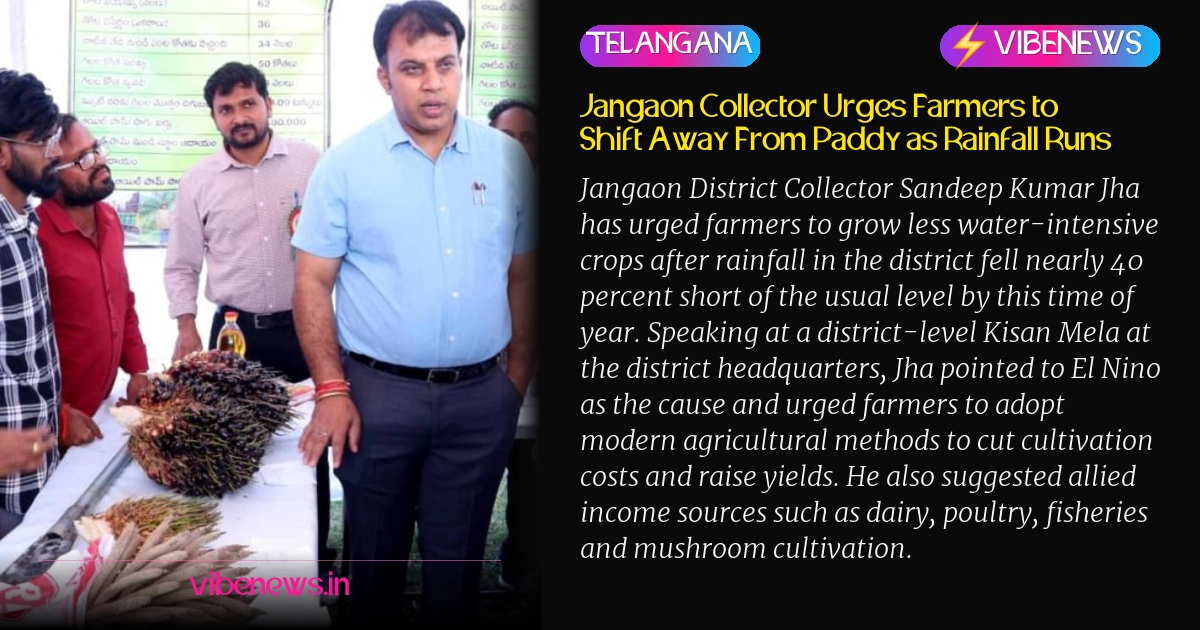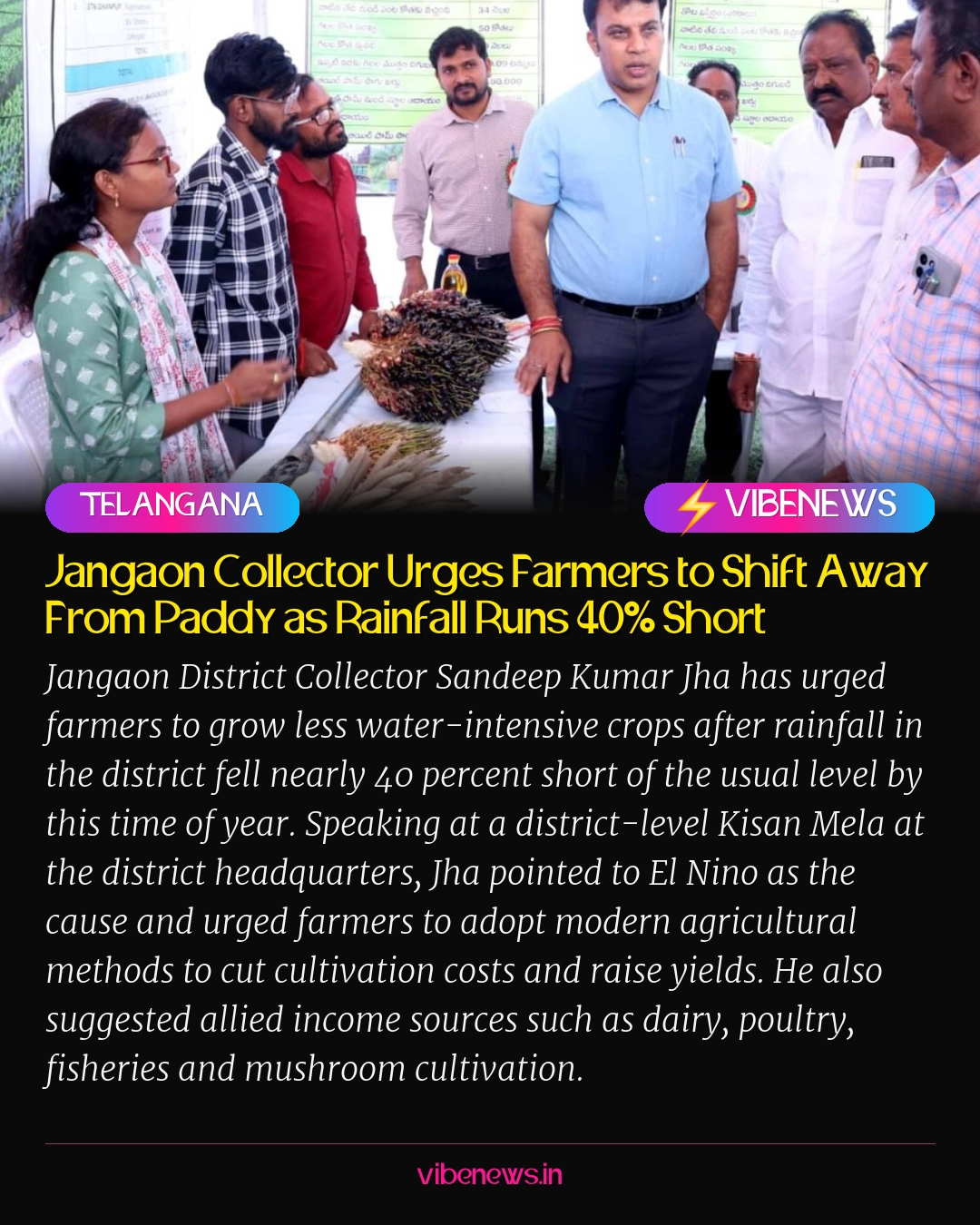
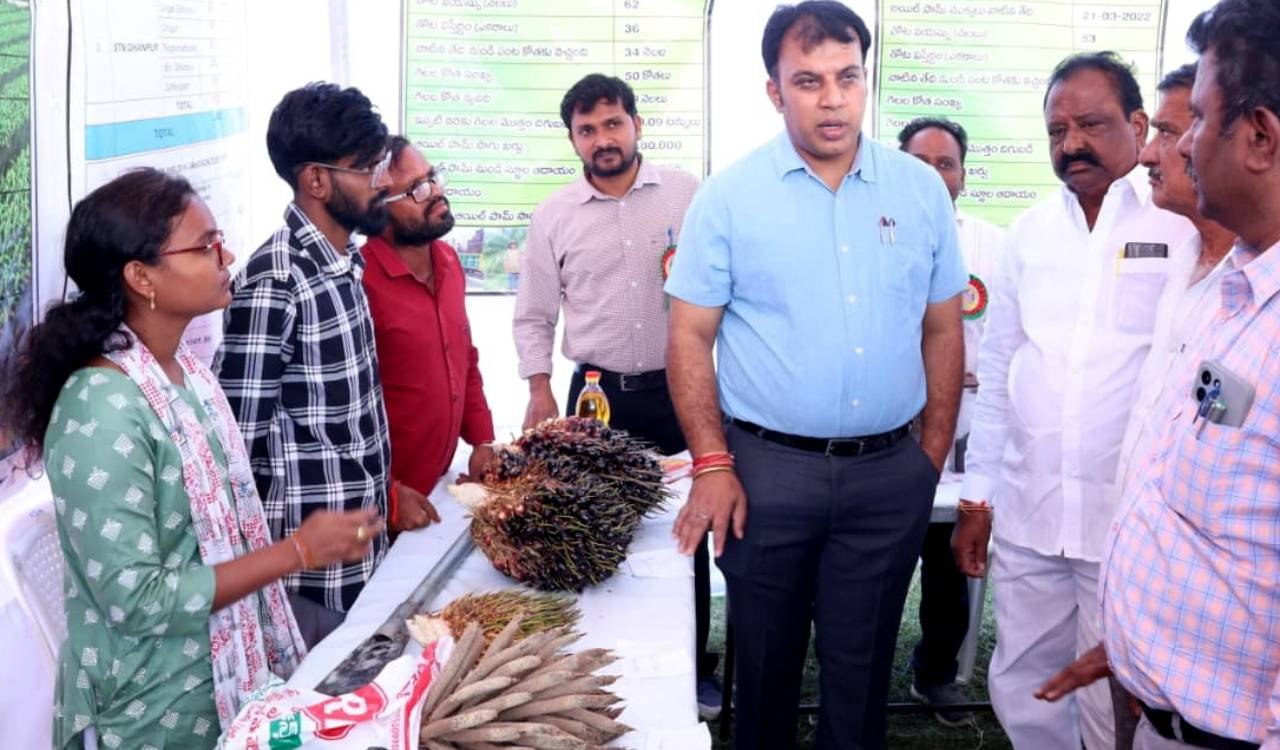
Jangaon District Collector Sandeep Kumar Jha has told farmers to stop relying almost entirely on paddy and start planting crops that need less water, after rainfall in the district fell far below normal. He made the call while addressing a gathering of farmers and inspecting stalls at a district-level Kisan Mela, organised by the Agriculture Department with support from the Agricultural Technology Management Agency (ATMA) at the district headquarters.
The numbers behind his warning are hard to ignore. Jangaon typically receives around 800 millimetres of rainfall by this point in the year. So far, only 525 millimetres has been recorded, a deficit of nearly 40 percent. Jha linked the shortfall to El Nino, the climate pattern that can disrupt monsoon rains, and said the combination of falling rainfall and rising temperatures could start hurting agriculture in the coming days.
Rainfall Running 40 Percent Short
Jha did not frame his message as a distant forecast. He told farmers the dry spell is already affecting the district and that waiting to see how the season unfolds carries a real cost. That is why he asked them to take precautionary steps now, rather than after the crop is already under stress.
He spoke about his own background as well. Jha said he comes from a farming family and understands the sector well, a point he used to lend weight to advice that many farmers may find hard to hear. Paddy has long been a familiar choice across the region, and asking growers to change it is a serious request.
Crops That Need Less Water
The core of the Collector’s message was a shift in what gets planted. Rather than depending only on paddy, he urged farmers to consider crops that require less water. The list he named includes tur dal, green gram, black gram, groundnuts, oilseeds, vegetables and horticultural crops. He also pointed to oil palm cultivation as an option worth exploring.
Rather than relying solely on paddy cultivation, farmers should consider growing crops that require less water.
The advice connects directly to the rainfall problem. Crops that need less water can reduce the risk of losing a season if rain keeps falling short, while the modern technology Jha encouraged is meant to bring down the cost of growing them. Lower costs and better yields are the two goals he returned to more than once.
Income Beyond the Field
Jha also argued that farmers should not depend on a single source of income. He suggested allied sectors that can run alongside or instead of field crops. These include dairy farming, livestock rearing, sheep farming, fisheries and poultry.
For farmers with limited land, he pointed to mushroom cultivation, which can be carried out in a small space. The harvest is possible in about 30 to 40 days, which gives growers a quicker return than many field crops. For households that have little room to expand, that timeline may be the most practical part of the suggestion.
Demonstration Plots Inside the Collectorate
Rather than leaving the advice on paper, Jha pointed farmers to a working example. He said horticultural crops, vegetables, pigeon peas (red gram) and other crops are being grown on about two acres within the district collectorate premises. Farmers who want to see the crops up close now have a local reference point for what alternative cultivation can look like.
The demonstration matters because farmers often hesitate to change crops without seeing results in their own district. A visible plot on government land gives the message a practical base, even if the source material does not report yields from those plots.
What It Means for Telangana Farmers
For Jangaon, the warning is immediate. The district is a Telangana agricultural area, and a rainfall deficit of nearly 40 percent is large enough to change planting decisions for the season. Farmers who have already committed to paddy, or who are still deciding what to sow, now face a direct question about risk and cost.
The Collector’s message also points to a broader lesson for farming communities across the state. When rainfall runs short, the crops chosen at the start of a season can determine how much of the loss a farmer absorbs. Jha’s appeal is essentially a call to plan around water availability instead of around habit.
What happens next will depend on how many farmers act on the advice and how quickly rainfall patterns change. The source material does not say whether the government plans further support or how many farmers have already switched crops. Those details will shape whether the shift Jha described becomes a real change on the ground or stays a recommendation at a mela.
TL;DR
- Jangaon Collector Sandeep Kumar Jha urged farmers to shift to less water-intensive crops amid a rainfall deficit linked to El Nino.
- The district has recorded 525 millimetres of rain so far against a typical 800 millimetres, a deficit of nearly 40 percent.
- Suggested crops include tur dal, green gram, black gram, groundnuts, oilseeds, vegetables, horticultural crops and oil palm.
- Jha also recommended allied income sources such as dairy, livestock, sheep farming, fisheries, poultry and mushroom cultivation.
- Around two acres of demonstration crops are growing inside the district collectorate premises.