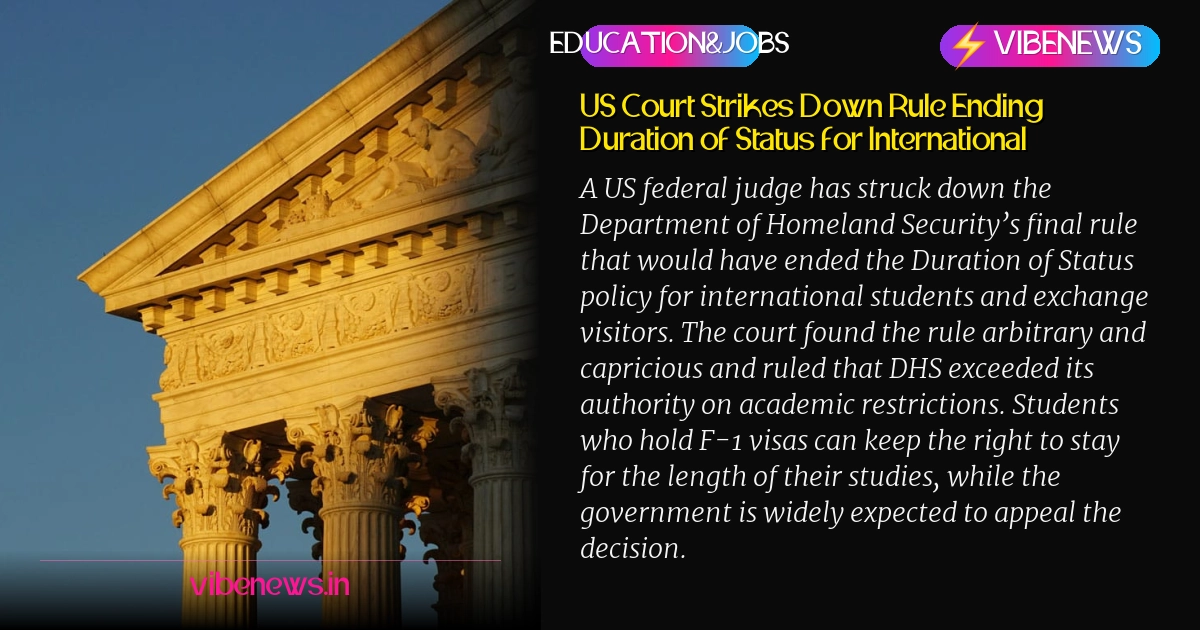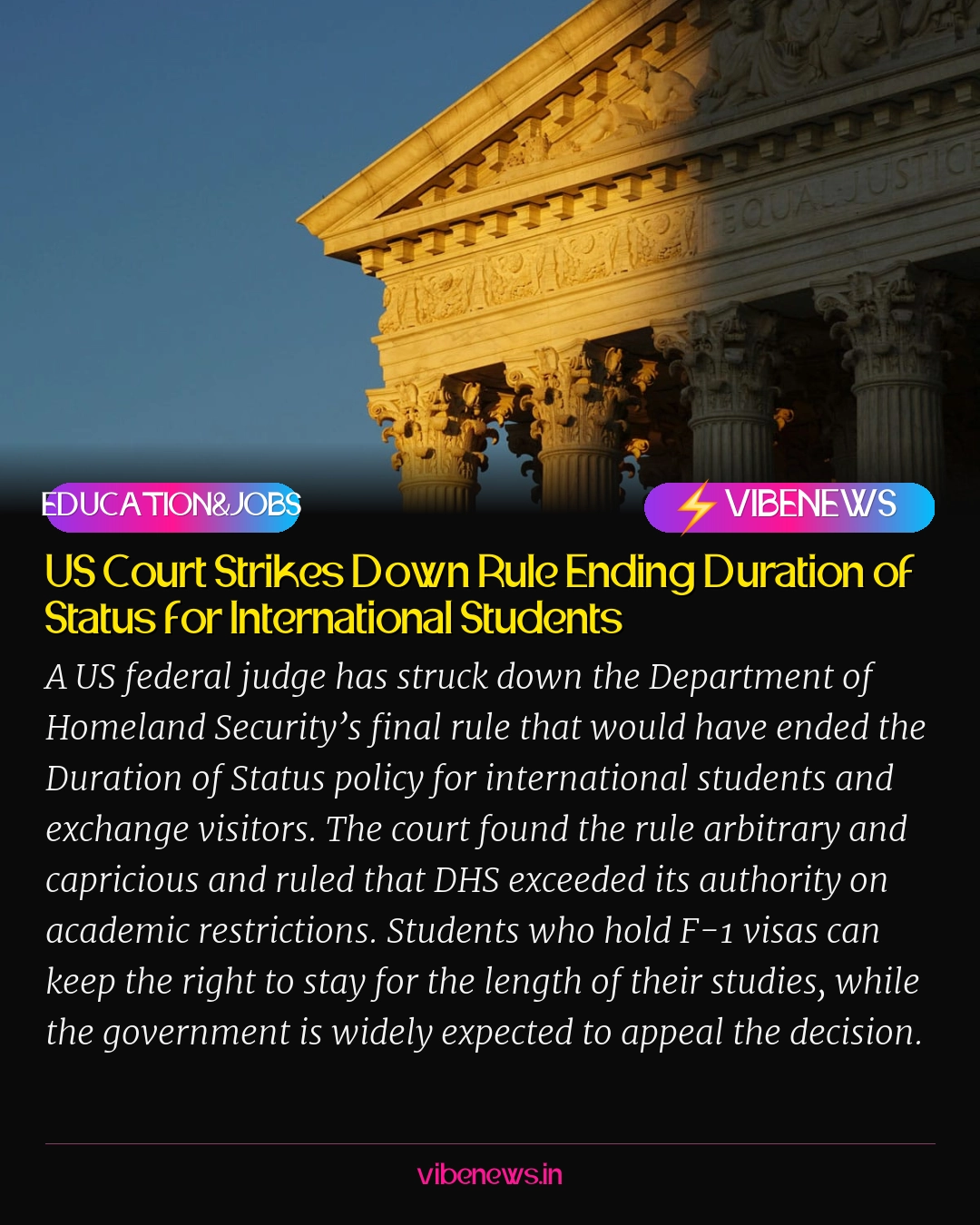
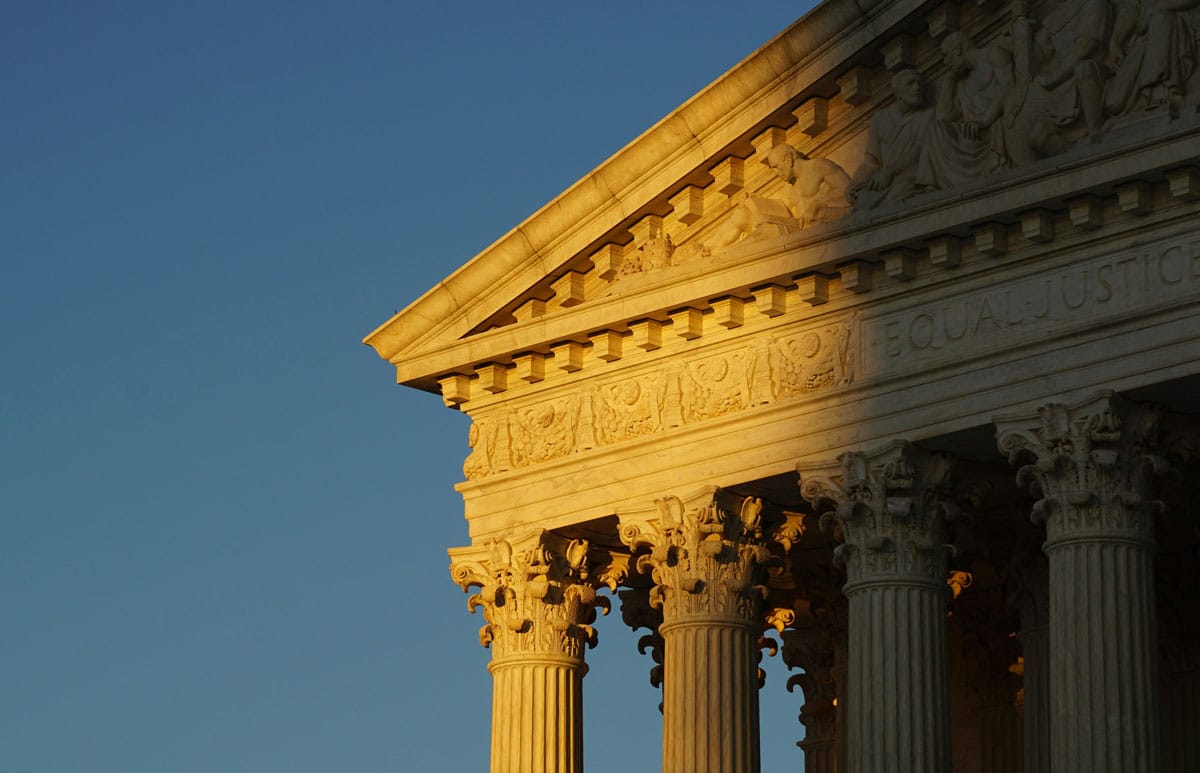
A US federal judge has struck down the Department of Homeland Security’s final rule that would have ended the Duration of Status (D/S) policy for international students, exchange visitors and representatives of foreign media. The ruling came on 16 November 2026 from the US District Court for the District of Massachusetts, and the rule will not come into effect.
For students on F-1 visas, that means the decades-old system stays in place. Under D/S, a student can remain in the US for the full length of their academic programme, rather than being tied to a fixed admission period that would have required repeated extensions.
Why the judge rejected the rule
The court found the rule was "arbitrary and capricious" under the Administrative Procedure Act. In legal terms, that describes an action that lacks a rational basis, ignores facts and evidence, or rests on whim rather than law or reason.
According to NAFSA: Association of International Educators, the court held that DHS failed to properly weigh the rule’s costs and benefits. The agency also did not justify its changes with enough evidence behind its stated concerns about fraud and national security. Judges said DHS did not consider less burdensome alternatives or respond adequately to significant public comments.
The court went further on one point. It said DHS had not meaningfully looked at improvements to the existing Student and Exchange Visitor Information System (SEVIS) as an alternative to building a costly new system.
The judge also ruled that the rule’s limits on academic studies went beyond what the law allows. Those restrictions were not reasonably connected to the purpose of the F-1 student visa program, and the court put it bluntly:
"The statute simply does not grant DHS such broad and open-ended authority to undermine the F-1 visa program."
What changes for students right now
Students keep the freedoms that the rule would have taken away. They can remain in the US for the duration of their academic journey. They can transfer from one institution to another and enrol in additional programmes without automatically needing a visa extension.
When an extension is still needed, students will work through their Designated School Official (DSO), as they do now. They will not have to deal with an immigration authority that has no knowledge of their case. For families who have been reading every new headline about visas, that is the practical difference between a stressful process and a familiar one.
The ruling also matters for colleges and universities. Many campuses had already spent months preparing for the rule, adjusting student support systems, databases, legal protections, communications with stakeholders and enrolment plans. That administrative burden ends, at least for now. Schools also reported staff, student and agent distress, along with rising costs, because the real possibility remained that the rule could stay in place.
Who challenged the rule
The case was brought by a coalition of education and business groups that filed suit in the summer. Paul Hughes, a partner at McDermott Will & Schulte, represented the group. Its members include NAFSA, the Presidents’ Alliance on Higher Education and Immigration, the Association of Independent Colleges and Universities in Massachusetts (AICUM), the American Federation of Teachers (AFT), the Graduate Labor Organization (AFT Local 6516), the International Union, United Automobile, Aerospace and Agricultural Implement Workers of America (UAW), UAW Local 2322, and the NewsGuild-CWA.
Dr Fanta Aw, executive director and CEO of NAFSA, said the judge had sent a clear message that the longstanding D/S policy is retained. She added that defending international education will require principled, strategic and sustained advocacy.
Miriam Feldblum, president and CEO of the Presidents’ Alliance, called the ruling a clear and important victory for international students, scholars and the institutions that welcome them. She tied the decision to wider concerns, pointing to what she described as significant declines in international student enrolment and interest in the US.
Robert J. McCarron, president and CEO of AICUM, noted that the court vacated the entire D/S rule and reaffirmed that the nature and purpose of the F-1 visa is to permit, and encourage, international students to study in the US. He argued that these students add to campus life, drive innovative research and support the economy of Massachusetts.
Randi Weingarten, president of the AFT, said the ruling would have lasting effects on the scientists and scholars who help keep American research at the forefront. She described the Trump administration’s proposed limits on how long international scholars can complete their studies as arbitrary and hostile. The AFT represents 420,000 higher education members, she said.
The fight is not over
The ruling does not end the policy debate. It is widely expected that the US government will appeal the District of Massachusetts decision that preserves D/S. Until an appeal is resolved, students and schools are operating under a court order rather than a settled rule, and that uncertainty is likely to shape how many families plan their next steps.
Background material linked to the case also points to a sharp drop in new international enrolments in the US, which fell 18 percent in 2025/26, with newer data suggesting the trend is continuing. The court’s decision does not reverse those numbers, but it removes one of the factors that had been pushing students to reconsider American campuses.
TL;DR
- A US federal judge struck down DHS’s final rule ending the Duration of Status policy for international students.
- The ruling was issued on 16 November 2026 by the US District Court for the District of Massachusetts.
- The court found the rule arbitrary and capricious and said DHS exceeded its authority on academic restrictions.
- F-1 students keep the right to remain for the full length of their studies and transfer between institutions.
- The government is widely expected to appeal, so the outcome could still change.