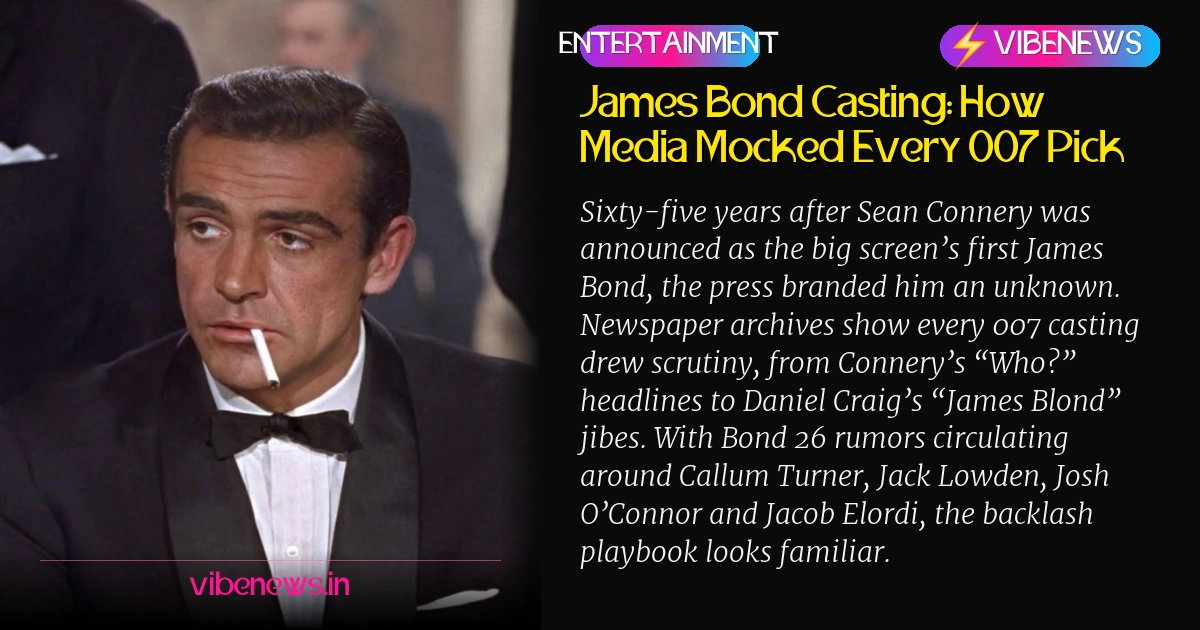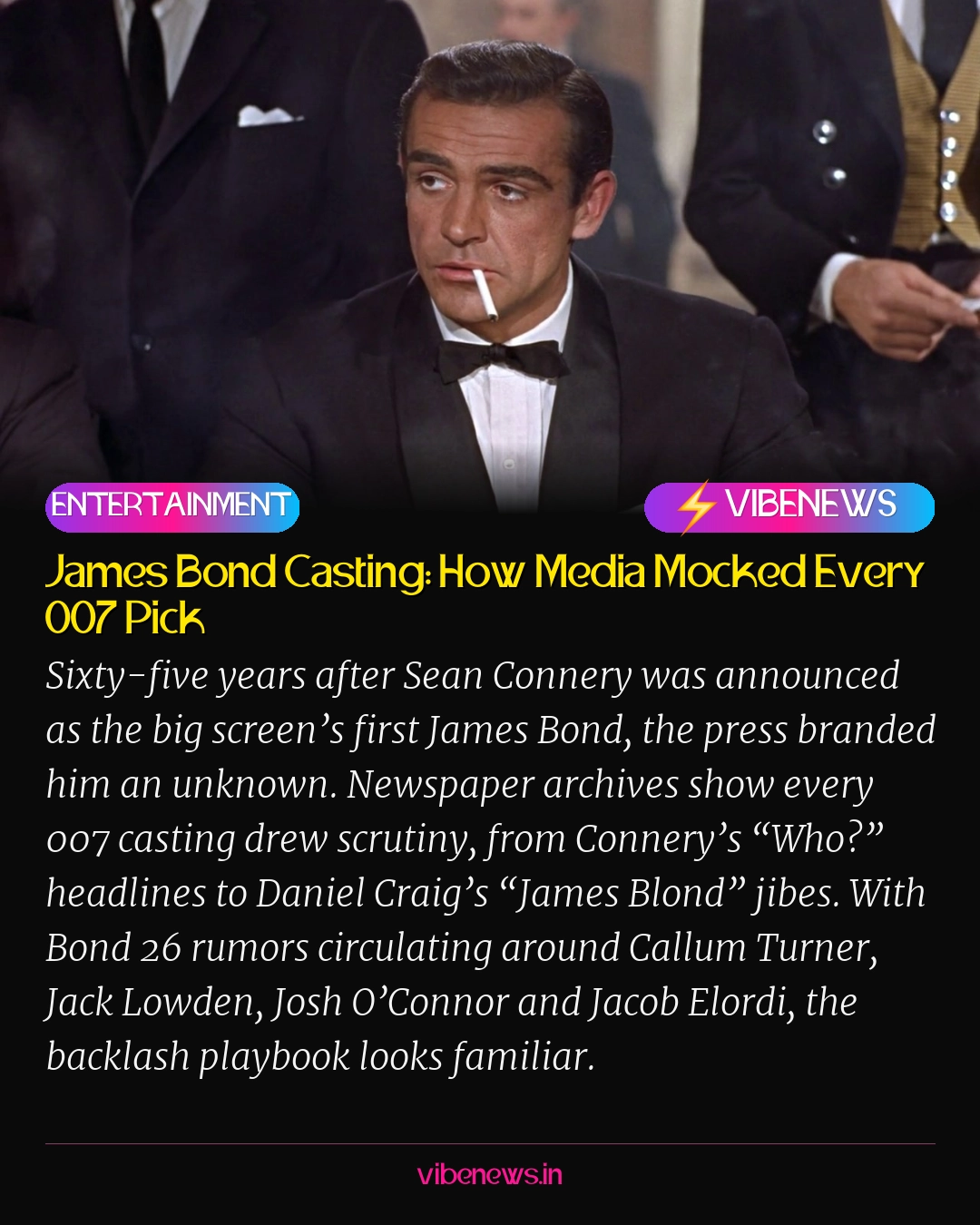
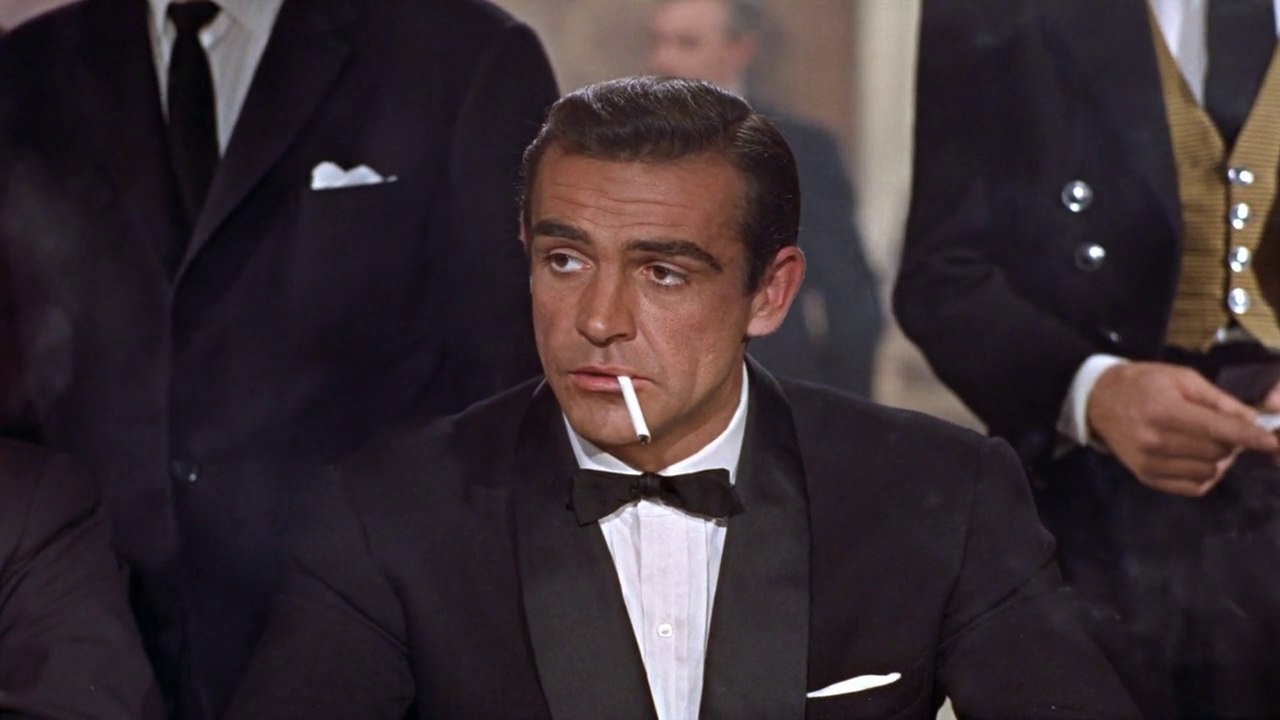
On November 3, 1961, Sean Connery was announced as the big screen’s first James Bond, and the press response was essentially one word: who? The Scottish actor was branded an unknown, a label he would shed once the franchise turned him into a global superstar.
The stakes were enormous. Ian Fleming’s novels were bestsellers, and President John F. Kennedy made his 007 fandom public. Alfred Hitchcock and Cary Grant had even eyed the role at one point before Dr. No finally reached the screen. Expectations were sky-high, and the newspapers treated the casting like a verdict.
One reporter’s jab at Connery’s casting has aged brilliantly. The line reads:
“Sean Connery, chosen to play Bond on the screen, had better be good.”It is the first fanboy takedown of a Bond casting, and it reads like a warning shot fired at a man who went on to top nearly every “who is the best Bond?” poll until Daniel Craig came along.
The male model who followed Connery
If Connery was an unknown, George Lazenby was something even less expected. The Aussie-born actor was not only unfamiliar to audiences, he had not worked as an actor at all. He was a male model known for some commercials, and the coverage when he was announced on October 7, 1968, hammered home his lack of experience and his past jobs.
Lazenby made only one Bond film, On Her Majesty’s Secret Service, before EON Productions paid up to bring Connery back for Diamonds Are Forever. His inexperience and ego got the better of him during his short run, a story told in the 2017 docudrama Becoming Bond.
Moore and the TV actor label
Roger Moore required no introduction when he was announced as the third 007 actor on August 1, 1972. Audiences knew him from The Saint, The Persuaders and Maverick, making him the most famous actor cast as Bond up to that point. The coverage was largely favorable, but the press still reached for a dismissive tag: “TV Actor.”
That snobbery says a lot about the era. The gulf between film actors and TV actors persisted until HBO and the streamers made it professionally acceptable to work in both mediums. Moore went on to hold the role for years, and the label that once stung became a footnote.
A Shakespearean actor in a tux
When Timothy Dalton was announced on August 6, 1986, the headlines zeroed in on his résumé. A Shakespearean actor as 007? Patrick Stewart had faced similar doubts when he was named the lead of Star Trek: The Next Generation.
Dalton had been on EON’s radar as far back as Live and Let Die. By the time he accepted the role, he had to follow Roger Moore, who had played Bond for 12 years until he retired with 1985’s A View to a Kill. The passing of the torch rattled at least one columnist, who lamented the move from Moore’s campy 007 to Dalton’s serious take.
Dalton is mostly remembered today as a super-serious Bond, closer to Fleming’s literary version and the antithesis of Moore’s approach. He made only two lukewarm films, but the shadow he cast was long. As one columnist put it, Dalton’s Bond walked so that Daniel Craig’s Bond could run.
The audition that lasted five seasons
The franchise went dormant from 1989 to 1994 while EON Productions fought a legal battle over screen rights with a producer who had collaborated on the novel for Thunderball. When production could finally resume, Dalton was out and Irishman Pierce Brosnan was in. Brosnan was announced on June 8, 1994.
Brosnan had spent five seasons playing the suave, often tuxedo-clad Remington Steele on TV, which amounted to a perpetual audition for the Bond role. His original path was blocked when NBC would not release him from his TV contract, and he was supposed to star in The Living Daylights before that. When he took over for GoldenEye, he told the press he was “older” and “wiser” for the part and did not want the character to be as “politically correct” as Dalton’s version.
Blond, James Blond
Daniel Craig’s casting, announced October 14, 2005, may have drawn the harshest reaction of them all. Nearly every headline went with a pun: “Blond, James Blond.” The tabloids later swapped in “James Bland” as they bashed the English actor. The criticism was reportedly on a scale not seen since Michael Keaton was cast as Batman, and a fan site dedicated to hating the casting, CraigNotBond.com, still exists.
Craig won most of the doubters over with his debut in Casino Royale in 2006. He brought a wounded humanity to the role that set him apart from his predecessors. It is hard to believe now that “James Bland” went on to become the longest-running Bond actor, leading the franchise for 15 years before exiting with No Time to Die.
The rumor mill and the next 007
Every Bond casting has followed the same arc: suspicion, backlash, then grudging acceptance. The 1954 Climax! episode that first put the character on screen had Barry Nelson playing an American version of Bond. Imagine the reaction if social media had existed back then.
Now the wait is on for James Bond 26. Callum Turner, Jack Lowden, Josh O’Connor or someone else entirely could get the call. Jacob Elordi has also been oft-rumored, and social media already has fierce opinions about each contender. Whoever follows Craig will face a storm of their own, though, as the archives show, few have faced one as fierce as his.
TL;DR
- On November 3, 1961, Sean Connery was announced as the first big screen James Bond, and the press mostly asked who he was.
- Newspapers branded Connery an unknown, a label he quickly lost once the franchise made him a global superstar.
- George Lazenby was announced in 1968 as a former male model with no acting experience, and coverage hammered that point home.
- Roger Moore was tagged “TV Actor” by the press in 1972, a snobbery that lasted until streaming made working in both mediums acceptable.
- Daniel Craig’s 2005 casting drew “Blond, James Blond” headlines, a fan site dedicated to hating him, and a backlash rarely matched.
- With Bond 26 casting still pending, Callum Turner, Jack Lowden, Josh O’Connor and Jacob Elordi are among the names fans are debating.