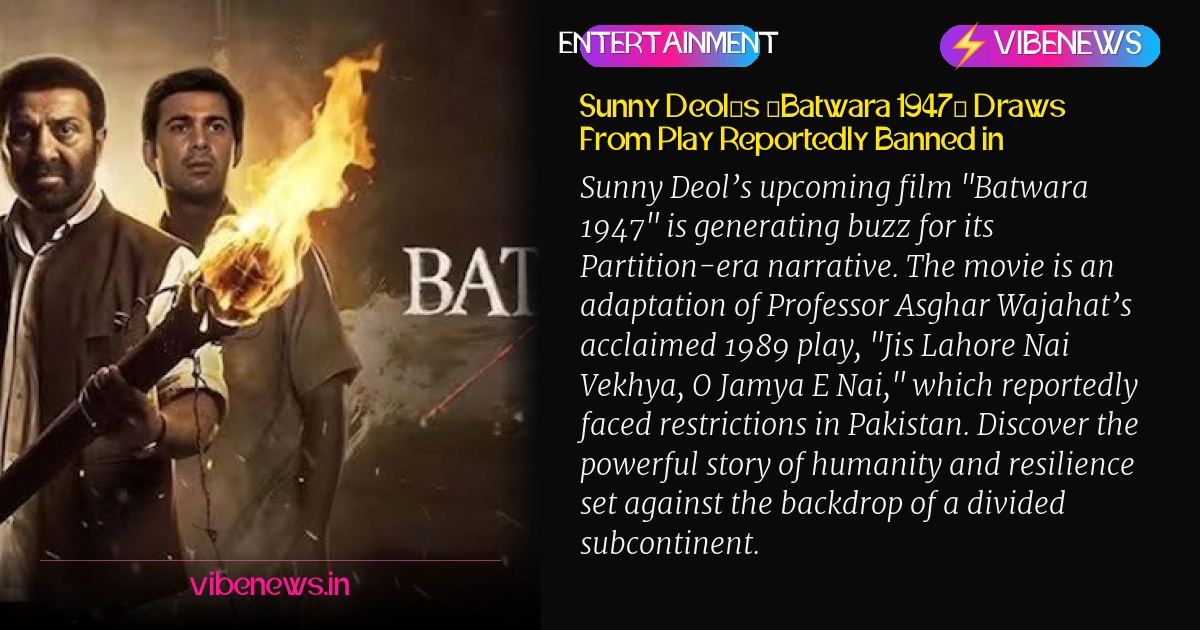
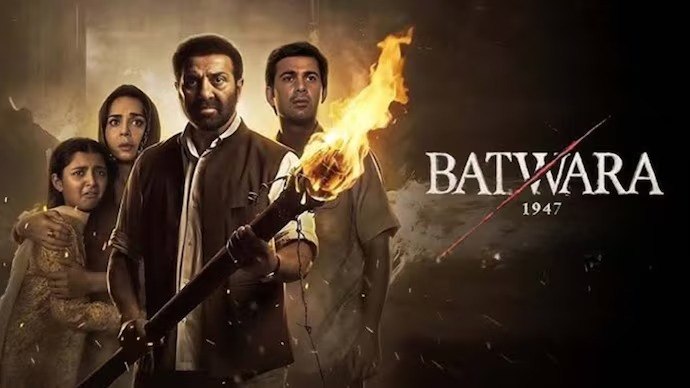
Sunny Deol’s upcoming film, "Batwara 1947," is rooted in a critically acclaimed 1989 play by Professor Asghar Wajahat, "Jis Lahore Nai Vekhya, O Jamya E Nai," a work reportedly banned in Pakistan. This cinematic adaptation, produced by Aamir Khan Productions and directed by Rajkumar Santoshi, promises to bring a poignant human story from the Partition era to the big screen.
The original play, whose title translates to "One Who Has Not Seen Lahore, Has Not Been Born," has garnered significant critical acclaim over decades. It has been performed extensively across India and in various international venues, yet its powerful narrative reportedly encountered restrictions within Pakistan. The play’s central premise, revolving around an elderly Hindu woman who refuses to abandon her home in Lahore after the subcontinent’s division, forms the emotional core of the upcoming film.
Professor Wajahat’s work delves into the complexities of loss, displacement, and identity through the lens of a Muslim family migrating from Lucknow. They are allotted a haveli in post-Partition Lahore, only to discover its original occupant, the elderly Hindu woman, still residing there. What begins as a property dispute evolves into a profound exploration of shared humanity amidst historical trauma.
Crucially, the play’s reported ban in Pakistan stems from its controversial ending. The narrative culminates with a local Maulvi advising the Muslim family to perform the old woman’s cremation according to Hindu religious rites following her death. This particular resolution, emphasizing interfaith harmony and respect even in death, likely challenged certain prevailing narratives and led to its reported prohibition.
Decades after its initial staging, the enduring relevance of "Jis Lahore Nai Vekhya, O Jamya E Nai" is evident in its adaptation for a wider cinematic audience. The film aims to revisit one of history’s most painful chapters, not through political grandstanding, but through the intimate struggles and resilience of ordinary people. This approach underscores the universal themes of coexistence and compassion that transcend national boundaries.
The collaboration between Sunny Deol, known for his powerful roles in patriotic dramas, and Aamir Khan Productions, recognized for its socially conscious storytelling, adds another layer of anticipation. Director Rajkumar Santoshi, who has previously helmed impactful films, is at the helm, promising a sensitive and compelling portrayal of the Partition’s human cost. The film’s musical score is composed by the legendary AR Rahman, with lyrics penned by Javed Akhtar, further elevating its artistic pedigree.
An impressive ensemble cast supports Deol, including veteran actress Shabana Azmi, Preity G Zinta, Karan Deol, Ali Fazal, Abhimanyu Singh, Khhushi Hajare, and Kanikka Kapur. Their collective talent is expected to bring depth and authenticity to the diverse characters caught in the maelstrom of 1947. The film’s exploration of a story that has faced censorship in a neighbouring country highlights the power of art to provoke thought and foster dialogue about shared histories.
"Batwara 1947" is slated for a theatrical release on August 14. Its arrival offers an opportunity for audiences to engage with a narrative that challenges conventional perspectives on Partition, focusing instead on the enduring spirit of humanity. The film’s journey from a reportedly banned play to a major cinematic release underscores the timeless power of its message.
TL;DR
- Sunny Deol’s upcoming film "Batwara 1947" is based on Professor Asghar Wajahat’s 1989 play, "Jis Lahore Nai Vekhya, O Jamya E Nai."
- The original play, which explores the human impact of Partition, was reportedly banned in Pakistan.
- The film, produced by Aamir Khan Productions and directed by Rajkumar Santoshi, focuses on an elderly Hindu woman refusing to leave her Lahore home post-Partition.
- The play’s controversial ending, involving a Maulvi advising Hindu cremation rites for the deceased woman, is cited as a reason for its reported ban.
- "Batwara 1947" features an ensemble cast including Shabana Azmi, Preity G Zinta, and Karan Deol, with music by AR Rahman and lyrics by Javed Akhtar.
- The film aims to portray themes of humanity, coexistence, and resilience amidst historical division.
- Its theatrical release is scheduled for August 14.