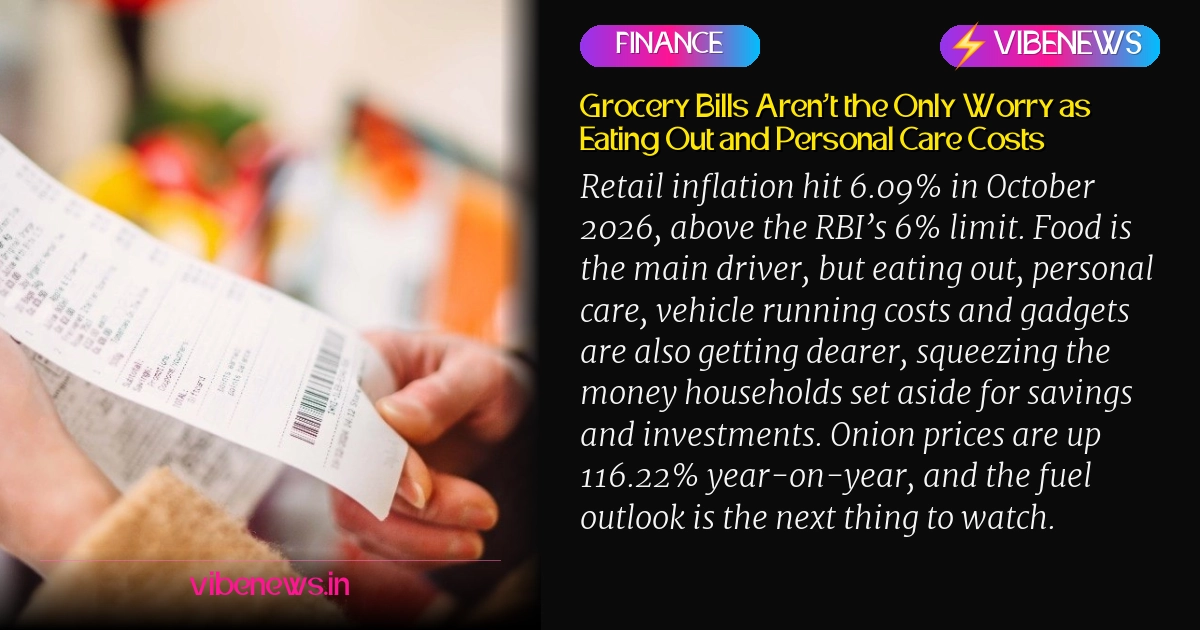
Retail inflation rose to 6.09% in October 2026, moving above the Reserve Bank of India’s upper tolerance limit of 6% for the first time under the current Consumer Price Index series. The data, released by the Ministry of Statistics and Programme Implementation (MoSPI), shows the squeeze on household budgets reaches well beyond the grocery basket.
Food is the biggest pressure. Food inflation touched 8.94% in October, up from 7.74% in September. But the same numbers point to a set of everyday costs that many households may not track as closely, and several of them are rising faster than the headline figure.
Eating out is getting harder to ignore
Prices in restaurants and accommodation services rose 10.06% year-on-year in October. Rural areas saw 10.24%, while urban areas recorded 9.90%. For families that order food regularly or dine out on weekends, those increases compound quickly.
Nirav Karkera, Head of Research and Fund Manager at W by Groww, said the team is focused on whether food costs spread into other categories. Eating out is already about 10% more expensive than a year ago, he noted.
Personal care bills are climbing too
The broader category covering personal care, social protection and miscellaneous goods and services rose 10.14% in October compared with the same month last year. Rural households felt it harder, with inflation at 10.84%, against 9.24% in urban areas.
The category spans a wide range of personal and miscellaneous spending. That means the cost of looking after everyday needs has also moved up sharply for many families over the past year.
Onion, garlic and ginger remain the sharpest kitchen pressures
Within food, the numbers are uneven. Onion prices recorded inflation of 116.22% year-on-year. Garlic rose 60.74%, ginger 48.32%, and lemon 47.30%. Silver jewellery, which falls outside essential household buying, recorded 52.39%.
There is some relief in vegetables. Potato prices fell 14.24% in October, cauliflower dropped 10.57%, and coconut declined 5.60%. That mix explains why a grocery bill can feel unpredictable from one month to the next. Some items get cheaper while a few staple ingredients keep pushing the total up.
Karkera linked food to the broader breach of the RBI limit. Inflation has crossed the RBI’s 6% upper limit, and about half of it is coming from food. Onion and garlic prices have shot up, and rural households feel this more because food takes a bigger share of what they spend, he said.
Running a vehicle is costing more
Transport inflation stood at 5.84% in October. The cost of operating personal transport equipment, which covers expenses linked to running vehicles, rose 7.52%. Transport services for goods climbed 7.34%, while passenger transport services rose a comparatively smaller 4.02%.
That matters beyond the commuter. Businesses rely on transport to move raw materials and finished goods, and higher freight costs can eventually show up in what shoppers pay at the counter.
“The bigger risk is fuel. Pump prices at state-run outlets have not moved since May, but if crude stabilises at elevated levels and the rupee remains weak, prices could rise further.”
Karkera said that fuel is the risk to watch in the coming months. He also pointed to global and geopolitical factors that have been pushing crude prices higher, adding that there is a greater possibility of a resolution, though the timing remains uncertain.
Clothing and household goods are getting dearer
Clothing and footwear prices rose 4.96% in October. Rural areas saw 5.61%, while urban areas recorded 3.89%. Furnishings, household equipment and routine maintenance rose 3.94%.
Within that group, glassware, tableware and household utensils climbed 7.10%, furniture and furnishings rose 5.39%, and household appliances went up 4.98%. Information and communication equipment recorded inflation of 7.75%, a figure that will matter to anyone replacing a phone or laptop.
Schooling, healthcare and housing are rising more slowly
Not every expense is climbing at the same pace. Education services recorded inflation of 4.02%, with urban areas at 4.61% and rural areas at 3.10%. Healthcare inflation stood at a comparatively moderate 2.05%. Medicines and health products rose 2.13%, and outpatient care services rose 2.05%.
Housing, water, electricity, gas and other fuels recorded 2.90%. Actual rental payments rose 2.36%, while electricity, gas and other fuels rose 3.71%.
Karkera said underlying inflation, excluding food and precious metals, is close to 4%. Rent, healthcare and education are rising slowly, and gold and silver prices fell through October, which could ease some pressure in the coming months.
What the 6% figure actually means for your wallet
Retail inflation tracks how much the prices of goods and services bought by households have changed over time. A reading of 6.09% means the overall consumer price level is 6.09% higher than in October last year. It does not mean every product has risen by that amount.
The RBI’s inflation target is 4%, with a tolerance band of 2% on either side. The latest reading sits above the upper edge of that band, and food is running well ahead of the overall rate.
For households, the practical effect is less money left over after routine bills. Families that spend a large share of income on groceries, eating out, transport and daily needs may find less room for savings and investments. With inflation rising across several categories at once, budgets could come under fresh strain in the months ahead.
TL;DR
- Retail inflation hit 6.09% in October 2026, above the RBI’s 6% upper tolerance limit for the first time under the current CPI series.
- Restaurant and accommodation prices rose 10.06% year-on-year, with rural areas seeing 10.24% and urban areas 9.90%.
- Personal care, social protection and miscellaneous costs climbed 10.14%, with rural households facing 10.84%.
- Onion prices jumped 116.22% and garlic rose 60.74%, while potato prices fell 14.24%.
- Cost of running personal vehicles rose 7.52%, and fuel is the biggest risk analysts are watching.