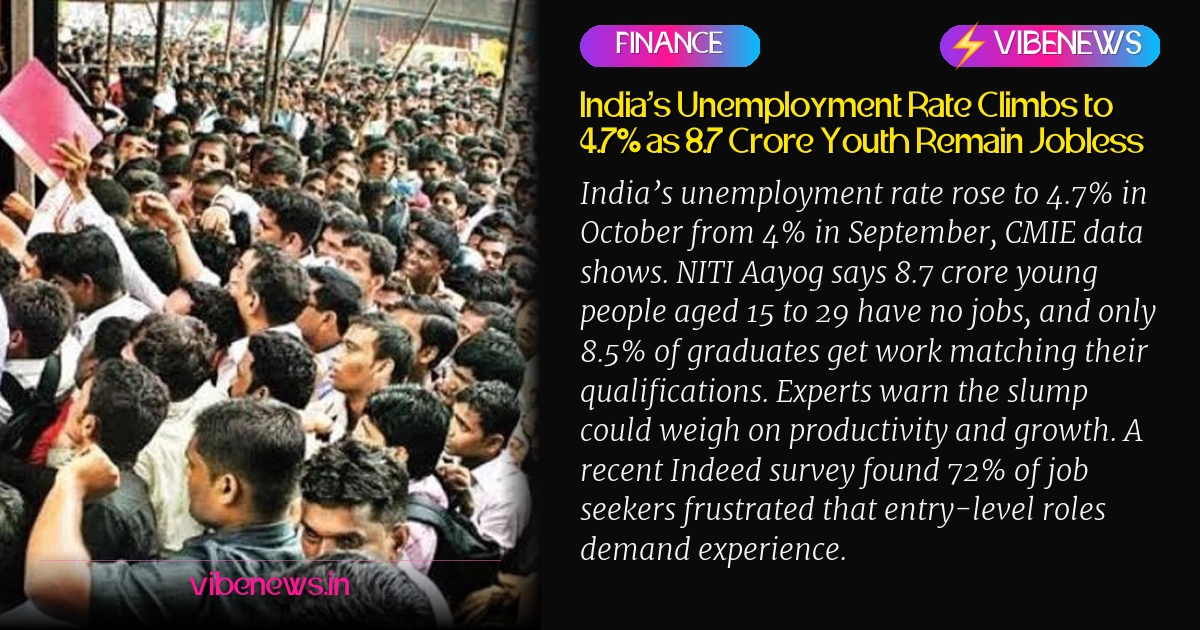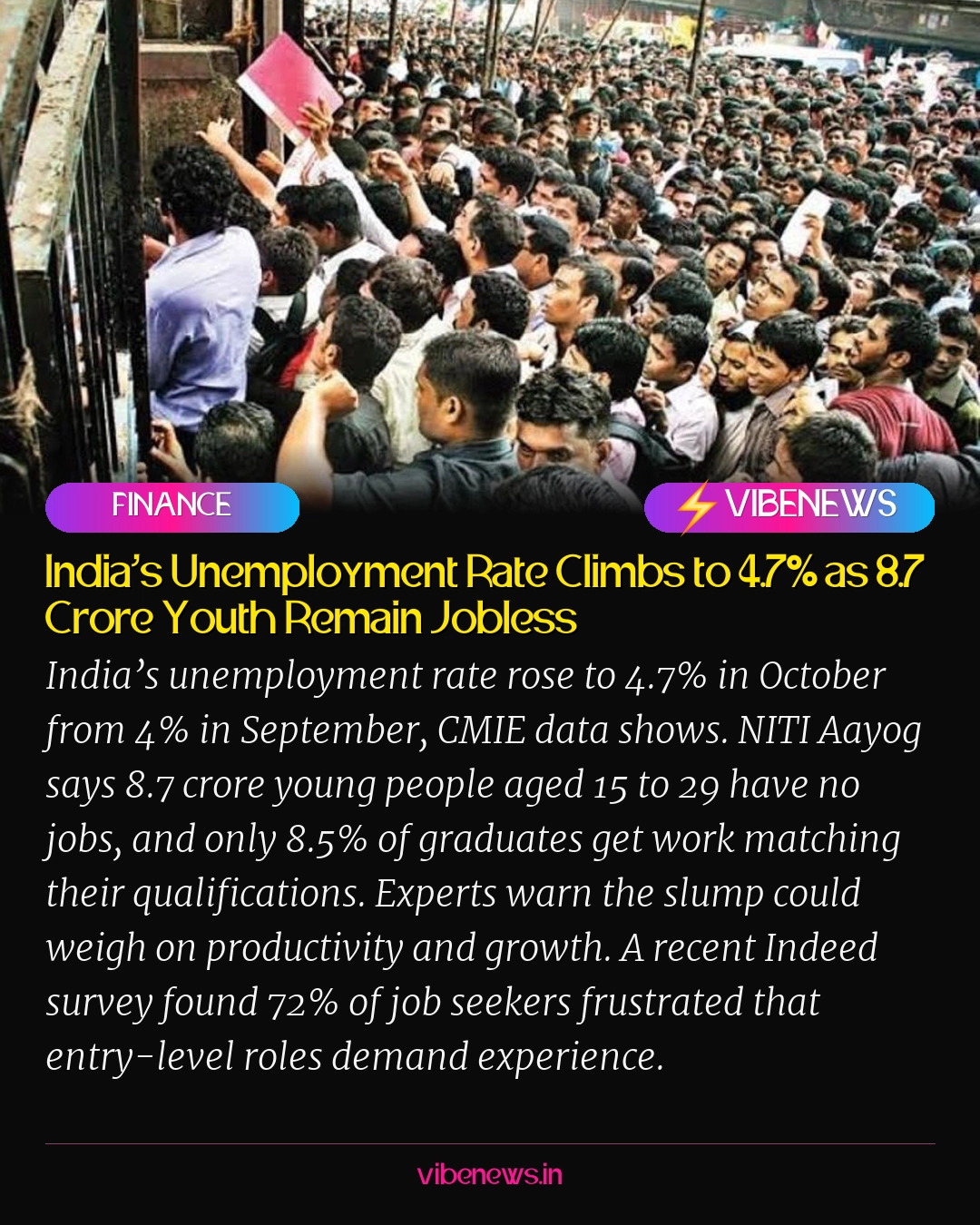
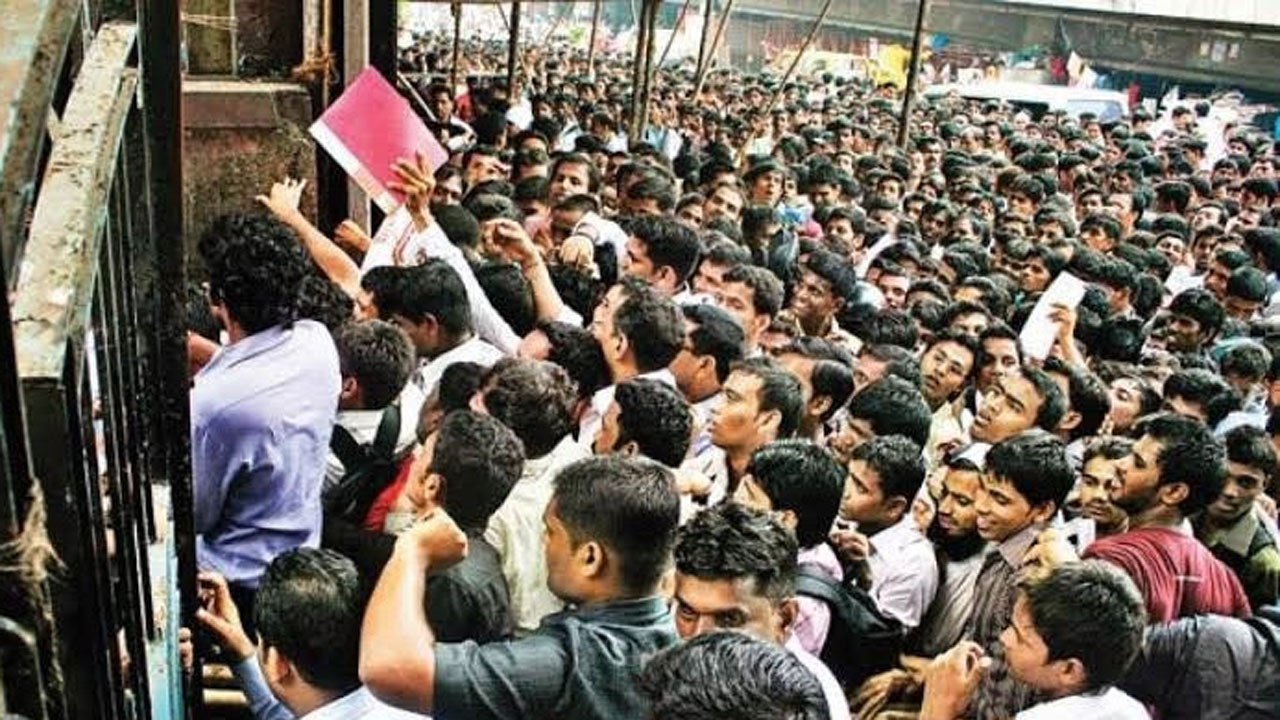
India’s unemployment rate climbed to 4.7 per cent in October, up from 4 per cent in September, according to fresh data from the Centre for Monitoring Indian Economy (CMIE). The agency also reported that five lakh people lost their jobs within that period, a figure that adds weight to a sharp worsening of conditions for young Indians.
The numbers are hard to ignore. Employment, measured as the share of working-age people who have jobs, stood at 39.7 per cent in January 2020, just before the Covid-19 crisis hit. In October it slipped to 39.3 per cent. By that measure, job creation in India is now weaker than it was during the pandemic, experts say.
Villages and women bear a heavier load
The pain is not confined to cities. Rural unemployment rose from 3.4 per cent in September to 4.7 per cent in October, according to CMIE figures. Among women, the jobless rate went from 11.7 per cent to 12.7 per cent over the same period. Women were already facing a steeper climb back into work, and the latest numbers suggest that gap is widening rather than closing.
A generation stuck between school and work
The most troubling figure may be the one that concerns the youngest workers. CMIE data shows that 25 per cent of young people aged 15 to 29, living across 250 districts in the country, have no jobs. They are also not pursuing higher education. They are neither earning nor studying further, which leaves them with fewer routes to a stable career.
NITI Aayog, the government’s policy think tank, paints a similar picture in its latest report. It estimates that 8.7 crore young people in the same age group do not have a job. According to the report, financial circumstances are keeping many of them from continuing their education or taking up skill training. For families that cannot afford either, the gap between school and steady work can stretch on for years.
Only 8.5 per cent of graduates are finding work that matches their qualifications, NITI Aayog said, voicing concern over the mismatch between education and employment.
That finding cuts to the heart of the problem. India produces a large pool of graduates every year, yet a small fraction of them land jobs that reflect what they studied. Many end up taking whatever is available, and some give up on the field they trained for entirely.
Job seekers describe a closed door at the entry level
Survey data points to the same frustration from the other side of the hiring table. In a recent Indeed survey, 72 per cent of job seekers said they were unhappy that even entry-level positions ask for work experience. The irony is hard to miss. Freshers are told they need experience to get a job, but they cannot gain that experience without one.
The results of that search are discouraging. Only 14 per cent of respondents said they had secured the first job they wanted. Another 43 per cent said limited opportunities had forced them to compromise on their career choice. Many of these are people who spent years preparing for a specific path and are now taking jobs they never planned for.
What experts are warning about
Specialists quoted in the report caution that the situation could get worse if the government does not step in. They argue that prolonged unemployment could reduce productivity and, in turn, slow the country’s economic growth. A large group of young people who cannot find work or training is not only a personal hardship for families. It is also a drag on the economy that will need to absorb them later.
The report also recalls a central political promise. The BJP-led NDA government, which came to power at the Centre on a pledge of creating two crore jobs every year, has not delivered on that commitment, the outlet argues. The figures in the latest CMIE and NITI Aayog data are being read against that promise, and they show a job market that is still struggling to absorb the people entering it.
For now, the numbers point in one direction. Unemployment is rising, job creation has slowed to levels seen during the pandemic, and the people most affected are young, rural and female. Whether policy responses can reverse that trend will decide how many of these young workers eventually find their footing.
TL;DR
- Unemployment rose to 4.7% in October from 4% in September, according to CMIE data.
- CMIE says five lakh people lost jobs in that period, and employment slipped to 39.3% from 39.7% in January 2020.
- NITI Aayog estimates 8.7 crore youth aged 15 to 29 do not have jobs.
- Only 8.5% of graduates are finding work matching their qualifications, NITI Aayog said.
- A recent Indeed survey found 72% of job seekers frustrated by experience demands for entry-level roles.
- Experts warn prolonged joblessness could hurt productivity and economic growth.