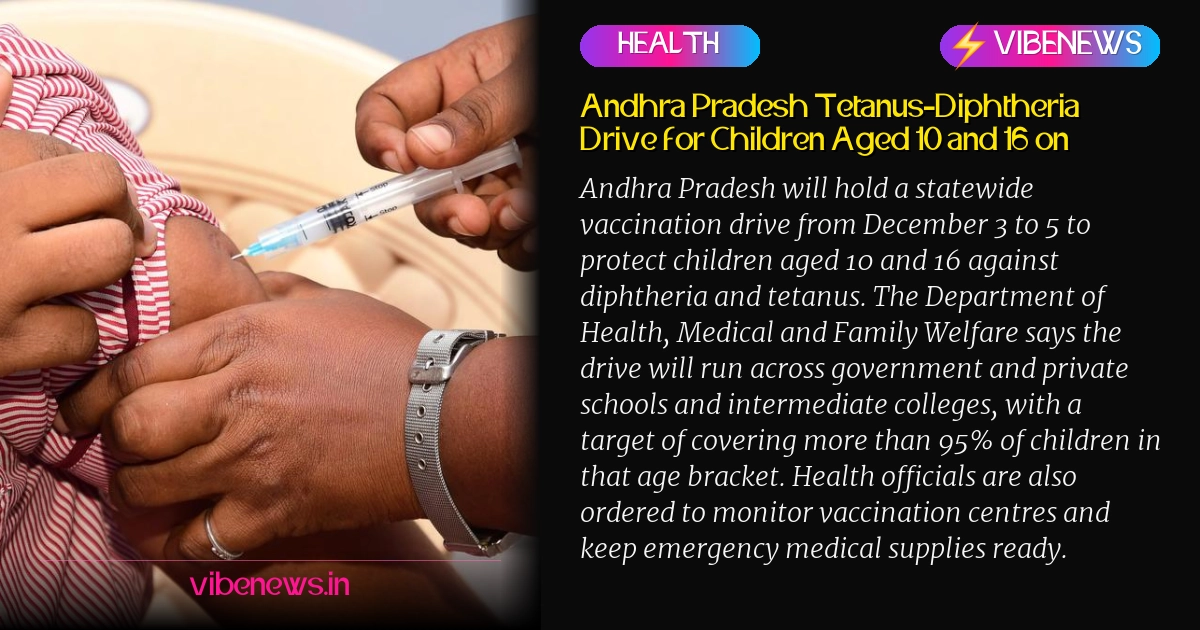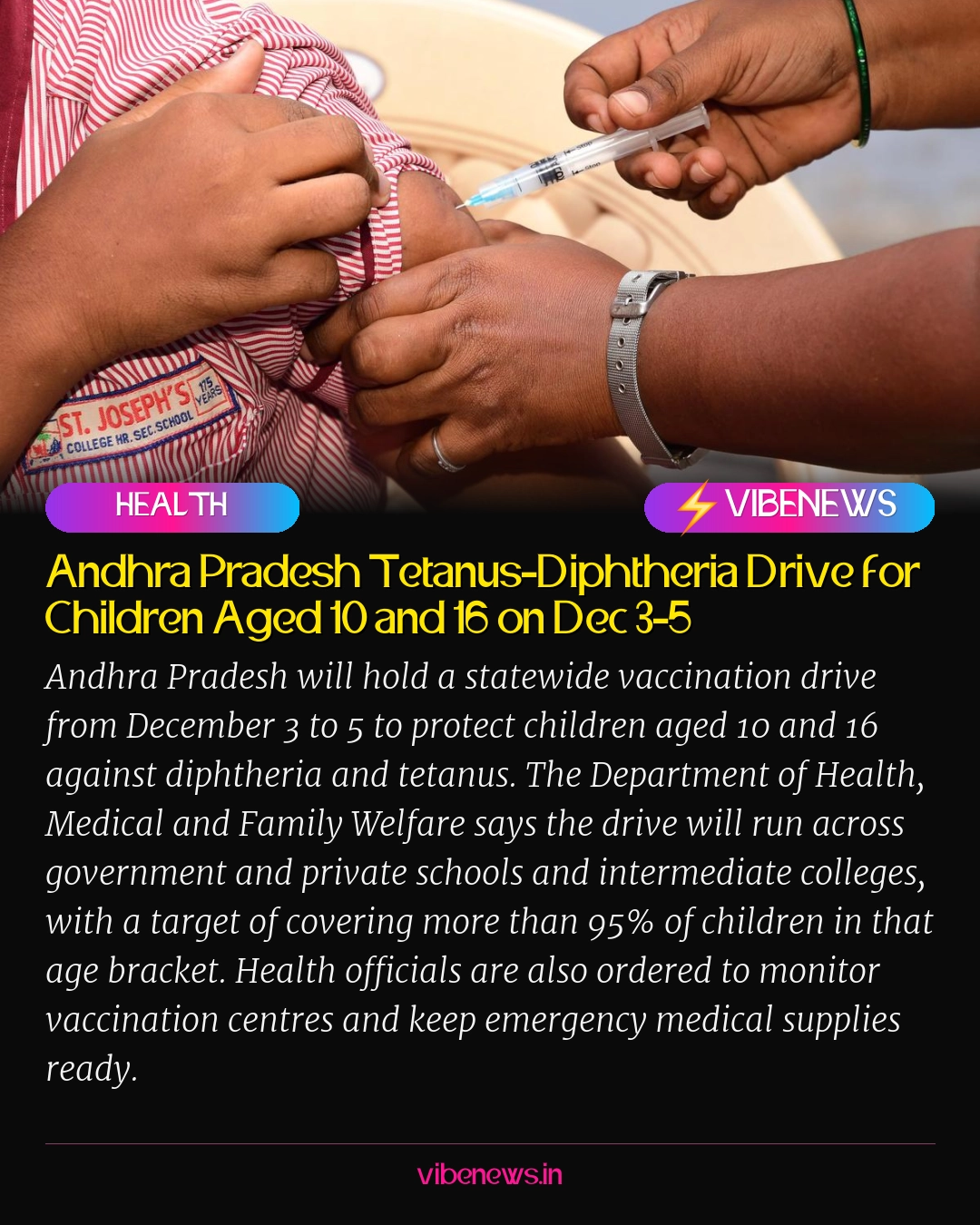
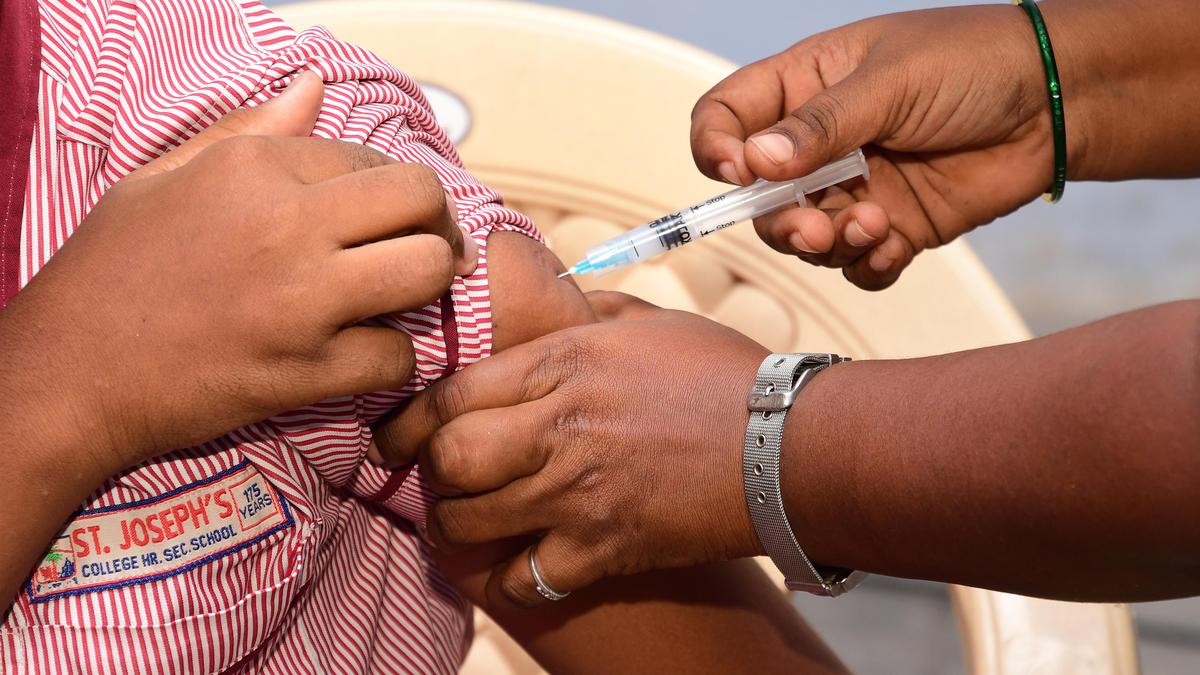
Children across Andhra Pradesh who have completed 10 and 16 years of age will be offered the TD (Tetanus-Diphtheria) vaccine during a statewide drive from December 3 to 5. The Department of Health, Medical and Family Welfare confirmed the schedule in a release, and the state has set a clear target: cover more than 95% of children in that age group.
The drive will take place in government and private schools and intermediate colleges over those three days. Officials are not asking families to wait for a clinic appointment. They are taking the vaccine to where the children already are.
Why the adolescent dose matters
Most children receive Pentavalent vaccines when they are very young as part of the routine immunisation programme. The TD vaccine adds a second layer of protection later in childhood. The release makes the point plainly: protection during adolescence is also essential, because diphtheria and tetanus are infectious diseases that can cause serious illness and even prove fatal.
Both diseases are bacterial, and both are preventable. That is what makes the drive significant for parents. The vaccine is available, the schedule is set, and the gap that remains is simply getting children to the shot.
Protection during adolescence is also essential, as diphtheria and tetanus are infectious diseases that can cause serious illness and even prove fatal.
Which doses go to which children
The age split matters. Children who have completed 10 years of age will receive the TD-10 vaccine. Children who have completed 16 years will receive the TD-16 vaccine. Parents should check which dose their child is eligible for, since the two age groups are being handled under the same drive but are not receiving the same vaccine.
The health department has also asked for the eligible children to be identified in advance, not discovered on the day. That is one reason the planning work started well before December 3.
How the groundwork is being laid
Before the drive begins, ANMs have been directed to prepare a list of government and private schools and intermediate colleges in their jurisdictions. They are also collecting details of children who are eligible for vaccination. Children who do not attend school or college are a specific concern, so ANMs have been asked to identify them separately.
ANMs have also been given the task of arranging the required vaccine doses and medical supplies, along with other preparations needed to run the drive smoothly.
At the state level, Health and Family Welfare Commissioner and National Health Mission Director K.V.N. Chakradhar Babu has directed District Medical and Health Officers, District Immunisation Officers and medical officers working in Primary Health Centres to hold coordination meetings. Those meetings are meant to bring in the departments of Women and Child Welfare, Education, Minority Welfare, Panchayat Raj and Municipal Administration and Urban Development. Schools and colleges cannot be reached without the education machinery, and the drive depends on that cooperation.
Safety checks and monitoring during the drive
Mr. Chakradhar Babu has told district health officials to monitor the drive continuously and inspect vaccination centres. The aim is to confirm that vaccine stocks are adequate and that anaphylaxis kits and other medical supplies are available to treat any emergency that arises.
Those instructions show that the department is planning for reactions as well as coverage. Parents will want to know that trained help and emergency supplies will be on site, and the directive says exactly that.
What families will receive after the shot
Once a child is vaccinated, digital certificates must be issued to all beneficiaries. The same information must also be uploaded to online health portals, the official said. For families, that means a digital record of the dose, which can be useful later for school and health documentation.
Digital recording also helps the department track who has been reached and who has not. That tracking is what allows officials to follow up with children who missed the drive.
What it means for Andhra Pradesh
This is a statewide effort, so every district will be involved. The coordination meetings, the school-based approach and the requirement to identify out-of-school children all point to a drive designed to reach the whole age group, not just the children who are easiest to find.
For parents across the state, the practical message is simple. Check whether your child has completed 10 or 16 years of age, confirm which vaccine applies, and watch for the drive at your child’s school or college between December 3 and 5.
TL;DR
- Statewide TD vaccination drive for children aged 10 and 16 runs December 3 to 5 in Andhra Pradesh.
- The TD vaccine protects against diphtheria and tetanus, which the health department calls potentially life-threatening but preventable.
- TD-10 goes to children who have completed 10 years; TD-16 goes to those who have completed 16 years.
- The drive will run in government and private schools and intermediate colleges, targeting more than 95% of the age group.
- Health officials must monitor centres and ensure anaphylaxis kits and medical supplies are available for emergencies.
- Digital certificates will be issued to all vaccinated children and uploaded to online health portals.