Siddha medical expert Dr Nitya is recommending a simple breakfast of sprouted finger millet and fenugreek for people living with diabetes. She says the dish can help keep blood sugar levels steady, and it may ease the tiredness, weakness and burning in the feet that often come with uncontrolled sugar.
Anyone who has lived with diabetes knows how quickly poor blood sugar control can start to wear down the body. Persistent exhaustion and a heavy sense of weakness are common complaints, and the report notes that foot burning can be especially hard on people at night. The recipe is presented as a food-based way to address those problems, without any oil and with ingredients most Indian kitchens already have.
The ingredients
The base is 100 grams of ragi, also known as finger millet, along with one teaspoon of fenugreek seeds. The recipe also calls for finely chopped carrot, grated cucumber, grated fresh coconut and salt to taste. The ratio matters here. The report specifies one teaspoon of fenugreek for every 100 grams of ragi, so there is no need to scale up the seeds when making a larger batch of the grain.
Soaking and sprouting
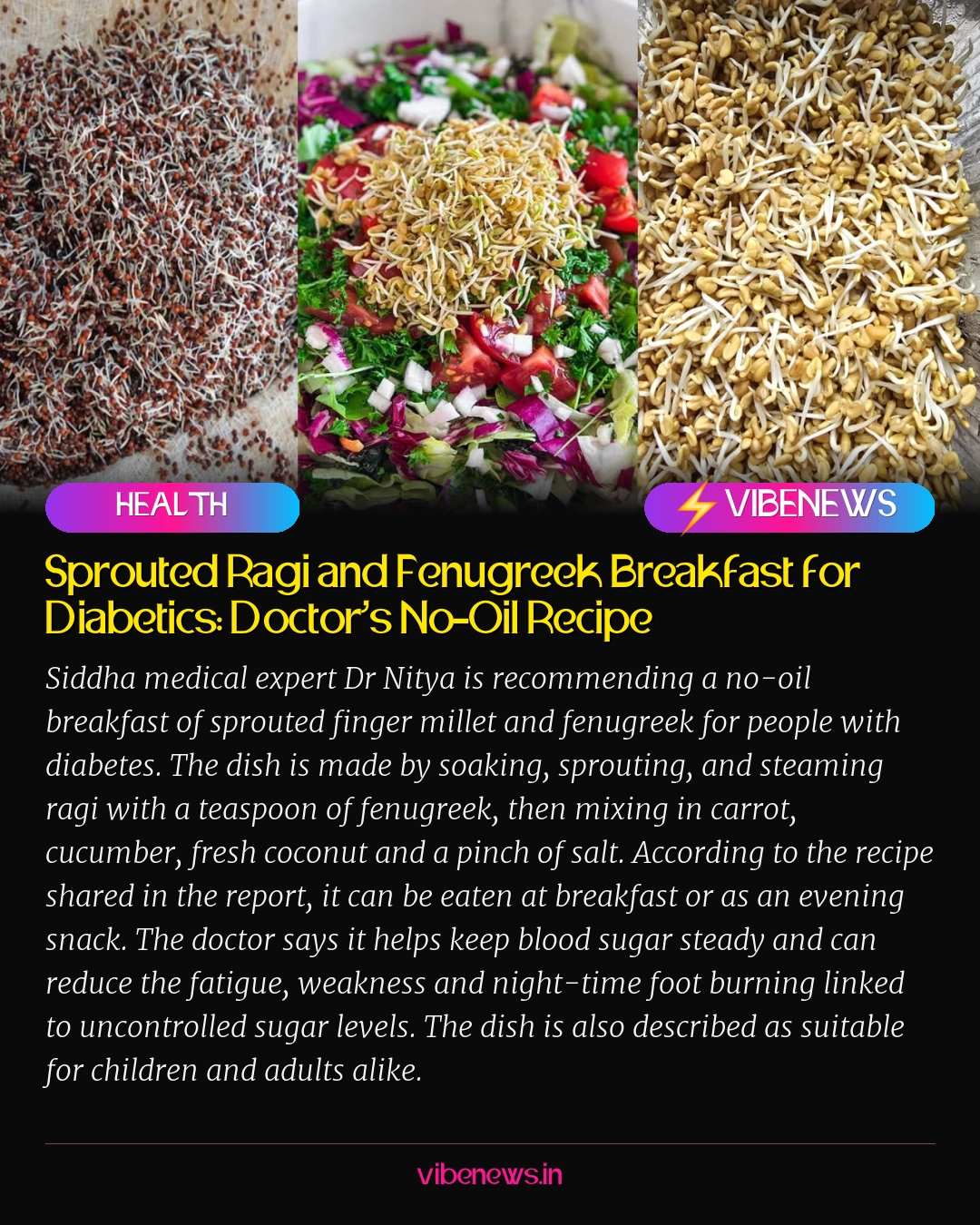
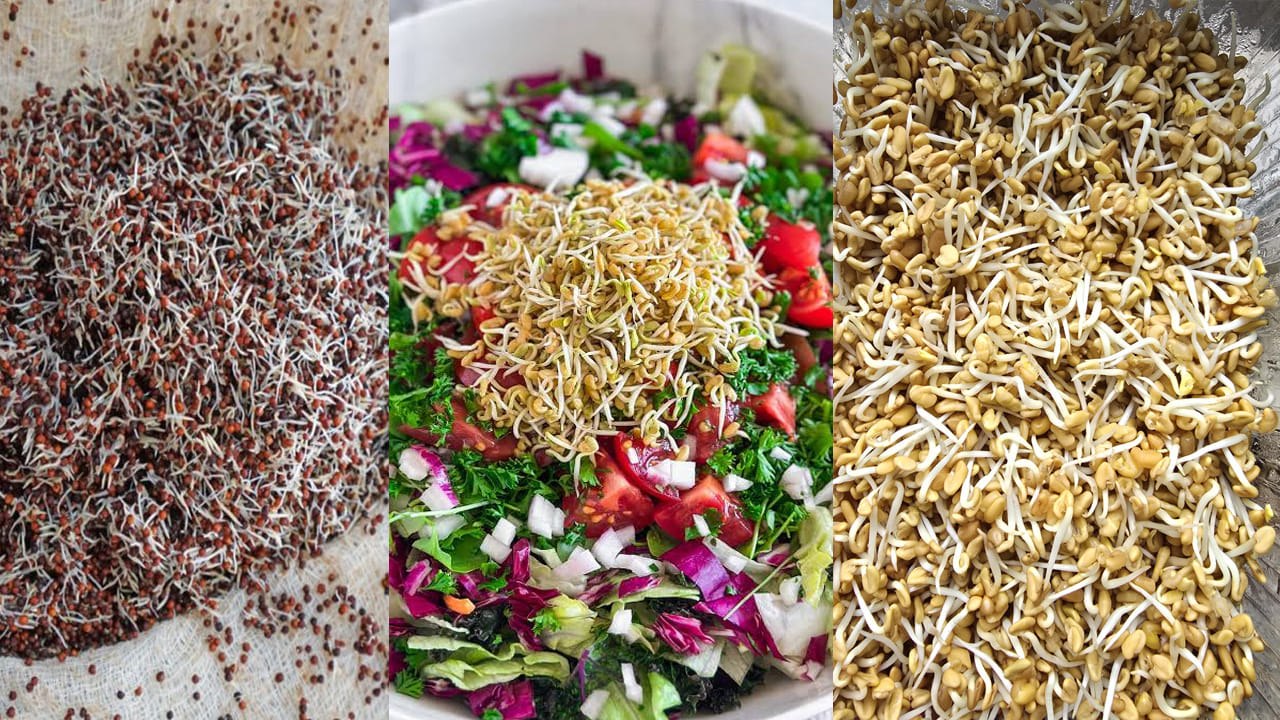
The process starts with washing the ragi thoroughly in clean water. The washed grain goes into a bowl along with the fenugreek, and both are soaked in water for about eight hours. The next morning, the water is drained. The soaked mixture is then tied in a clean, white cotton cloth and hung up so it can sprout. According to the instructions, the grains are ready after roughly 24 to 32 hours.
This step is the heart of the recipe. Sprouting changes the grain, and the doctor’s method depends on getting the timing right. Sprouts that are not fully developed will not give the texture the recipe describes, so it is worth checking them after the full window rather than cutting the wait short.
Steaming, not pressure cooking
The sprouted grains should not be eaten raw. Instead, they go into an idli steamer and are cooked over steam for five to seven minutes. The report is specific on this point: they should not be cooked in a pressure cooker. Once the grains are fully cooked, they should be left to cool. A small pinch of salt is then mixed in.
Next, the carrot, cucumber and grated fresh coconut are added. These are there for flavour and nutrition, and the dish is meant to be prepared without any oil at any stage. That is one of the features the report highlights, since many traditional breakfasts rely on generous amounts of oil.
What the doctor says it does
Dr Nitya’s recommendation rests on three main claims. The first is blood sugar control. The report says ragi and fenugreek work together to keep glucose levels stable. The second is energy. Ragi is described as rich in calcium and iron, which the report links to preventing anaemia and fighting the kind of fatigue that leaves people drained through the day. The third is relief from foot problems. The dish is said to be effective in reducing the burning sensation and numbness in the feet that diabetic patients often feel at night.
Ragi and fenugreek together work well to keep blood glucose levels steady, while the iron and calcium in ragi help fight fatigue.
It is worth being clear about what the report does and does not establish. It presents these benefits as the doctor’s recommendation. It does not include clinical trial results, patient numbers or comparisons with other diets. Readers managing diabetes should treat the recipe as a dietary suggestion to discuss with their own doctor, especially if they take medication that affects blood sugar.
Who can eat it
The report says this breakfast is suitable for people of all ages, from young children to older adults. For kids, the recipe suggests adding a few pomegranate seeds or small apple pieces to make it more appealing. Those additions are presented as optional extras for taste and variety, and they do not change the core preparation.
Why the recipe stands out
What makes this recipe interesting is how little it asks for. There is no frying, no oil and no complicated equipment beyond a steamer, a cotton cloth and a bowl. The sprouting stage takes time, but most of that time is passive. Most of the active work is washing, draining and mixing. For someone trying to change their breakfast habits, that low barrier is likely the main appeal.
The report also shows how the dish can fit into a daily routine. It can be eaten in the morning as a regular breakfast or in the evening as a snack. That flexibility makes it easier to build into a week of meals than a dish that works only on certain occasions.
What to keep in mind
The recipe calls for soaking the grain overnight, draining it the next morning, and then waiting another day for sprouting. Anyone planning to make it should allow for that schedule. Measurements are given only for the ragi and fenugreek, so the vegetables and coconut are added according to taste. The report does not specify exact amounts for them, which means the final balance will depend on the cook.
For people with diabetes, the most useful takeaway may be the emphasis on steady blood sugar and avoiding the fatigue and foot discomfort that can build up when glucose levels run high. Diet alone is rarely the full answer for diabetes care, but a simple, oil-free breakfast with a clear method is an easy idea to try and to discuss with a doctor.
TL;DR
- Siddha expert Dr Nitya recommends sprouted finger millet and fenugreek breakfast for people with diabetes.
- The recipe uses 100 grams of ragi and one teaspoon of fenugreek, soaked about eight hours before sprouting.
- Sprouts take roughly 24 to 32 hours and must be steamed for five to seven minutes, not pressure cooked.
- No oil is used; the dish can be eaten as breakfast or an evening snack.
- The doctor says it helps steady blood sugar, reduce fatigue, and ease night-time foot burning.
- Children can have it with pomegranate seeds or apple pieces added.