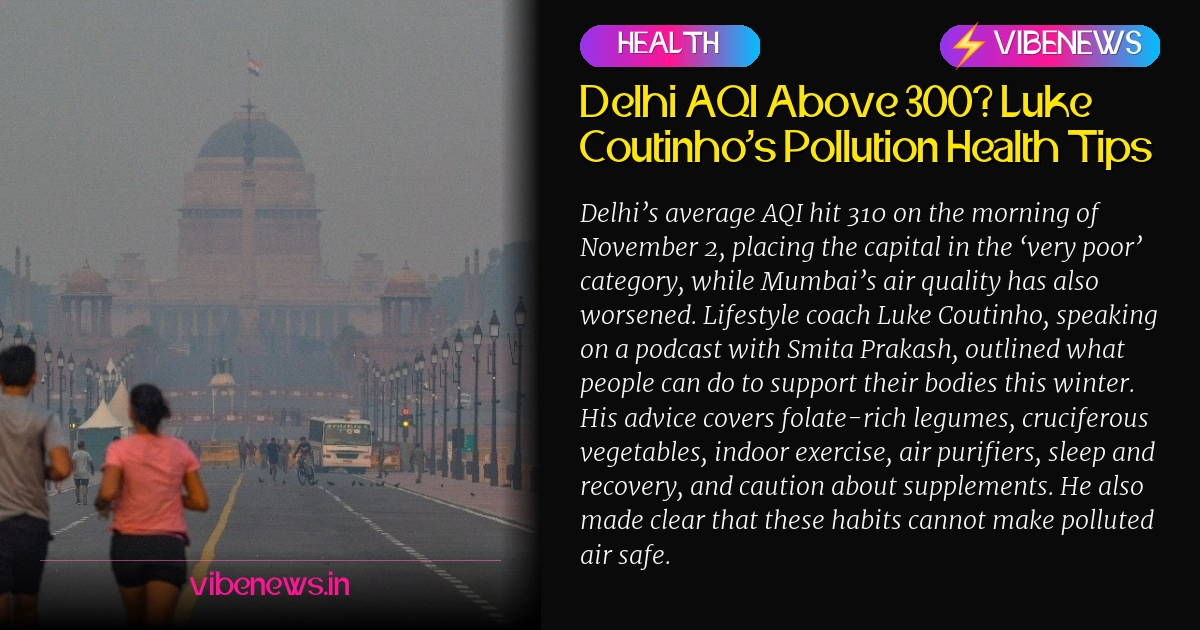
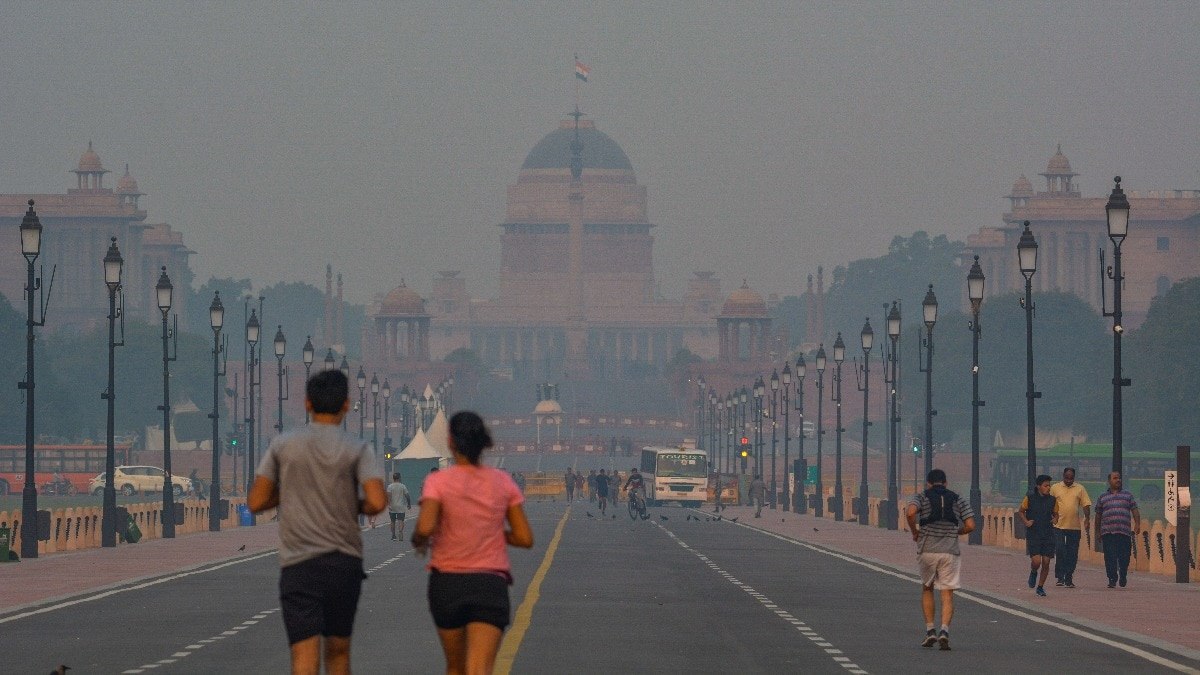
Lifestyle coach Luke Coutinho says Indians facing this winter’s pollution need to make their bodies "more bulletproof" after Delhi’s average AQI reached 310 at 8.05 am on November 2, placing the capital in the "very poor" category.
For many Delhi residents, checking the AQI first thing in the morning has become as routine as checking the temperature. The readings are hard to ignore, and the air is not getting easier to breathe as the season advances.
Mumbai is facing its own problem. Pollution levels there briefly went above Delhi’s, and the Bombay High Court sharply criticised the response of civic authorities. The city’s air is now part of the same national conversation about how people protect themselves while they wait for conditions to improve.
Coutinho, a holistic lifestyle coach and co-founder of You Care Lifestyle, spoke about pollution season on a podcast hosted by Smita Prakash. He framed the problem as one that many people cannot escape.
"Many people cannot leave Delhi and Mumbai. So, we have to just make our bodies more bulletproof," he said.
His advice begins with everyday food choices, including what is already in the kitchen.
Start with dal and legumes. Coutinho recommended legumes, lentils and beans for their folate content, which he linked to DNA maintenance. He did not suggest chasing an expensive pollution-season product. His broader point was to build meals around affordable foods that support the body.
Add vegetables every day. He suggested a daily serving of cruciferous vegetables such as cabbage, cauliflower, radish or broccoli, cooked or steamed. Cooked tomatoes made his list because of their lycopene content. He also urged people to eat colourful vegetables for variety and gut health. On the other side of the plate, he advised limiting processed and junk food, which he said adds to an already inflammatory burden.
Rethink the outdoor run. This is where his advice becomes most direct. Coutinho pointed out that exercising harder means breathing more heavily, which means drawing in more polluted air. At this time of year, he said, "going out would be worse." His recommendation was to stay active indoors and practise breathwork indoors.
He also suggested that people consider buying an air purifier, comparing it to how essential phones have become in daily life. Most people spend a large part of the day at home, and he said that time matters. "At least that seven, eight, nine, 10 hours in a day that you’re at home, your lungs are getting new oxygen, clean oxygen and stuff like that," he said.
One clarification matters here. Air purifiers filter pollutants from indoor air. They do not produce oxygen. The benefit is cleaner air indoors, not a supply of new oxygen.
Sleep and recovery count as much as diet. Coutinho’s focus was on improving sleep quality rather than simply chasing a fixed number of hours. He returned the conversation to rest, recovery and feeling relaxed. "The only goal I have during pollution months is how do I enable my body to repair?" he said.
Be careful with supplements. Coutinho advised addressing vitamin D3 and B12 deficiencies when they are present. He stressed that supplementation should respond to an actual need rather than a general sense of worry. He also cautioned smokers against taking beta-carotene supplements. For anyone tempted to buy a shelf full of pills to fight pollution, his message was to check first.
What this means for you. The core takeaway is that everyday habits deserve attention, but they do not replace reducing exposure. Dal, sleep and indoor workouts can support your health. They cannot turn polluted air into safe air. Limit time outdoors when the numbers are high, keep indoor air as clean as you can, and treat the body’s repair as a daily priority while the pollution lasts.
TL;DR
- Delhi’s average AQI hit 310 at 8.05 am on November 2, placing the capital in the ‘very poor’ category.
- Mumbai’s pollution briefly exceeded Delhi’s, and the Bombay High Court sharply criticised civic authorities’ response.
- Luke Coutinho advises eating legumes for folate and daily cruciferous vegetables such as broccoli, cabbage and cauliflower.
- Coutinho says exercising outdoors in bad air means inhaling more pollution, so staying active and doing breathwork indoors is better.
- Air purifiers filter indoor pollutants but do not produce oxygen, according to the same advice.
- Supplements like vitamin D3 and B12 should only be taken when a real deficiency exists, and smokers should avoid beta-carotene.