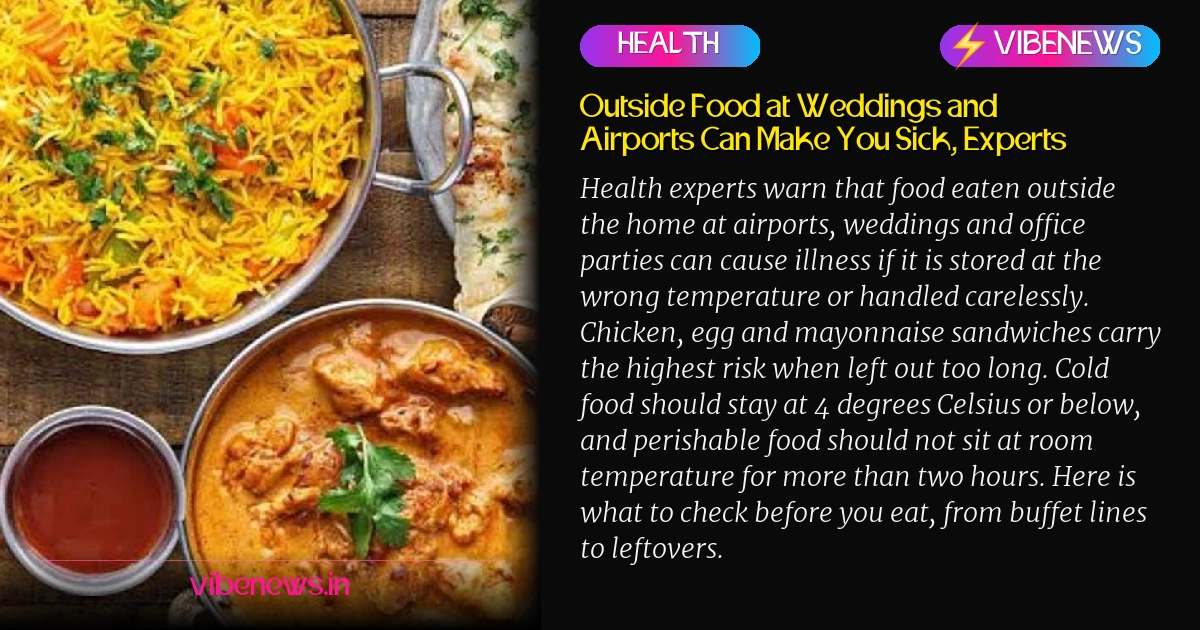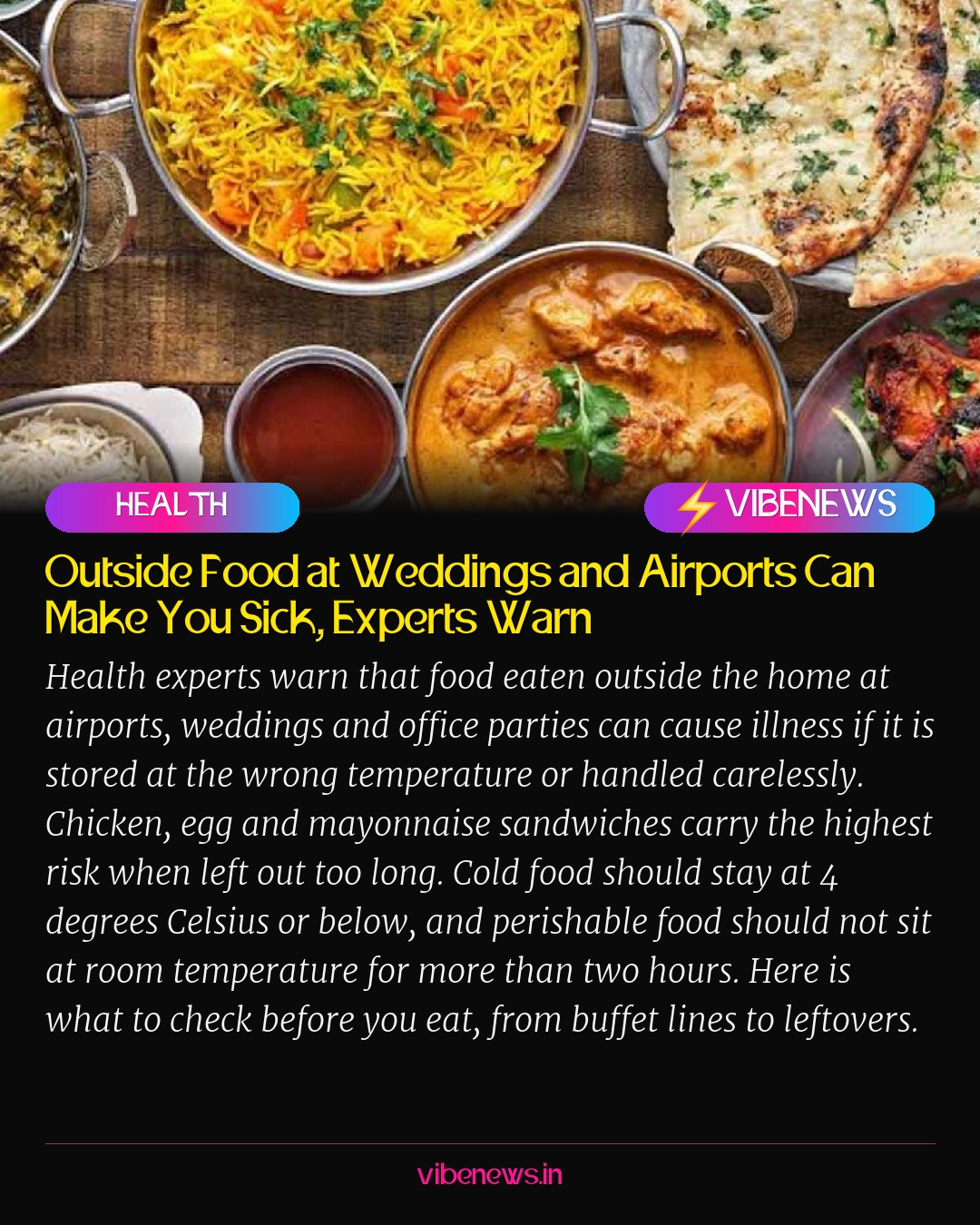

Health experts are warning that food eaten outside the home, whether at airports, wedding feasts or office parties, can cause illness when it is stored at the wrong temperature or handled carelessly.
The biggest danger comes from sandwiches and dishes made with chicken, eggs and mayonnaise. When these foods are not kept at the right temperature, harmful bacteria can multiply quickly. Cold food should stay at 4 degrees Celsius or below. Perishable food should not sit at room temperature for more than two hours. If the surrounding temperature climbs above 32 degrees Celsius, that window shrinks to one hour.
Buffets hide the worst of it
Wedding buffets deserve extra caution. Experts advise skipping kheer and other milk-based puddings that have been left out for a long time. They also advise avoiding raw salads from unfamiliar places and fruit that was cut in advance.
Dirty serving spoons, unclean containers and repeated hand contact with food can contaminate it as well. Contaminated food does not always look or smell wrong, which is the uncomfortable part. Before filling a plate, check every dish on the buffet line. Then choose items that include vegetables and protein.
Office parties and the sodium problem
Office gatherings bring their own trap. Pakodas, spring rolls and fried chicken are fine now and then, but experts say they should not become a habit. Sausages, salami and heavily salted chips push up sodium intake quickly.
The World Health Organization recommends that adults consume less than 2,000 milligrams of sodium a day. A few party snacks can cover a large share of that limit, which is why experts want people to pace themselves. Before going back for a second helping, ask whether you are actually hungry.
Travel tips for airports and long journeys
When buying food at airports or while on the road, choose trusted vendors and pick the freshest options available. Insulated bags with ice packs help keep cold food at a safe temperature during travel.
Fried snacks and sugary drinks should be limited. Water or drinks without added sugar are the better choice. Staying hydrated matters on long journeys, and the advice treats it as part of a safe travel routine.
Mayonnaise is not automatically dangerous
Not every mayonnaise-based item is a health hazard. What matters is how the perishable ingredients, such as eggs and meat, were prepared and stored. A mayonnaise dish made and kept properly is not the same as one left in the sun at a crowded event.
Cream-based sweets are also considered safe when they are kept at the right temperature. Leftovers should be cooled and stored within two hours. When you eat them later, reheat them until they are fully hot.
Who faces the greatest danger
Food-borne illness does not hit everyone equally. Pregnant women, older adults, children and people with weakened immunity face more severe effects. Anyone in these groups should be especially careful about where their food comes from and how it has been stored.
Experts also say that uncertainty is a warning sign. If you are not sure whether food was stored safely, the advice is clear: do not eat it.
If there is any doubt about whether food was stored safely, do not eat it.
Balance, not bans
Experts stress that the goal is not to ban outside food altogether. Freshness, hygiene, safe handling and portion size matter more than avoiding every plate prepared by someone else.
Skipping meals before a celebration is not the answer, either. Nor is it wise to adopt harsh diet rules or rapid weight-loss methods after overeating at a party. Daily sugar and salt intake should also stay under control, long after the celebration ends.
The message is practical. Food that was stored at the wrong temperature, comes from an unknown source, or is frequently fried, salty or sugary deserves the closest look before it reaches your plate.
TL;DR
- Perishable food should not sit at room temperature for more than two hours, and it must stay at 4 degrees Celsius or below if it is meant to be cold.
- Chicken, egg and mayonnaise sandwiches carry high risk when stored at the wrong temperature, experts warn.
- Buffet dishes can look and smell normal even when contaminated by dirty utensils or repeated hand contact.
- Adults should consume less than 2,000 milligrams of sodium daily, according to the World Health Organization.
- Pregnant women, older adults, children and people with weak immunity face the most severe effects of food-borne illness.
- Experts say the focus should be on freshness, hygiene and portion size rather than banning outside food completely.