Red rice contains more fiber, more minerals and a lower glycemic index than polished white rice, and those differences matter most for people trying to keep blood sugar steady. A health feature published on November 11, 2026, lays out the comparison in plain numbers.
What polishing takes away
Most people eat white rice without thinking twice about it. The grain is milled and polished until it looks clean and uniform, but that process strips away the fibrous outer layers and much of the nutrition inside them. What remains is mostly starch.
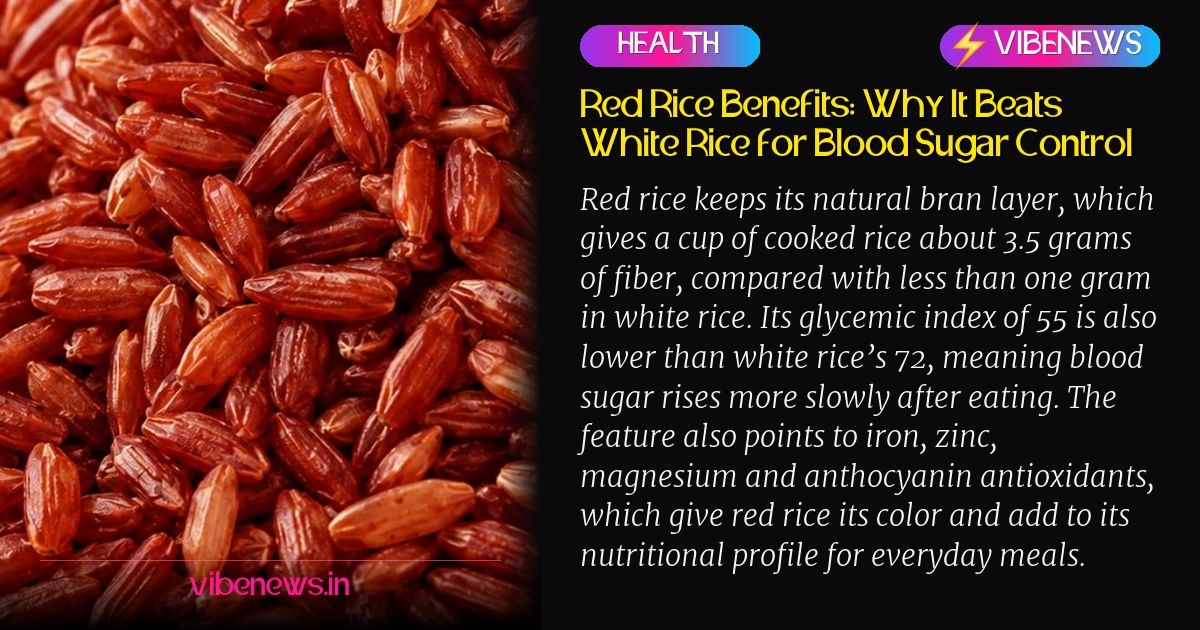
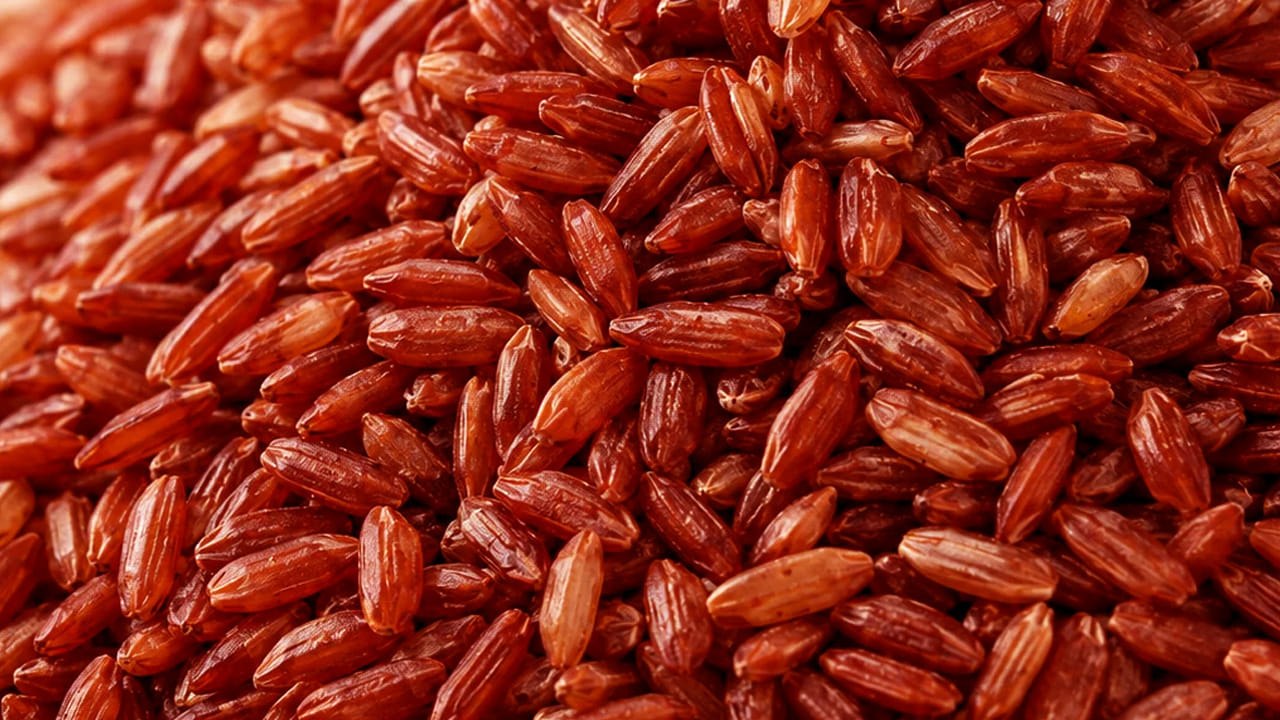
Red rice takes a different path. It keeps its natural bran layer, so it reaches the table much closer to the form it had when it was harvested. That reddish bran carries B vitamins and a significant amount of fiber, which is why the feature treats it as a fuller grain rather than a simple swap.
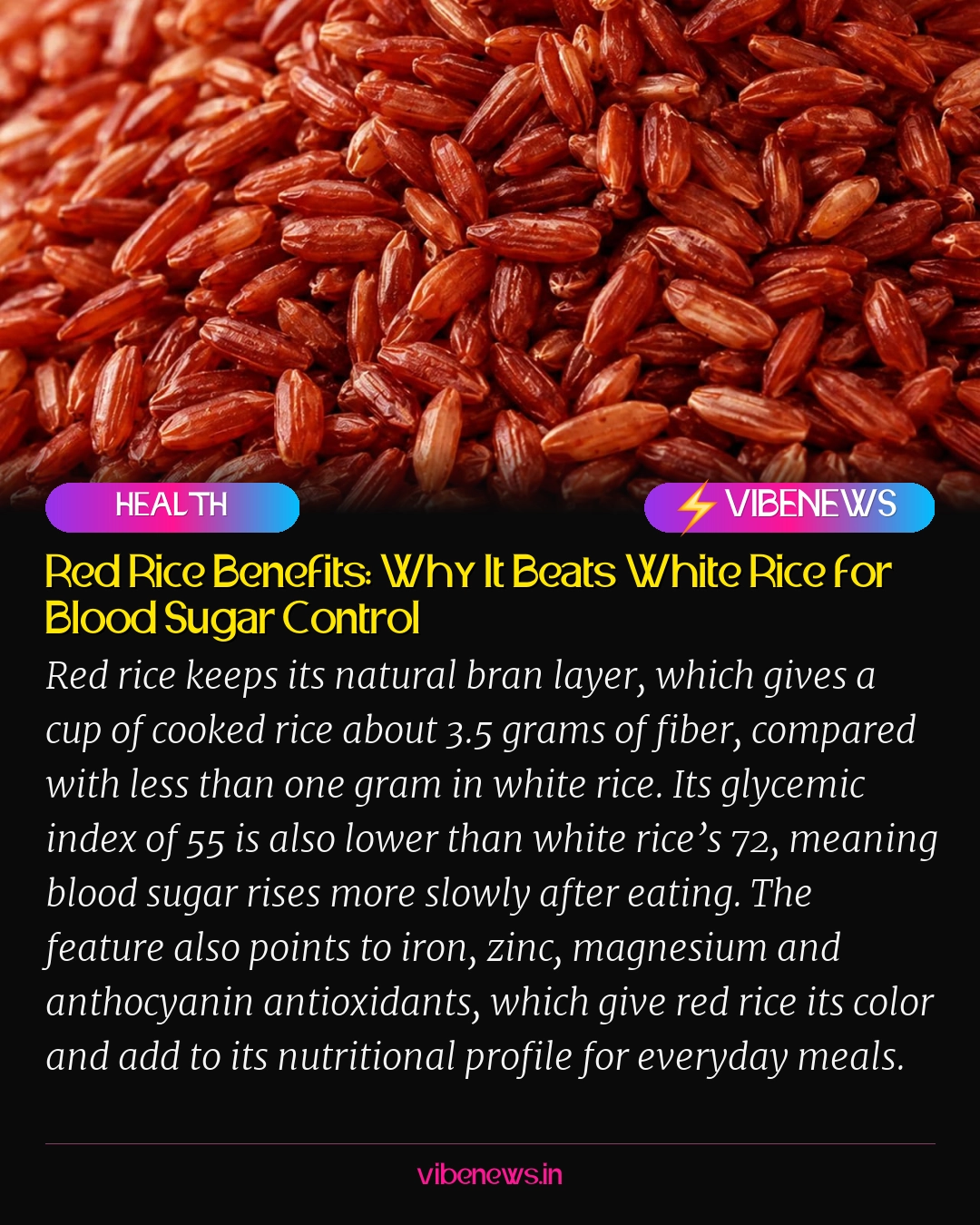
The gap shows up clearly in the per-cup figures. A cup of cooked white rice provides about 45 grams of carbohydrates but less than one gram of fiber. A cup of cooked red rice offers around 50 grams of carbohydrates and 3.5 grams of fiber. That works out to three to four times the fiber of white rice.
Minerals and antioxidants
Fiber is only part of the story. The feature says red rice is also a good source of iron, zinc, manganese, selenium, magnesium and phosphorus. These minerals support a range of processes the body depends on every day.
Red rice also contains more antioxidants than white rice. The pigment behind its color, anthocyanin, is described as playing a key role in helping guard against certain cancers, lowering harmful LDL cholesterol and protecting against heart disease. Those points are presented as the benefits highlighted in the feature, and they reflect the broader health claims made for this group of antioxidants rather than a clinical trial result reported in the piece.
A cup of red rice gives 3.5 grams of fiber, while a cup of white rice gives less than one gram.
Why blood sugar is the central point
For people living with diabetes, the feature makes its strongest case around the glycemic index. Red rice scores 55, while white rice scores 72. In practical terms, the body breaks down red rice more slowly, so blood sugar climbs more gradually after a meal.
White rice, by contrast, releases sugar into the bloodstream quickly. The feature says that makes it a poor choice for people with diabetes. Red rice is described as an excellent food option for them, a framing that puts it at the center of the article’s argument.
Gradual sugar release is also why the choice matters beyond a single meal. Steadier glucose levels after eating are the goal most people managing blood sugar are working toward, and the feature argues red rice helps move in that direction.
Feeling full for longer
Fiber does more than slow digestion. According to the feature, the high fiber content in red rice creates a sense of fullness soon after eating. That can make it easier to stop before overeating and to go longer between meals without reaching for a snack.
The article links that feeling of fullness to weight management. It says red rice helps people control how much they eat, which in turn supports weight loss. For readers who have struggled with portion control at dinner, that is the part most likely to change a daily habit.
A food older generations already knew
The feature also reminds readers that red rice was once a regular part of the diet. Earlier generations ate it often, and the article suggests that modern eating habits pushed it off many plates. Its health benefits have not disappeared with that shift, the feature argues. They are simply easy to overlook when polished white rice is the default.
Switching grains is not complicated. Red rice cooks and serves much like white rice, so it can replace the usual bowl without rebuilding a meal around it. That makes it one of the more realistic dietary changes a reader can make without giving up familiar food.
What readers should keep in mind
The feature presents red rice as a healthier alternative, not a cure. People who manage diabetes, heart conditions or weight concerns should discuss dietary changes with their doctor, especially when medication is involved. Individual plans vary, and what works well for one person may need adjusting for another.
Still, the core comparison is hard to ignore. Red rice keeps the fiber, minerals and antioxidants that polishing removes, and it brings a lower glycemic index to the bowl. For anyone looking for a natural way to rethink their rice, the numbers make the case clearly.
TL;DR
- Red rice has about 3.5 grams of fiber per cup, while white rice has less than one gram.
- Red rice has a glycemic index of 55, compared with 72 for white rice, so blood sugar rises more slowly after eating.
- Polishing white rice removes fiber and nutrients, leaving mostly carbohydrates behind.
- Red rice is a good source of iron, zinc, magnesium, manganese, selenium and phosphorus.
- Its red bran contains anthocyanin antioxidants, which the feature links to heart health and cholesterol control.
- High fiber in red rice helps people feel full longer, which can support weight management.