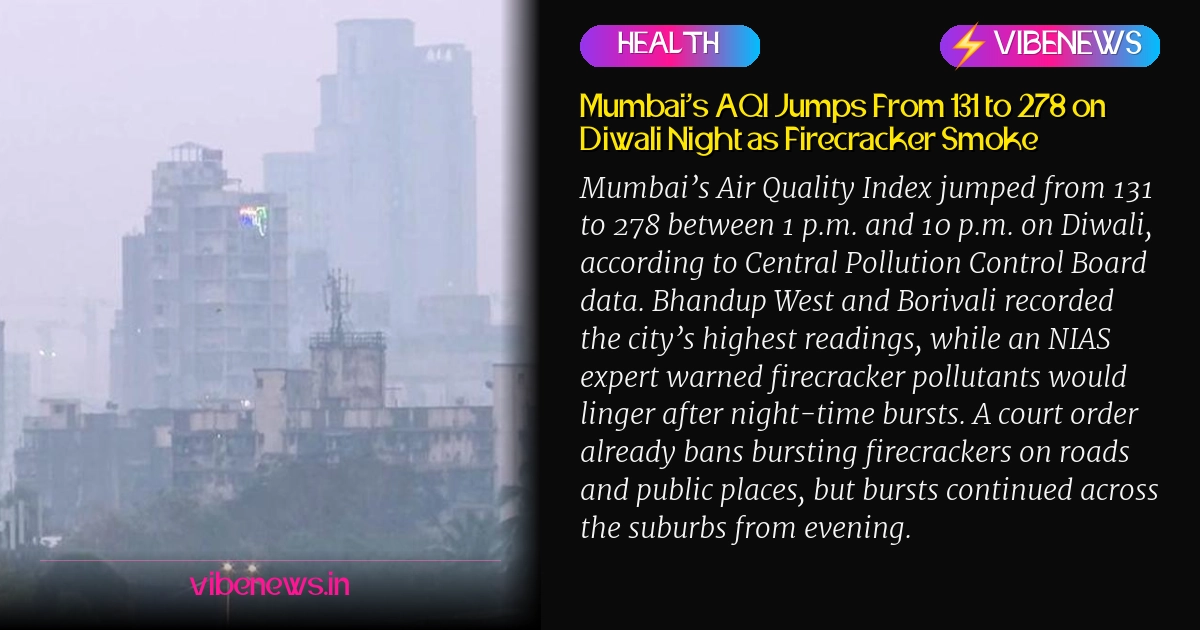
Mumbai’s Air Quality Index rose from 131 to 278 on Diwali, moving from the ‘moderate’ band at 1 p.m. into the ‘poor’ category by 10 p.m., according to the Central Pollution Control Board dashboard and the Air Quality Index website.
The jump happened within nine hours, and it hit almost every station the dashboard tracked. The readings covered Bhandup West, Borivali, Govandi, Chembur, Chandivali, Bandra East, BKC and Bandra West. Bhandup West recorded 276 and Borivali 269, making them the two highest numbers in the city’s evening snapshot.
The afternoon numbers looked better, and that is the warning
The 1 p.m. reading of 131 was actually lower than the Diwali afternoon figures from earlier years. The dashboard shows 194 the previous year, 181 in 2024 and 149 in 2023. On paper, the early afternoon air looked cleaner than it had in recent Diwalis. The real damage came after dark, when firecrackers went off across the city and the air stopped clearing.
That gap between a relatively calm afternoon and a sharp evening rise is what worried observers. Once the bursting began in earnest, the pollution had nowhere to go.
Ten o’clock, station by station
By 10 p.m., the readings lined up in a tight cluster. Bhandup West stood at 276 and Borivali at 269. Govandi reached 265, Chembur 258 and Chandivali 257. Bandra East, BKC and Bandra West all sat at 242.
Several other locations, including Bhakti Park in Wadala, Charkop, Chandivali, Dahisar East and Gavdevi, recorded readings in the 200 to 300 band. The dashboard places that range above 200, so these areas also moved into a zone that the index flags as a serious concern. The spread across both the eastern and western suburbs shows the problem was not confined to one pocket of the city.
Firecrackers burst from the evening across Mumbai, the eastern suburbs and the western suburbs. A portion of those bursts were noisy, smoke-heavy crackers, and that smoke is what the monitors picked up as the night wore on.
What the expert said would happen
Professor Gufran Baig of NIAS had flagged the risk before the night’s readings came in. He pointed to the wind. Winds from the sea increased in speed over 48 hours, and the wind direction changed during the same period. In his explanation, that shift affected how pollutants were held in the air.
He also warned about what fireworks would do once they went off. Pollutants from firecrackers, he said, would remain in the air after bursting at night, and pollution could rise. The reporting on the night notes that his prediction came true.
Pollutants from firecrackers would remain in the air after bursting at night and pollution could rise.
That warning is a reminder that a bad air night does not end when the last firecracker goes off. Smoke and fine particles can hang around, and the readings reflect that lingering load.
A court order that did not stop the bursting
A court order already bans the bursting of firecrackers on roads, streets and places used by the public. The rule exists, and it is clearly written. Yet the evening saw firecrackers going off widely across Mumbai, and the air quality numbers rose in step with that activity.
The ban and the reading tell two sides of the same story. One shows what the law says. The other shows what the sky looked like afterward.
Smog over the city
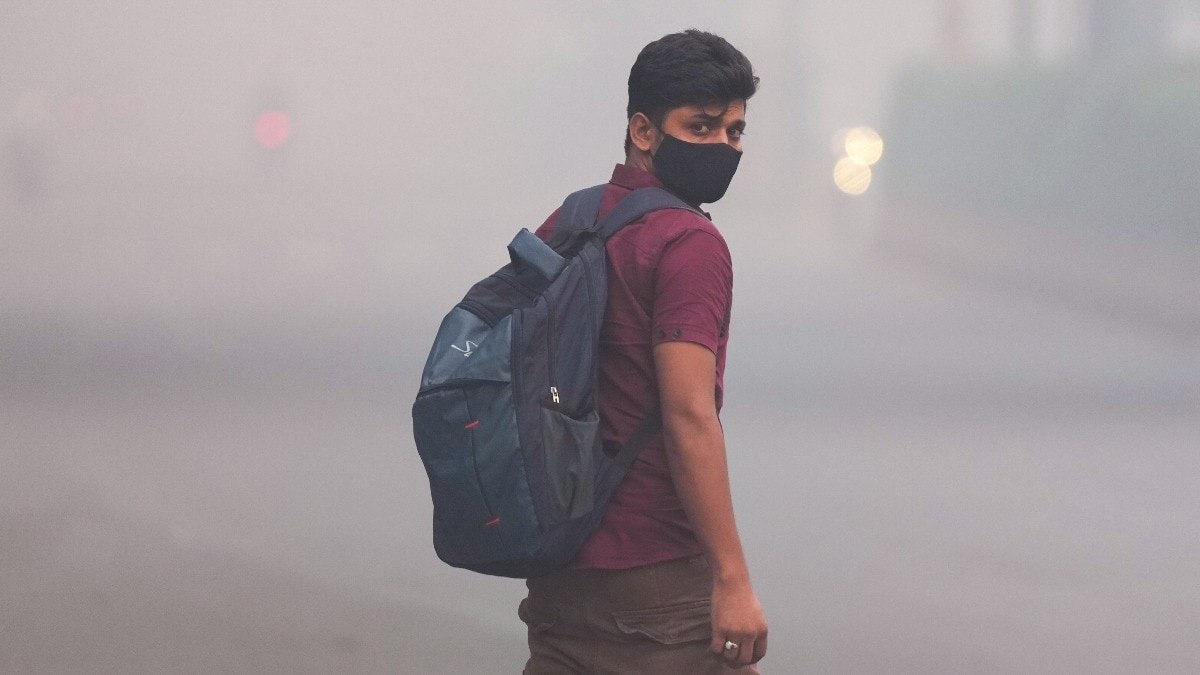
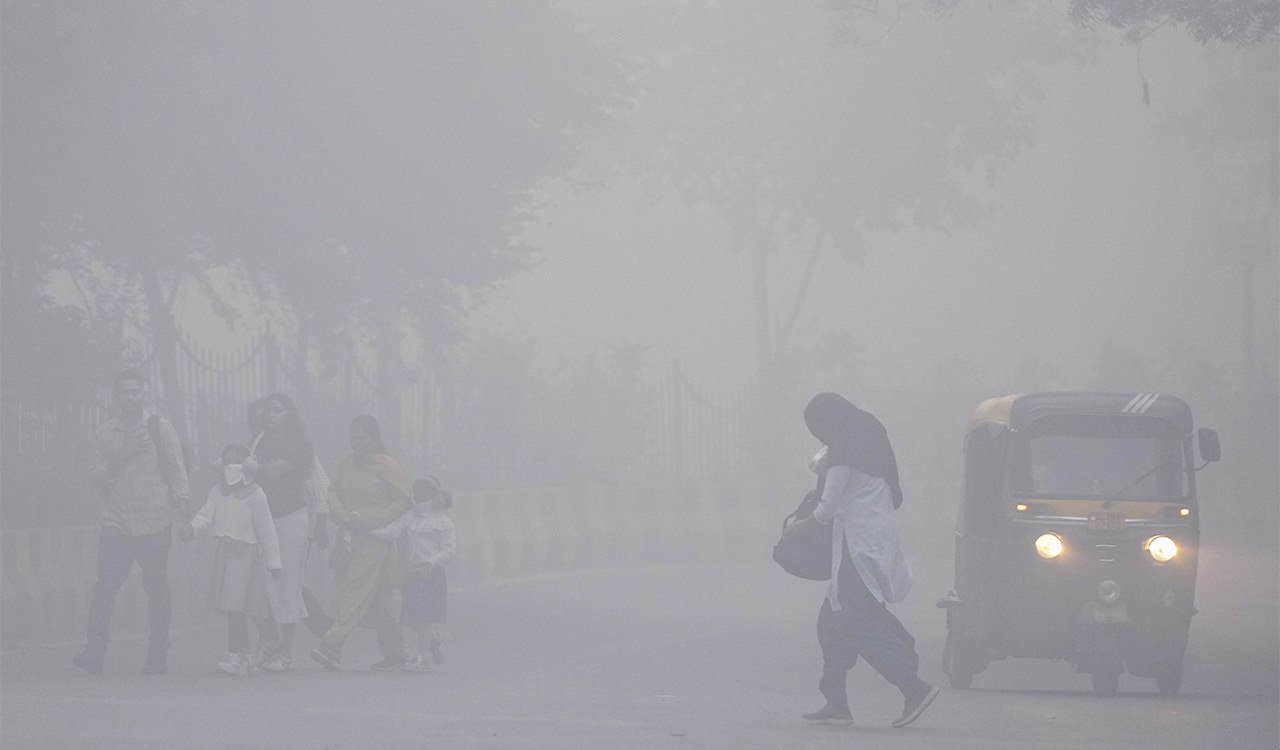
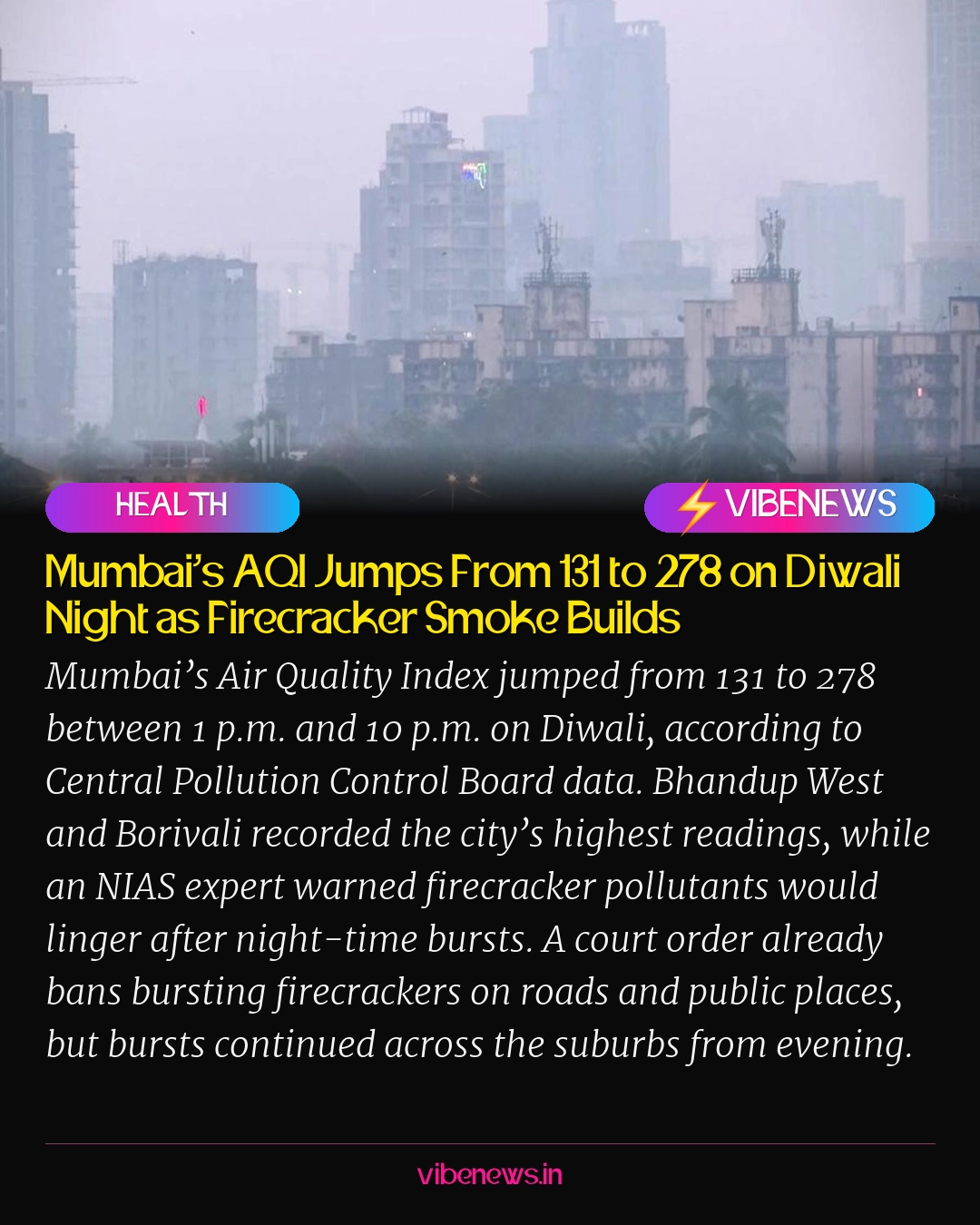
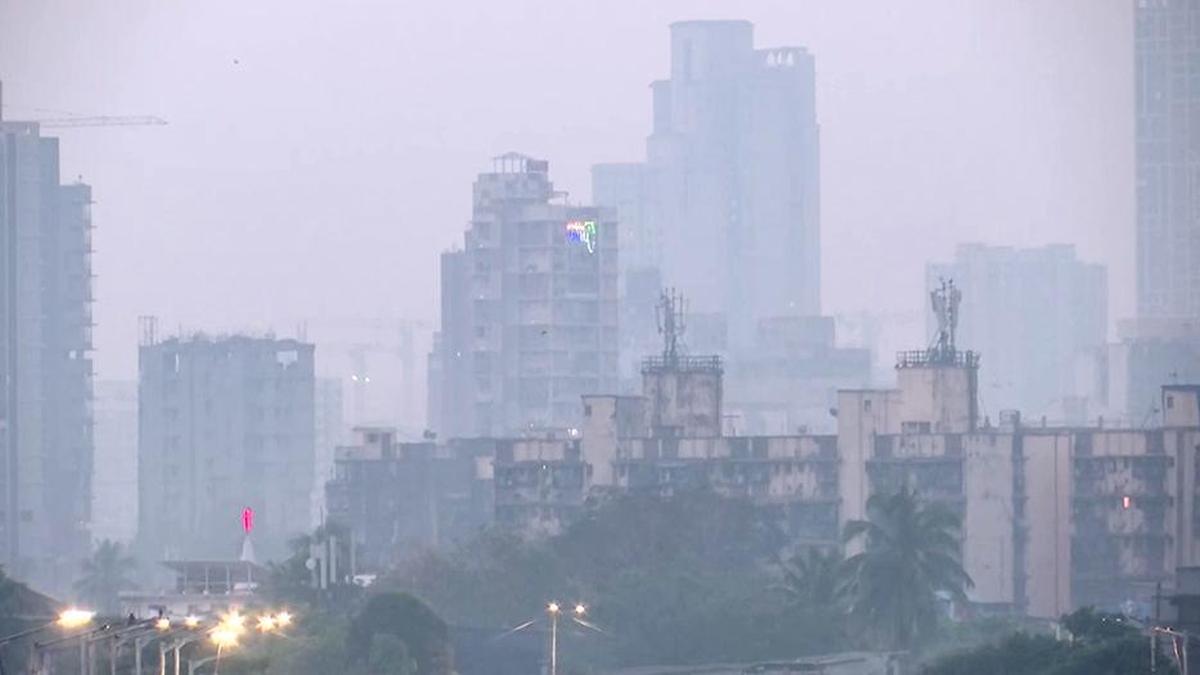
A photograph distributed by ANI showed thick smog engulfing the city amid worsening air quality in Mumbai on November 9, 2026. The image gave readers a visible sense of what the monitors were recording in numbers, though the photo itself does not state a reading.
The Diwali spike arrived against a backdrop of heavy smoke that had already settled over parts of the city. The index did not improve as the night went on, and the evening figures were the highest in the day’s record.
What the data does and does not show
The numbers come from the Central Pollution Control Board dashboard and the Air Quality Index website. They show the readings at specific times and stations, and they show a clear rise between 1 p.m. and 10 p.m. They do not, on their own, explain every health effect residents may feel, and the reporting available does not include hospital data, medical advice or long-term exposure figures.
What the readings do make plain is the speed of the change. A city can move from a moderate reading to a poor one in a single evening, and a firecracker night is enough to drive that move. For residents in the affected suburbs, the air on Diwali night was measurably worse than it had been in the afternoon, and the dashboard numbers confirm it.
Where things go from here
The next readings will show whether the air clears as the wind pattern settles or whether the smoke lingers into the following day. Professor Baig’s account suggests the pollution does not clear immediately once the bursting stops. Residents and authorities will be watching the dashboard closely to see how long the spike lasts.
TL;DR
- Mumbai’s AQI rose from 131 at 1 p.m. to 278 by 10 p.m. on Diwali, moving into the ‘poor’ category.
- Bhandup West recorded 276 and Borivali 269 at 10 p.m., the highest readings in the dashboard list.
- The 1 p.m. Diwali reading was lower than the figures from 194 the previous year, 181 in 2024 and 149 in 2023.
- NIAS professor Gufran Baig said firecracker pollutants would stay in the air after night-time bursts.
- A court order bans bursting firecrackers on roads, streets and public places, but bursts continued from evening.