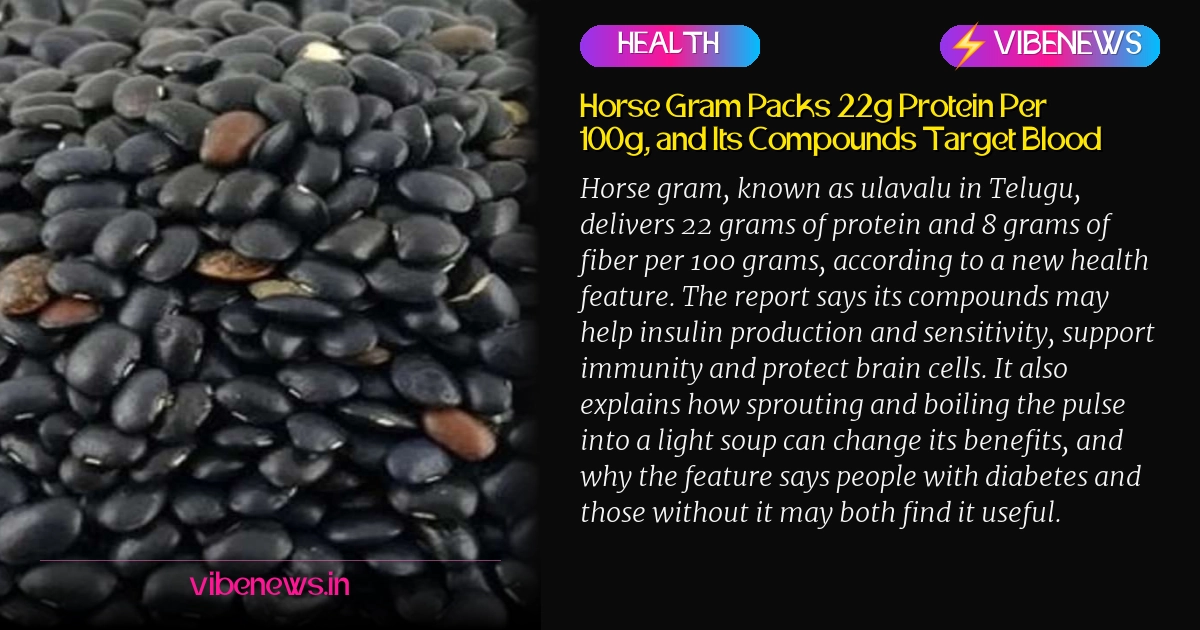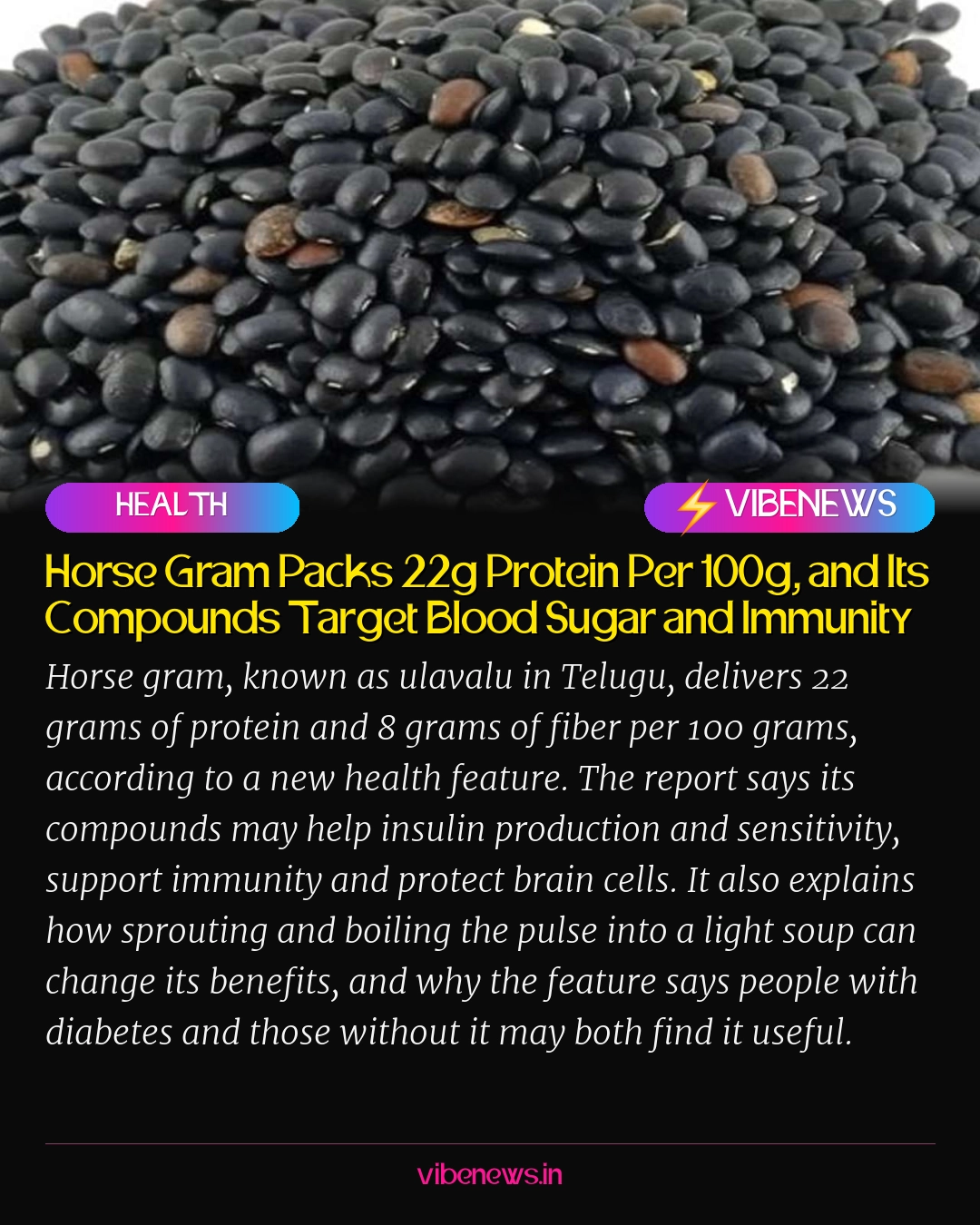
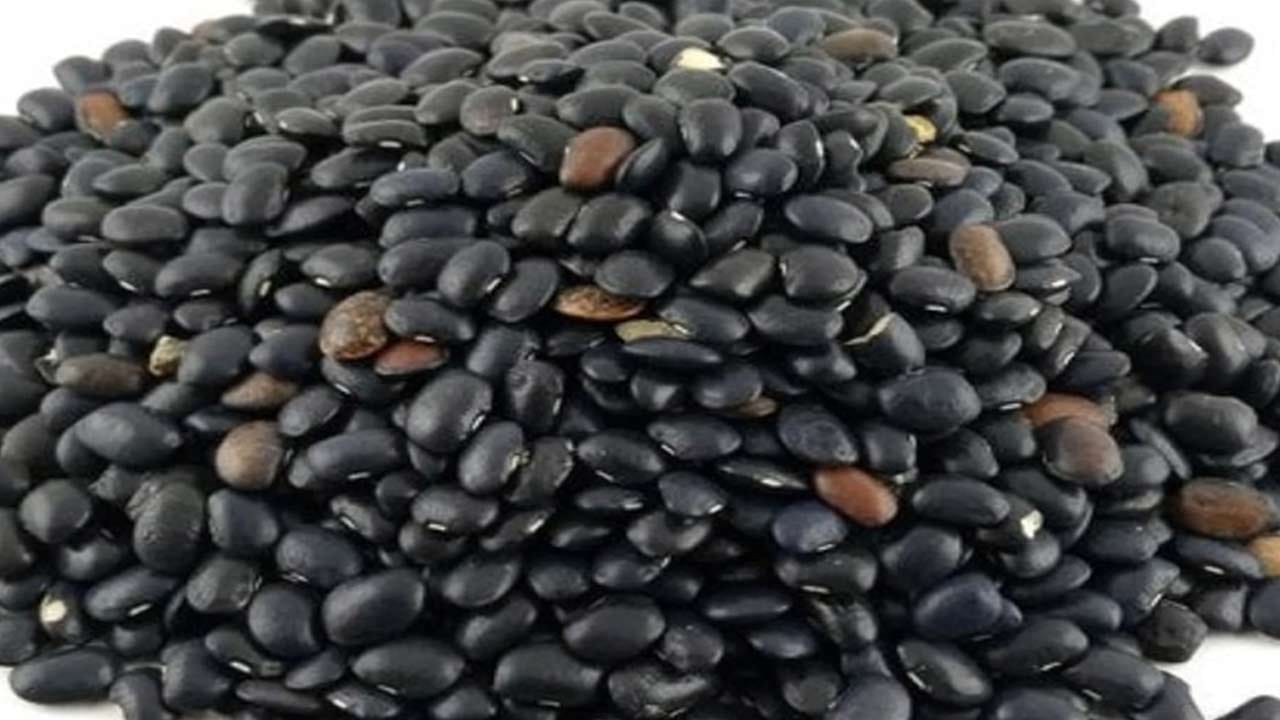
Horse gram, known in Telugu as ulavalu, delivers 22 grams of protein per 100 grams, according to a health feature published on November 9, 2026. The same portion carries 8 grams of fiber and 329 kilocalories of energy, and the report argues that this humble pulse does far more than fill the stomach.
The feature begins with a line that reframes the grain entirely. Horse gram is not just horse feed, it says. It is a powerful food that works remarkably well in controlling diabetes.
Ulavalu is not just a horse’s feed. It is a powerful food that works remarkably well in controlling diabetes.
The protein figure is the one that stands out most. The report says 100 grams of horse gram provides roughly the same protein as 100 grams of goat meat. Beyond protein, the pulse contains 57 grams of carbohydrates and only 0.6 grams of fat per 100 grams, which makes it a dense source of nutrients rather than a light snack.
How the energy claim works
The report links the pulse’s energy to a compound called inulin. After food reaches the gut, bacteria break inulin down and release certain chemicals. Those chemicals stimulate mitochondria, the structures inside cells that produce energy. According to the feature, this cellular-level activation releases more energy than the food’s calories alone would suggest.
That explanation is the basis for the claim that horse gram can boost energy. It is worth reading the claim as the feature presents it. The report describes a biological mechanism, but it does not cite a specific study or clinical trial to back up the strength of the effect.
The diabetes angle
Diabetes is the central concern of the feature. The report says that roughly 25 to 35 percent of people are living with the disease, and it presents horse gram as a practical way to help manage it.
According to the report, a compound called pyroglutaminyl glutamine enters the digestive system and triggers the release of incretins. These hormones stimulate the beta cells in the pancreas, which in turn raise insulin production. Another group of compounds, dolichin A and B, is said to reduce insulin resistance. In simple terms, the feature suggests the body may move blood sugar into tissues more quickly, helping insulin work better.
The feature also points to the carbohydrate content. It says 43 percent of the 57 percent carbohydrates in horse gram is undigested starch. Because the body does not break that starch down into glucose, the report argues, blood sugar levels should not spike after eating it. That detail is why the feature frames horse gram as useful for people who already have diabetes and as a preventive food for those who do not.
Immunity and antioxidants
The immunity claim in the headline rests on the pulse’s antioxidant profile. The report lists beta-sitosterol, stigmasterol, kaempferol and nitric oxide-related compounds as the elements that support the immune system.
The preparation method matters, according to the feature. Sprouting the seeds before eating them is said to strengthen these antioxidant benefits. The report also recommends boiling horse gram and taking it as a soup, which is known in Telugu as charu. Both methods are presented as ways to get more out of the grain, although the feature does not give detailed cooking instructions.
What the report says about the brain
The last section moves from the body to the brain. The feature says a compound called inositol protects brain cells. It links this protection to a lower risk of neurological conditions, including Parkinson’s disease, Alzheimer’s disease and dementia, as well as everyday forgetfulness.
These are significant claims, and the report presents them with confidence. Readers should keep in mind that the feature is a health photo gallery, not a medical review, and that it does not name the researchers or institutions behind its figures.
What readers should take from this
The feature makes a clear case for horse gram as a protein-rich, fiber-heavy food with a range of claimed benefits. The most concrete numbers are the nutritional values per 100 grams, including 22 grams of protein, 8 grams of fiber and 57 grams of carbohydrates. The health claims around diabetes, energy, immunity and brain function are more mechanism-based and less tied to specific studies within the report.
For anyone curious about adding it to their diet, the report’s practical advice is simple. Sprout it, boil it and eat it as a soup. The feature’s broader message is that a grain many people have overlooked may deserve a place on the plate.
TL;DR
- Horse gram delivers 22 grams of protein and 8 grams of fiber per 100 grams, according to the report.
- The feature says 100 grams of horse gram offers protein comparable to 100 grams of goat meat.
- Inulin in the pulse is said to stimulate cellular mitochondria, which produce the body’s energy.
- The report says compounds in horse gram may boost insulin production and improve insulin sensitivity.
- Sprouting and boiling horse gram into soup is recommended to maximize its antioxidant benefits.
- The feature also links the pulse’s inositol to protection against Parkinson’s, Alzheimer’s and dementia.