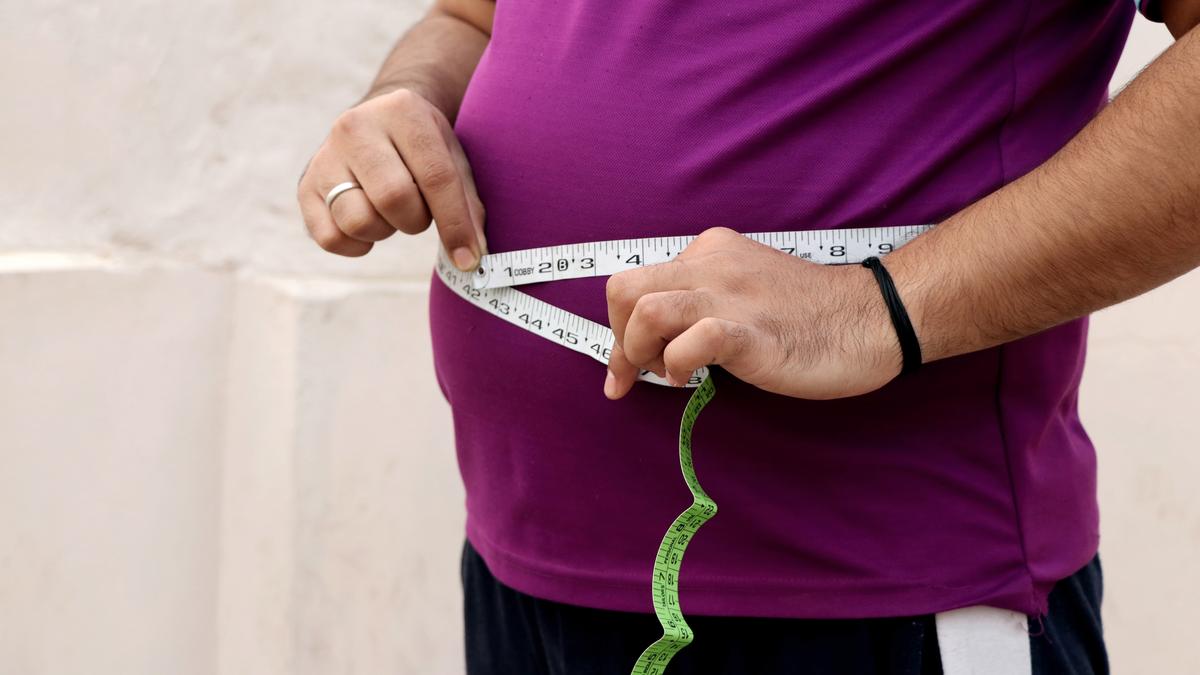
Body mass index, the number most people have been told to watch for decades, may be a poor guide to how healthy someone really is. The measure cannot tell the difference between fat and other kinds of body weight, and that gap is now at the centre of a growing argument about how obesity should be judged.
Where BMI came from
The idea dates back to 1832, when Belgian astronomer and mathematician Adolphe Quetelet set out to find the parameters of what he called the "average man". Analysing height and weight measurements, he noticed that a person’s weight rises roughly in proportion to the square of their height. He expressed that relationship as a ratio of weight to height squared.
Quetelet’s formula was one of several early attempts to measure relative body weight. Researchers also tried simple weight-to-height ratios and weight-to-height-cubed ratios.
In 1972, U.S. physiologist Ancel Keys and his colleagues compared these measures against how much fat the body actually carried. They concluded the Quetelet Index performed best and renamed it the body mass index.
The flaw at the heart of the number
BMI has since become one of the most widely used measures of relative body weight. Its weakness is simple. A high reading could come from greater muscle or bone mass rather than excess body fat. The number does not say which it is.
Even so, it quickly became the principal tool for classifying obesity. A figure that cannot separate lean tissue from fat ended up deciding who was labelled obese.
BMI cannot distinguish between the sources of body weight, yet it became the principal measure used to classify obesity.
Why waistlines and organ function matter
The argument now gaining ground is that waist measurements and how well organs are working tell a more useful story. Those signals reflect where fat sits and what it is doing to the body, rather than just the total weight on the scale. The source material frames this as a better way to understand obesity, though it does not set out a full alternative clinical standard.
Key Facts
Adolphe Quetelet, a Belgian astronomer and mathematician, developed the early weight-to-height-squared ratio in 1832.In 1972, U.S. physiologist Ancel Keys and colleagues renamed the Quetelet Index the body mass index.BMI cannot distinguish between muscle or bone mass and excess body fat.Despite that limitation, BMI became the principal measure used to classify obesity.Waistlines and organ function are presented as a better guide to the story obesity tells.Does BMI measure body fat directly?
No. According to the source, BMI measures relative body weight and cannot show whether a high value comes from fat, muscle or bone.
Who created the BMI?
The original ratio came from Adolphe Quetelet in 1832. Ancel Keys and colleagues renamed it the body mass index in 1972.
TL;DR
- BMI was developed from a Belgian astronomer’s 1832 weight-to-height ratio.
- Ancel Keys renamed the Quetelet Index the body mass index in 1972.
- BMI cannot tell muscle or bone mass apart from excess body fat.
- Despite this flaw, BMI became the main tool for classifying obesity.
- Waistlines and organ function are presented as a truer picture of obesity.