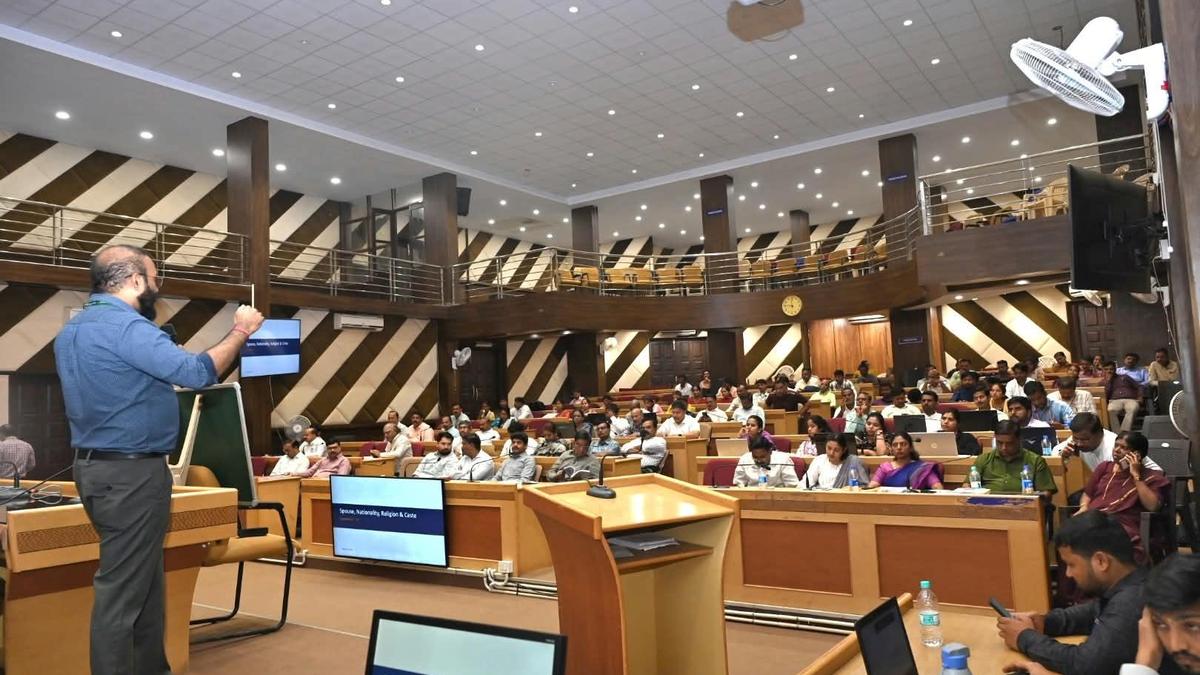
Census officials in Dharwad have been told to carry out the 2027 count with accuracy, integrity and a strong sense of responsibility. Deputy Commissioner Snehal R., who also serves as the Principal Census Officer, gave the instruction at a two-day training workshop held at the Dharwad Zilla Panchayat office on Thursday.
She described the census as a major national exercise. Every person assigned to it, she said, must complete the prescribed training and discharge their duties with commitment and discipline. The message was blunt: the work is not optional, and it is not casual.
Why the data matters to ordinary families
Snehal explained that the information collected will become the foundation for government planning. Census data, she said, will help officials formulate development programmes and plan public services in education, healthcare, housing, drinking water and infrastructure. In other words, the numbers recorded at each doorstep can shape which schools get built, which clinics get staffed and which neighbourhoods get pipelines and roads.
That is why she stressed that officials must gather accurate information from every household, without omissions or errors. A missed family or a wrongly recorded answer does not stay on paper. It travels into planning decisions that will run for years.
It is, therefore, essential to collect accurate information from every household without omissions or errors, she said.
What field staff were asked to do
Beyond counting, officials were instructed to create awareness among the public about the purpose and importance of the census. They were also told to interact with households courteously and ensure that no family is left out of the enumeration. Confidentiality came up as well. Staff must protect the information they collect, she said.
The instructions reflect a broader administrative push to make the exercise both complete and trustworthy. Public awareness helps households understand why their answers matter, and courteous interaction makes it more likely that families cooperate. Protecting the data keeps that trust intact once the forms are filled.
How the census is being sequenced
The second phase of Census 2027, which covers population enumeration, will begin only after the first phase of house-listing and housing census is complete. The schedule set out during the workshop is specific. Self-enumeration will run from January 10 to 24, 2027. House-to-house enumeration will follow from January 25 to February 28.
Homeless people will be counted separately. Their enumeration is set for 6 p.m. to 11.59 p.m. on February 28. A revision round will then take place from March 1 to 5. Those dates give field teams a clear window, but they also leave little room for slippage, which may be why the training focused so heavily on procedure.
Training on tools, portals and questions
The two-day workshop covered both the administrative responsibilities and the technical procedures involved in the second phase. Officials were trained to use the CMMS portal, prepare enumeration blocks, manage training and logistics, and monitor progress through dashboards. Each of those tasks is a link in the chain that determines whether a count is complete.
Sessions also introduced the Census Mobile Application and the concepts and definitions used in population enumeration. Participants learned the procedure for collecting responses to 40 questions. Practical demonstrations showed how to record information through the mobile application and how the self-enumeration portal works.
Data quality received specific attention. The workshop explained data quality indicators, publicity, media coordination and the distribution of census material. Trainers emphasised that enumerators and supervisors must know all 40 questions thoroughly. Households deserve answers recorded exactly as they are given, and that standard leaves little space for guesswork.
Who was in the room
Zilla Panchayat Chief Executive Officer and Additional Principal Census Officer Bhuvanesh Patil attended the workshop, along with Hubballi-Dharwad Municipal Corporation Commissioner Rudresh Ghali and Additional Deputy Commissioner Geetha C.D. Other officials and technical personnel also took part. Their presence signals that the district’s municipal and panchayat structures are both preparing for the count, rather than leaving it to a single office.
For now, the Dharwad effort is about preparation. The enumeration itself is still months away, with self-enumeration beginning in January 2027. Yet the training makes clear that the district is treating accuracy as the central task, not an afterthought, and that every household on the list will be expected to count.
TL;DR
- Census 2027 officials in Dharwad were told to carry out the count with accuracy, integrity and responsibility.
- The district’s Deputy Commissioner, Snehal R., also serves as Principal Census Officer.
- Census data will guide planning in education, healthcare, housing, drinking water and infrastructure.
- Self-enumeration runs January 10 to 24, 2027, followed by house-to-house enumeration until February 28.
- Officials were trained on the CMMS portal, the Census Mobile Application and all 40 questions.
- Homeless people will be enumerated from 6 p.m. to 11.59 p.m. on February 28, 2027.