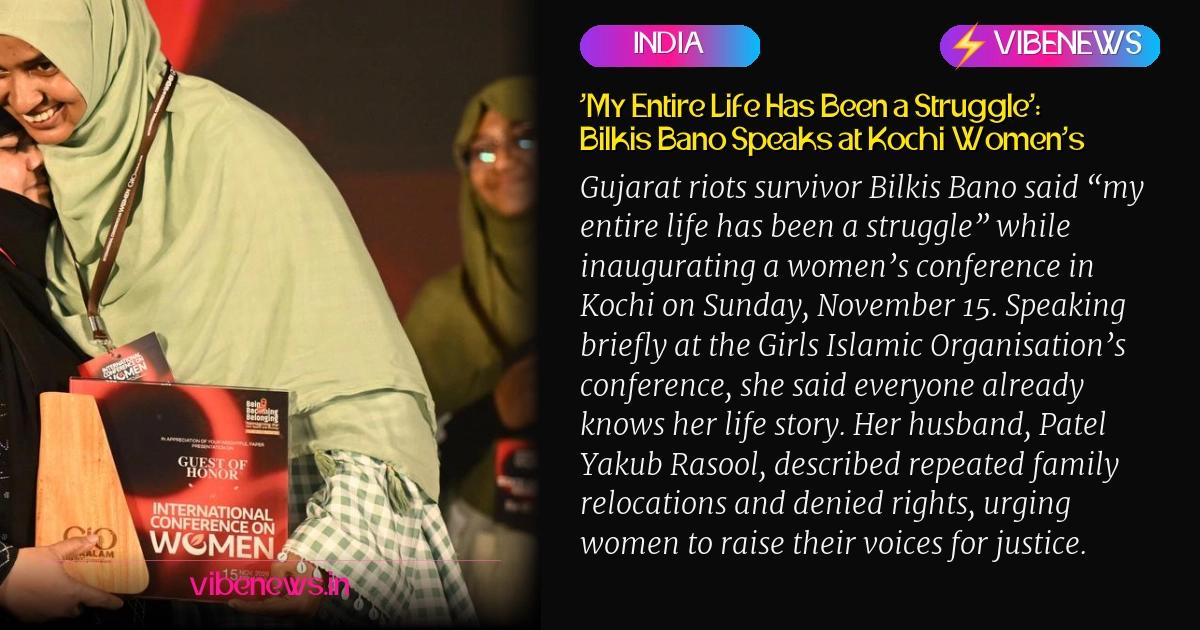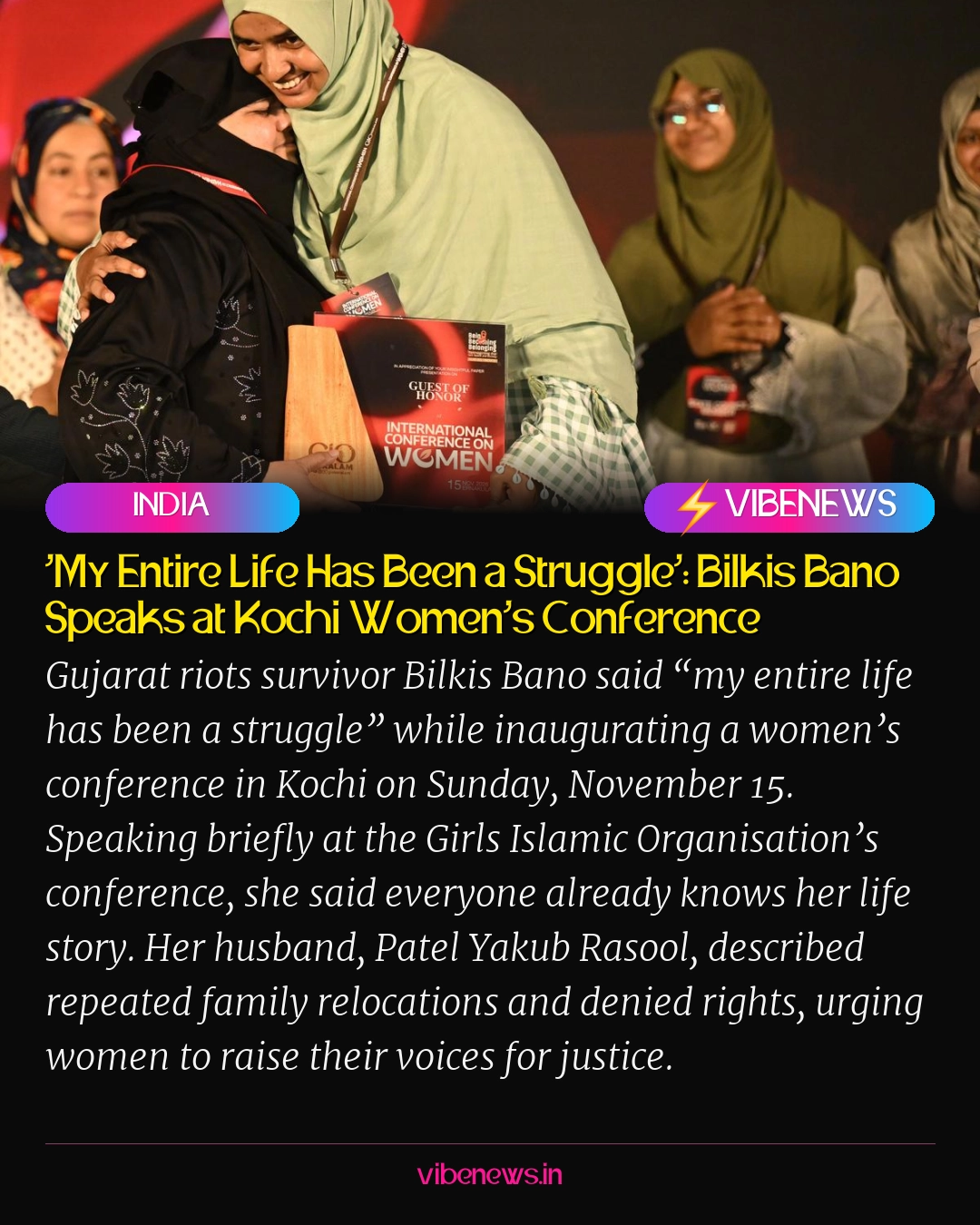
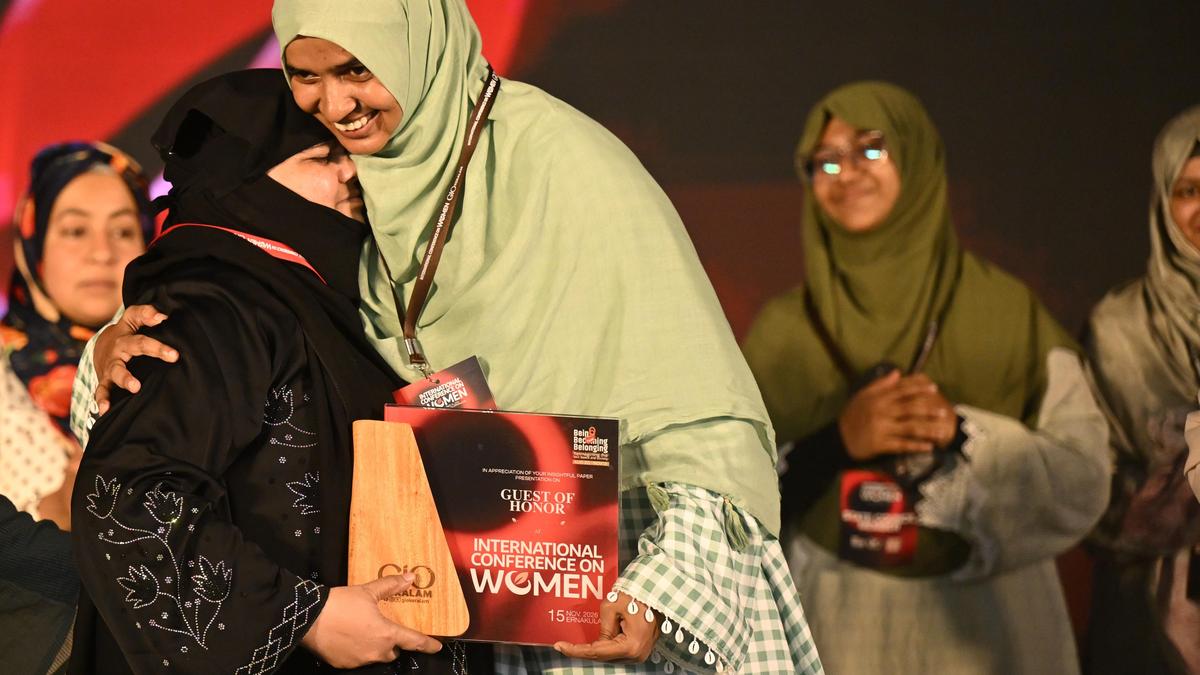
Bilkis Bano told an audience in Kochi on Sunday, November 15, that her life has been one long struggle. The Gujarat riots survivor was speaking at the International Conference on Women organised by the state committee of the Girls Islamic Organisation (GIO), and she did not stay on the subject for long.
“My entire life has been a struggle,” she said. Bano has become known across the country for her prolonged legal battle for justice, and she made the remark while inaugurating the conference. Then she stopped herself from going any further.
“Everyone knows my life story, don’t they? There is no need to say anything more about it.”
Her short address carried the weight of a history that she has already had to explain many times over. Bano was gang-raped during the 2002 riots and lost seven members of her family, including her three-year-old daughter. Those losses are the foundation of the case that has followed her for more than two decades, and she did not repeat the details from the stage.
Instead, she turned to gratitude. Thanking the people who had invited her, she offered a simple wish: “May we continue to live with such love and peace every day, staying together all our lives.” For a speaker whose life has been defined by conflict, the line landed as a plain hope rather than a political statement.
Her husband, Patel Yakub Rasool, attended the conference and spoke about the years of pressure that came with the fight for justice. He described how the family had to relocate several times and how her rights were denied again and again. He said they had to keep bringing instances of injustice to the attention of people in positions of power, often without any result that felt like justice.
“What happened to Bilkis is now known to the entire world,” he said. “May her struggle inspire every woman to find the strength to raise her voice for her rights.” His remarks shifted the focus from Bano’s personal history to what he hoped other women would take from it.
Who else took the stage
The conference was presided over by K. Shifana, state president of the GIO. Nousheen Farooq, a student leader from Jamia Millia Islamia, was the chief guest. Several speakers addressed the sessions over the course of the day, including Saria Cheruvallil, a professor at Coventry University in the UK, and Dalia Saleh, a researcher at the University of Cambridge.
The program also included Reem Mahmoud Al Haddad, a Palestinian writer and journalist, along with A. Rahmathunnisa, national secretary of Jamaat-e-Islami, and P. Mujeeb Rahman, ameer of Jamaat-e-Islami Keralam. The mix of academics, writers and political leaders gave the event a wide reach beyond a single community meeting.
What the event does and does not tell us
The reports available on the event focus on what was said in Kochi. They do not describe the current stage of Bano’s legal case, nor do they say whether any new steps were announced at the conference. Readers should not assume more than the speeches themselves offered.
What the day did show is how Bano is now seen by the people who organised it. Her speech was short, and the organisers chose to build the program around women’s rights, justice and the courage to speak. Her husband made that connection explicit, asking women to draw strength from what she has endured.
There is a quiet tension in the moment. Bano has spent years telling her story to courts, journalists and the public, and on Sunday she decided that the audience already knew enough. That choice says as much about the weight of repetition as it does about the event itself. For many listeners, the most striking part of the day may have been what she left unsaid.
TL;DR
- Bilkis Bano said “my entire life has been a struggle” while inaugurating a women’s conference in Kochi on November 15.
- The 2002 Gujarat riots left her gang-raped and cost her seven family members, including her three-year-old daughter.
- She kept her remarks brief, saying everyone already knows her life story.
- Her husband, Patel Yakub Rasool, said the family relocated several times and had its rights denied.
- Academics, writers and Jamaat-e-Islami leaders spoke at the conference sessions.