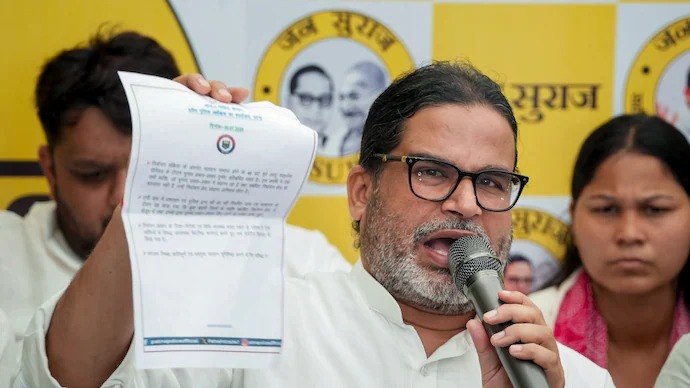
Prashant Kishor’s Electoral Debut Marks a New Chapter
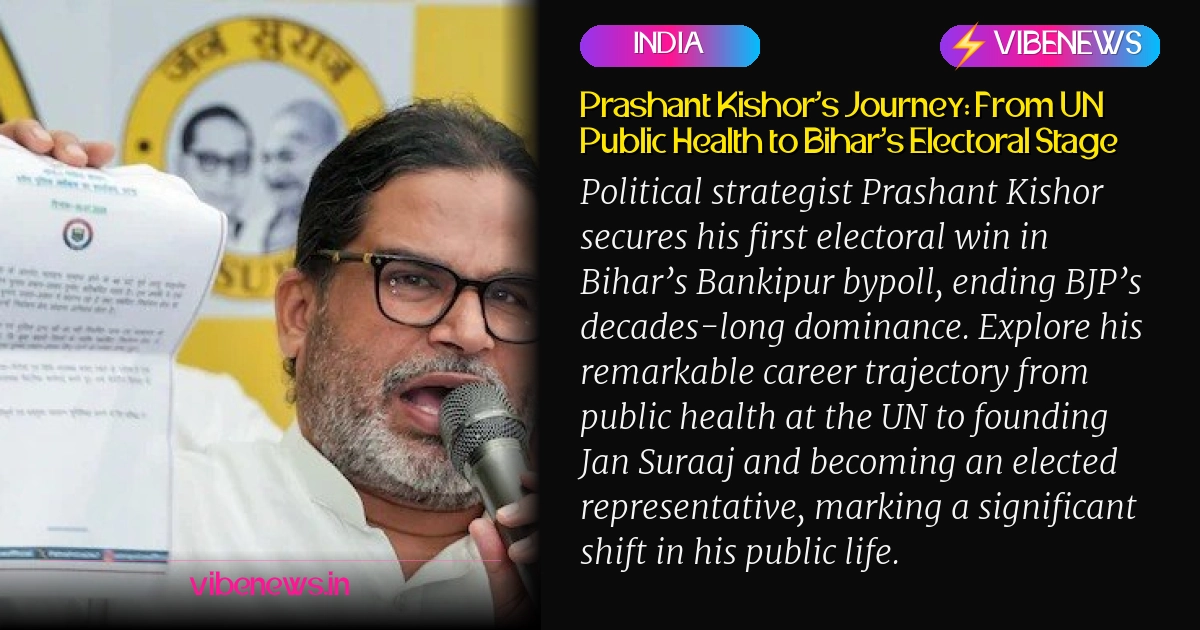
Prashant Kishor, a name synonymous with groundbreaking election campaigns across India, has officially transitioned from a behind-the-scenes strategist to an elected representative. His recent victory in the Bankipur Assembly bypoll in Bihar is not merely a personal milestone but a significant political event, as it ended the Bharatiya Janata Party’s (BJP) 35-year stronghold over one of its most reliable bastions in the state. This win signals a pivotal moment for Kishor, who now seeks to forge his own political legacy after years of guiding others to power.
Before his foray into the intricate world of Indian politics, Kishor cultivated a distinguished career in public health. For nearly eight years, he dedicated his expertise to United Nations-backed programmes, primarily across various African nations. This period was instrumental in shaping his understanding of grassroots issues, public policy, and large-scale development challenges, experiences that would later subtly influence his political approach.
Early Life and Global Health Endeavors
Born on March 20, 1977, in Konar village within Bihar’s Rohtas district, Prashant Kishor’s roots are firmly embedded in the state he now seeks to represent. His father, Dr. Shrikant Pandey, served as a government physician, while his mother, Sushila Pandey, managed their home. The family later relocated to Buxar, where Kishor completed his foundational schooling, laying the groundwork for his future academic pursuits.
Kishor initially pursued an engineering background, a discipline that, while technical, provided him with a structured problem-solving approach. However, his professional path soon diverged into public policy and health. His tenure with the United Nations saw him serve as the Head of Social Policy and Planning at UNICEF in Chad, a role that immersed him in critical areas such as nutrition, child welfare, and comprehensive development planning. During this time, he authored a notable paper that critically examined India’s economic growth in conjunction with its persistent challenges in malnutrition, a work that inadvertently set the stage for his political career.
The Unlikely Shift to Political Strategy
The paper on India’s malnutrition, a testament to Kishor’s analytical prowess and deep understanding of socio-economic issues, reportedly reached the Prime Minister’s Office. More crucially, it captured the attention of then-Gujarat Chief Minister Narendra Modi. This serendipitous connection led to a meeting that fundamentally altered Kishor’s professional trajectory, drawing him into the high-stakes arena of Indian electoral politics around 2011.
His initial foray into the political landscape saw him play a crucial role in shaping Narendra Modi’s highly successful 2012 Gujarat Assembly election campaign. This experience proved to be a springboard for his subsequent ventures. Ahead of the monumental 2014 Lok Sabha elections, Kishor co-founded Citizens for Accountable Governance (CAG). This organization pioneered innovative campaign strategies that redefined political outreach in India, introducing initiatives like ‘Chai Pe Charcha,’ 3D rallies, ‘Run for Unity,’ and extensive digital engagement, effectively modernizing election campaigning.
From Strategist to Political Leader
Following the success of CAG, Prashant Kishor established the Indian Political Action Committee (I-PAC), which quickly became the go-to consultancy for a diverse array of political parties across the ideological spectrum. Over the years, I-PAC provided strategic counsel to major players including the BJP, Janata Dal (United), Congress, Trinamool Congress, DMK, YSR Congress Party, and Aam Aadmi Party. This period solidified Kishor’s reputation as one of India’s most influential and sought-after election strategists, capable of crafting winning narratives for varied political entities.
In 2018, Kishor briefly joined the Janata Dal (United), serving as the party’s national vice-president. However, his tenure was short-lived, and he parted ways with the party in 2020, signaling a growing desire for independent political action. This desire culminated on October 2, 2022, when he embarked on the ‘Jan Suraaj Padayatra,’ a transformative journey across Bihar aimed at directly engaging with citizens and understanding local issues firsthand. Two years later, on October 2, 2024, he formally launched the Jan Suraaj Party, marking his definitive entry into electoral politics as a direct participant rather than an advisor.
The Bankipur Victory and Future Implications
The Bankipur Assembly bypoll victory is more than just a win; it is a powerful statement. For decades, Bankipur had been a reliable stronghold for the BJP, making Kishor’s triumph a significant upset and a clear indicator of his growing political influence in Bihar. This electoral success validates his transition from a master strategist to an elected representative, demonstrating his ability to connect with voters directly and translate grassroots engagement into electoral gains.
His journey, spanning public health, international development, and over a decade of shaping India’s biggest election campaigns, now converges into a singular pursuit: building his own political legacy. The Jan Suraaj Party, under Kishor’s leadership, aims to offer a new political alternative in Bihar, a state known for its complex and often entrenched political dynamics. His victory in Bankipur serves as a crucial first step in this ambitious endeavor, signaling a potential shift in the state’s political landscape.
Editorial Context
Prashant Kishor’s electoral victory in Bankipur holds profound long-term implications for Indian politics, particularly in Bihar. For years, Kishor operated as a powerful, yet largely unseen, force behind numerous successful campaigns, embodying the rise of professional political consultancy in India. His decision to step out of the shadows and directly contest elections, culminating in a win against an established party in a traditional stronghold, represents a significant evolution in his career and potentially in the broader political ecosystem.
This development raises questions about the future of political strategy and leadership. Will more strategists follow suit, transforming from advisors to direct political actors? Kishor’s unique background, blending international public health experience with deep political acumen, positions him as a distinct voice. His emphasis on grassroots engagement through the Jan Suraaj Padayatra suggests a commitment to understanding and addressing local issues, potentially offering a different model of political engagement compared to traditional party structures.
The challenge for Kishor and Jan Suraaj now lies in scaling this initial success. Bihar is a state with deeply entrenched caste and political loyalties. Sustaining momentum, building a robust party organization, and translating a bypoll victory into broader electoral success in future assembly or general elections will be a formidable task. However, his Bankipur win undeniably establishes him as a serious political contender, capable of disrupting established narratives and offering a fresh perspective in a state hungry for change. His journey will be closely watched as a test case for how professional expertise can translate into direct political power in India’s vibrant democracy.
TL;DR
- Prashant Kishor secured his first electoral victory in the Bankipur Assembly bypoll, ending the BJP’s 35-year hold.
- Before politics, Kishor spent nearly eight years working on United Nations-backed public health programmes, primarily in Africa.
- He served as Head of Social Policy and Planning at UNICEF in Chad, focusing on nutrition and child welfare.
- Kishor’s paper on India’s malnutrition caught Narendra Modi’s attention, leading to his entry into Indian politics around 2011.
- He co-founded Citizens for Accountable Governance (CAG) and later I-PAC, advising numerous major political parties.
- Kishor launched the Jan Suraaj Padayatra in 2022 and formally established the Jan Suraaj Party in 2024, transitioning from strategist to elected representative.