A New Chapter in National Healthcare
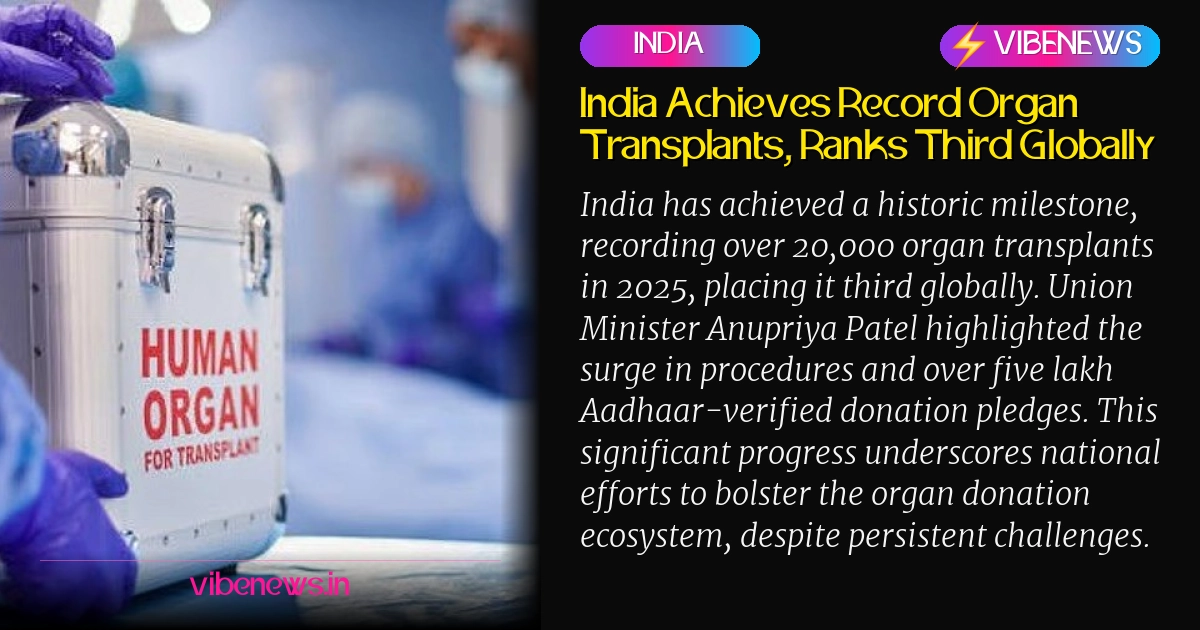
India has marked a significant milestone in its healthcare journey, recording an unprecedented 20,138 organ transplant procedures in 2025. This achievement positions the nation as the third-largest contributor to global organ transplantation efforts, trailing only the United States and China. The Union Minister of State for Health, Anupriya Patel, announced this remarkable progress, highlighting a substantial increase from previous years.
The minister also revealed that the national digital pledge portal, launched in 2023, has garnered over five lakh Aadhaar-verified organ donation pledges. This surge in public commitment reflects growing awareness and a positive shift in societal attitudes towards organ donation across the country.
Expanding the Reach of Life-Saving Procedures
The growth in organ transplants has been exponential, with the total number rising from 4,990 in 2013 to over 20,000 in 2025. Deceased donor transplants, a critical component of the organ donation ecosystem, have seen an even more dramatic increase, quadrupling from 837 in 2013 to 3,526 in 2025. This upward trend is attributed to sustained awareness campaigns and Prime Minister Narendra Modi’s personal appeal encouraging citizens to pledge their organs.
Despite these impressive figures, a considerable gap persists between the demand for organs and their actual availability. This ongoing challenge underscores the need for continued efforts in public education and infrastructure development to bridge the divide and save more lives.
Strengthening the Organ Donation Ecosystem
To further bolster the country’s organ donation and transplantation framework, several key initiatives were launched. These include the year-long ‘Jug Jug Jiyo Abhiyaan’, a comprehensive campaign aimed at promoting organ donation. Additionally, the e-Pratyaropan digital platform and the NOTTO mobile application were introduced to streamline processes and enhance accessibility for donors and recipients.
New guidelines were also unveiled, including the National Brain Stem Death Certification Guidelines and the National Guidelines on Swap Transplantation. These measures are designed to standardize practices, ensure ethical procedures, and strengthen implementation across all states, fostering greater trust and efficiency within the system.
Addressing Misconceptions and Building Trust
A significant hurdle in increasing organ donation rates remains the prevalence of misconceptions and cultural beliefs. Minister Patel emphasized that no major religion prohibits organ donation, framing it as a profound humanitarian act that offers a second chance at life. This clarification is crucial in dispelling myths and encouraging broader participation.
The government has established a robust institutional network to support these efforts, comprising the National Organ and Tissue Transplant Organisation (NOTTO), five Regional Organ and Tissue Transplant Organizations (ROTTOs), and 26 State Organ and Tissue Transplant Organizations (SOTTOs). This network, alongside approximately 1,200 registered hospitals, forms the backbone of India’s transplant infrastructure.
A Unified Digital Approach and Financial Support
To enhance coordination among these diverse stakeholders, a unified digital platform has been launched. This platform aims to create a seamless, transparent, and efficient ecosystem, thereby increasing public trust and operational effectiveness. Such digital integration is vital for managing the complex logistics of organ donation and transplantation across a vast country like India.
Under the National Organ Transplant Programme (NOTP), the government continues to provide substantial financial assistance to states. This support covers critical areas such as infrastructure development, donor maintenance, organ retrieval, and transportation. Furthermore, kidney transplantation has been included in the Health Benefit Package under the Ayushman Bharat Pradhan Mantri Jan Arogya Yojana (AB PM-JAY), making it accessible to a wider population.
Economically weaker patients also receive financial assistance through the Rashtriya Arogya Nidhi. The expanding network of over 20,000 Jan Aushadhi Kendras plays a crucial role in improving access to affordable medicines, including essential post-transplant medications, ensuring long-term care for recipients.
Expanding Transplant Infrastructure Across India
Health Secretary Punya Salila Srivastava highlighted the extensive reach of the NOTTO-ROTTO-SOTTO network, which now spans 31 states and Union Territories. This expanded coordination is vital for efficient organ procurement and allocation, ensuring that organs reach recipients in a timely manner.
Beyond AIIMS New Delhi, ten new AIIMS institutions now offer kidney transplant services. Additionally, AIIMS Jodhpur, Bhubaneswar, Patna, and Rishikesh have commenced liver transplants, while AIIMS Bhopal has initiated heart transplantation. This geographical expansion of advanced transplant services is crucial for reducing regional disparities and increasing access to life-saving procedures across the nation.
Editorial Context
The remarkable surge in organ transplants and donation pledges in India signifies a pivotal moment in the nation’s public health narrative. This development is not merely about numbers; it reflects a profound societal shift towards altruism and a growing recognition of the critical importance of organ donation. Over the long term, this trajectory promises to significantly reduce the mortality and morbidity associated with organ failure, enhancing the quality of life for countless individuals.
The government’s multi-pronged approach, encompassing policy reforms, digital integration, infrastructure expansion, and public awareness campaigns, lays a robust foundation for a sustainable organ donation ecosystem. As India continues to strengthen its healthcare infrastructure and address cultural barriers, the potential for further growth is immense. This sustained effort will not only solidify India’s position as a global leader in transplantation but also foster a culture of giving that can transform public health outcomes for generations to come, moving towards greater self-sufficiency in meeting the demand for organs.
TL;DR
- India recorded a historic 20,138 organ transplants in 2025, marking its highest annual count ever.
- The nation now ranks third globally in total organ transplants, behind the United States and China.
- Over five lakh Aadhaar-verified organ donation pledges have been registered since the national digital portal launched in 2023.
- The government introduced the ‘Jug Jug Jiyo Abhiyaan’, e-Pratyaropan platform, and NOTTO mobile app to enhance the organ donation ecosystem.
- New National Brain Stem Death Certification Guidelines and National Guidelines on Swap Transplantation were released to standardize practices.
- Financial assistance for transplants is available under AB PM-JAY and Rashtriya Arogya Nidhi, with services expanding across AIIMS institutions.