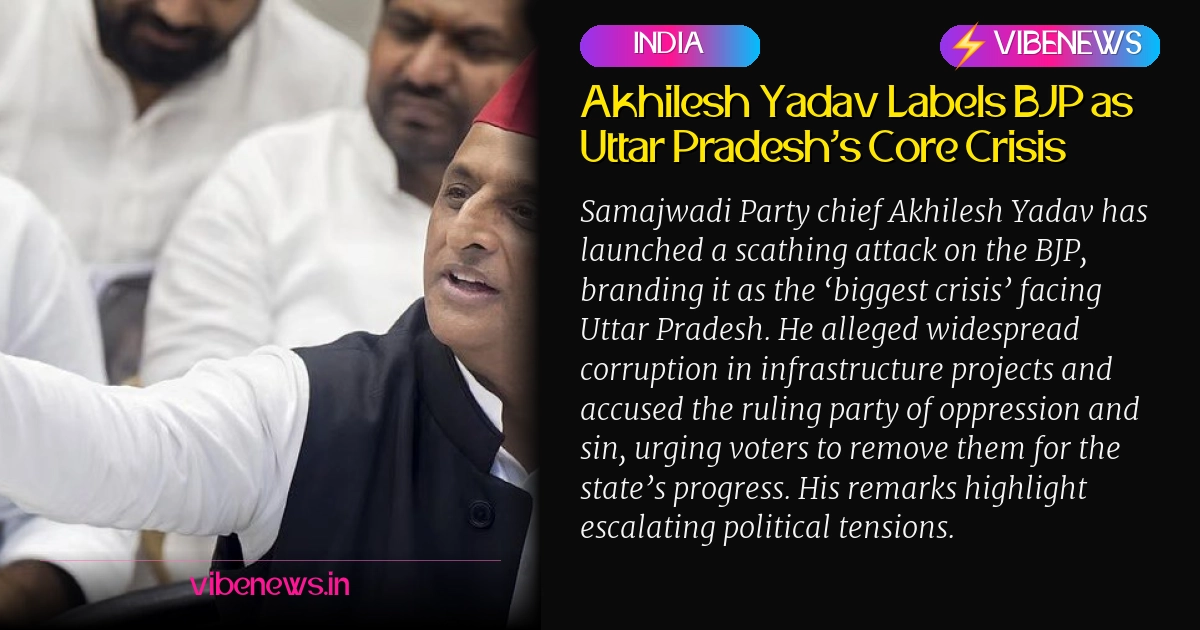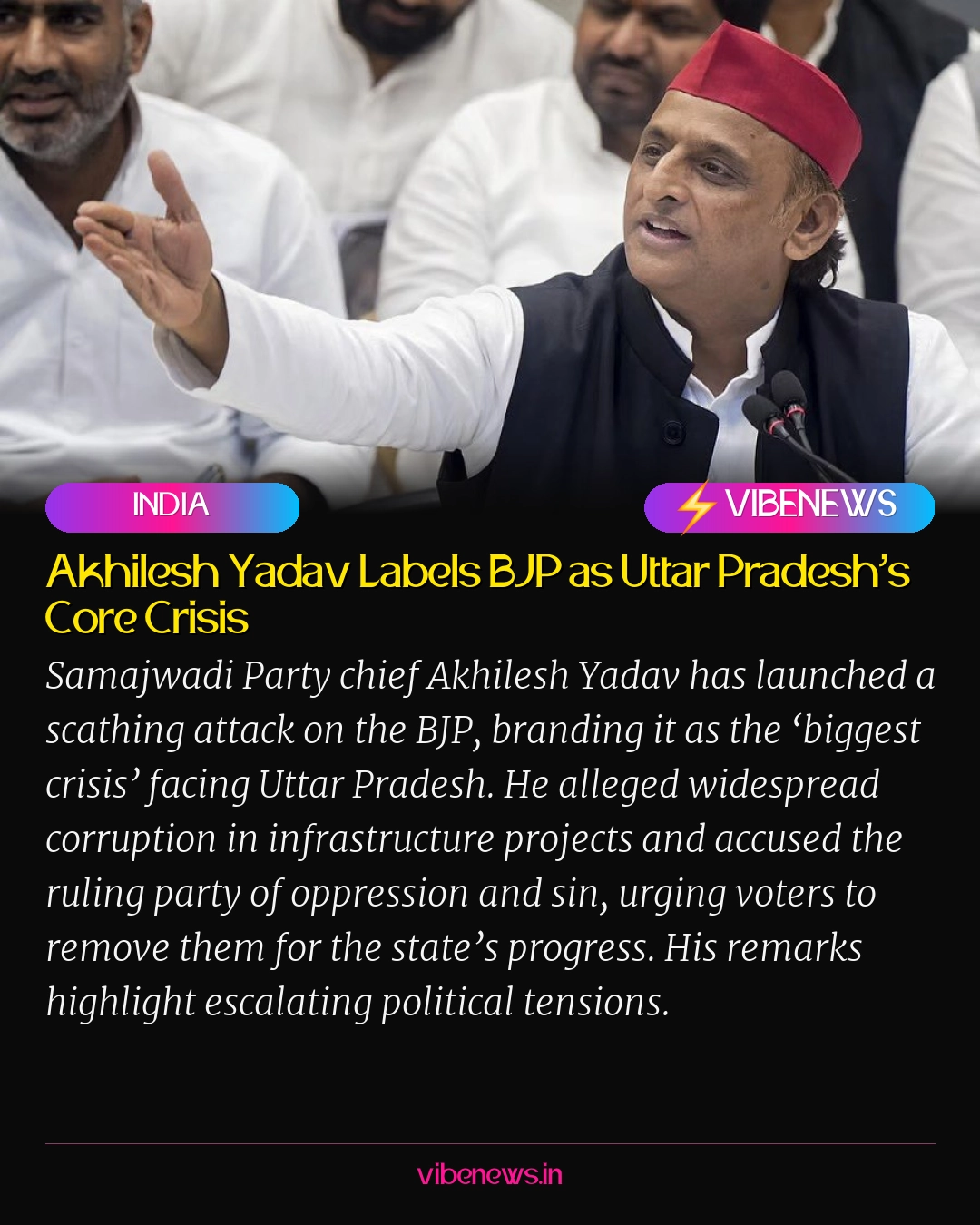
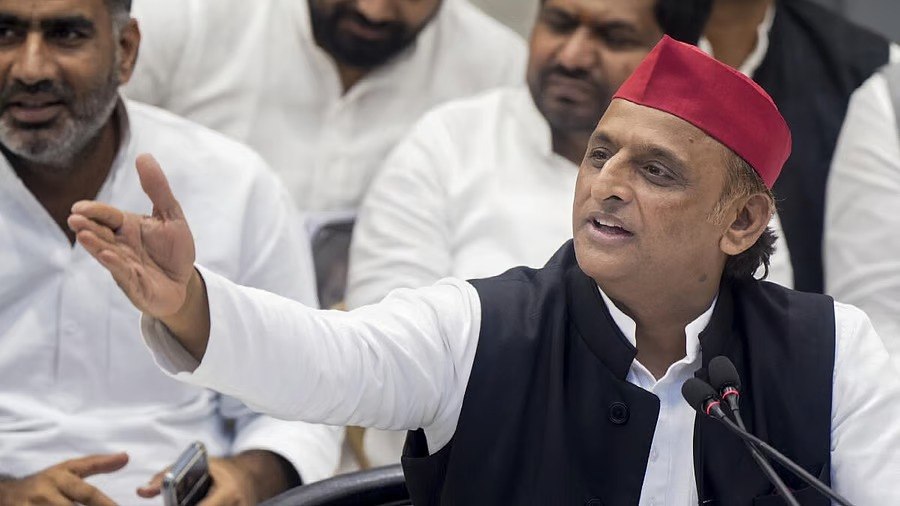
Samajwadi Party (SP) president Akhilesh Yadav has intensified his criticism of the Bharatiya Janata Party (BJP), asserting that the ruling party represents ‘bhrasht’ (corrupt), ‘julm’ (oppression), and ‘paap’ (sin). Speaking at a press conference in Lucknow, the former Uttar Pradesh chief minister declared that the state’s myriad problems would only cease once the BJP is ousted from power.
Yadav’s remarks underscore a deepening political divide in Uttar Pradesh, a state pivotal to national politics. He contended that the BJP has become synonymous with corruption and injustice, a narrative the SP is keen to push as it positions itself as the primary opposition force.
Allegations of Misgovernance and Graft
The SP chief did not shy away from specific accusations, pointing to several expressways constructed during the BJP’s tenure, including the Lucknow-Kanpur, Bundelkhand, and Purvanchal expressways. He claimed these vital infrastructure projects have fallen victim to widespread corruption, suggesting irregularities in their development and execution.
Beyond infrastructure, Yadav alleged that land mafias, purportedly linked to the ruling party, have encroached upon significant ponds and public lands across Uttar Pradesh. This accusation touches upon sensitive issues of land ownership and environmental protection, resonating with local communities affected by such activities.
He reiterated his central theme, stating, "There is only one crisis in Uttar Pradesh and that is the BJP. Once the BJP goes, all crises will end." This direct challenge aims to consolidate anti-incumbency sentiments and rally support for the Samajwadi Party.
Broader Political Scrutiny
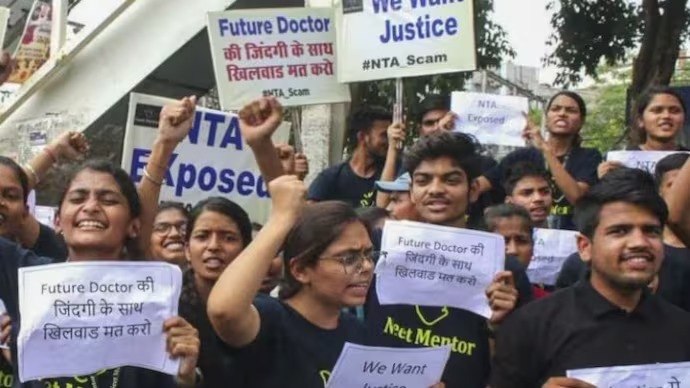
Yadav extended his critique beyond state-specific issues, questioning the BJP government’s handling of recent protests. He specifically referenced the use of force against protesting youths at Jantar Mantar in New Delhi, demanding accountability for the baton-charge. He implied that while the government claimed ignorance, the police personnel involved were acting under clear directives.
The SP leader also issued a stern warning to government officials, cautioning them against acting unfairly at the behest of the ruling party. He asserted that the BJP would not protect them from future legal or administrative repercussions, a tactic aimed at influencing bureaucratic neutrality ahead of elections.
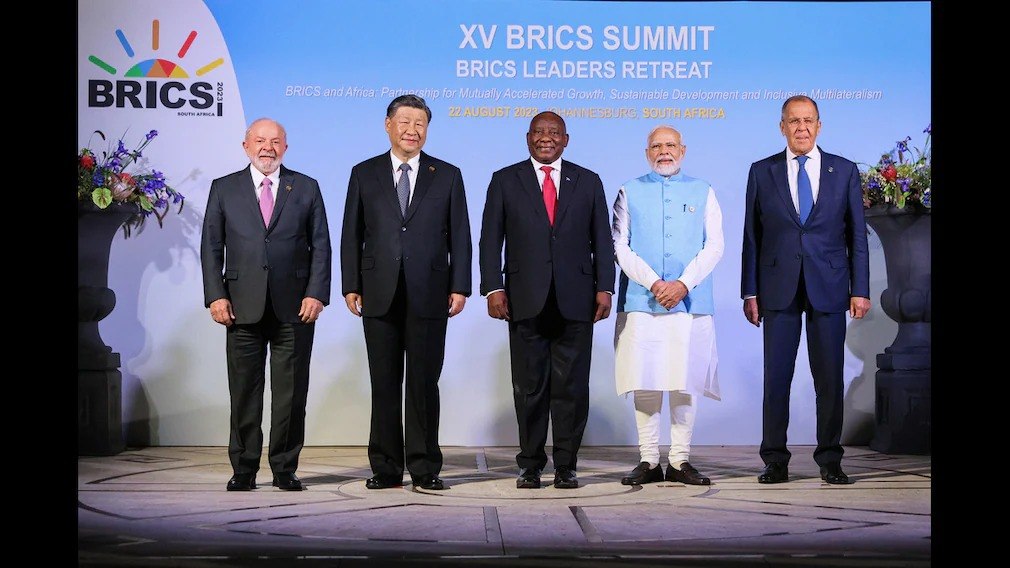
In a more cultural critique, Yadav took a swipe at Prime Minister Narendra Modi’s recent Instagram reels. He expressed dismay, stating it was unfortunate that the BJP had "engaged even the prime minister in making reels," and found the content produced to be "painful." This comment reflects a broader debate on political communication and the use of social media by leaders.
Controversies and Political Symbolism
Responding to a query, Yadav urged the BJP to address allegations that all stolen "Ram dhan" (wealth associated with Lord Ram) was reaching the party. This loaded statement taps into religious sentiments and ongoing political narratives surrounding the Ram Temple in Ayodhya, implying financial impropriety.
He further questioned the selective application of legal action, contrasting the cases against opposition leaders for a satirical performance in Parliament with the lack of action against those who allegedly portrayed Lord Hanuman in a derogatory manner during a political event. This referred to an incident involving a man dressed as Lord Hanuman dancing in front of BJP national president Nitin Nabin’s convoy, highlighting perceived double standards in political discourse and legal enforcement.
The Samajwadi Party’s consistent efforts to highlight these issues are part of its strategy to regain political ground in Uttar Pradesh. The state, with its vast population and significant number of parliamentary seats, remains a crucial battleground for national political parties.
Editorial Context
Akhilesh Yadav’s latest broadside against the BJP is more than just routine political rhetoric; it signifies the intensifying battle for Uttar Pradesh’s political future. By framing the BJP as the root cause of all crises, the Samajwadi Party is attempting to consolidate diverse grievances—from economic hardship and unemployment to perceived corruption and social injustice—under a single, powerful narrative. This strategy aims to galvanize opposition voters and present a clear alternative.
The allegations concerning infrastructure corruption and land mafias, if they gain traction, could significantly impact public perception of governance effectiveness. Such claims often resonate deeply with the electorate, particularly in rural and semi-urban areas where land disputes and development projects are tangible realities. The SP’s focus on these issues indicates an attempt to shift the political discourse from nationalistic themes to local governance and accountability.
Furthermore, Yadav’s warnings to government officials and his critique of the Prime Minister’s social media presence reflect a broader concern about democratic norms and the nature of political leadership. These statements contribute to a charged political atmosphere, where every action and statement by political figures is scrutinized for its implications on upcoming elections and the long-term health of democratic institutions in India. The sustained attack suggests a long-term strategy to chip away at the BJP’s dominance in the state.
TL;DR
- Akhilesh Yadav labeled the BJP as ‘bhrasht’ (corrupt), ‘julm’ (oppression), and ‘paap’ (sin), stating it is Uttar Pradesh’s biggest crisis.
- He alleged widespread corruption in expressways like Lucknow-Kanpur, Bundelkhand, and Purvanchal, built during the BJP’s tenure.
- Yadav claimed land mafias linked to the ruling party have encroached upon important ponds across the state.
- He criticized the government’s use of force against protesting youths at Jantar Mantar and cautioned officials against unfair actions.
- The SP chief questioned the BJP on allegations of ‘Ram dhan’ reaching the party and perceived double standards in legal action.
- His remarks underscore the Samajwadi Party’s strategy to consolidate anti-incumbency sentiments and challenge the BJP’s governance in Uttar Pradesh.