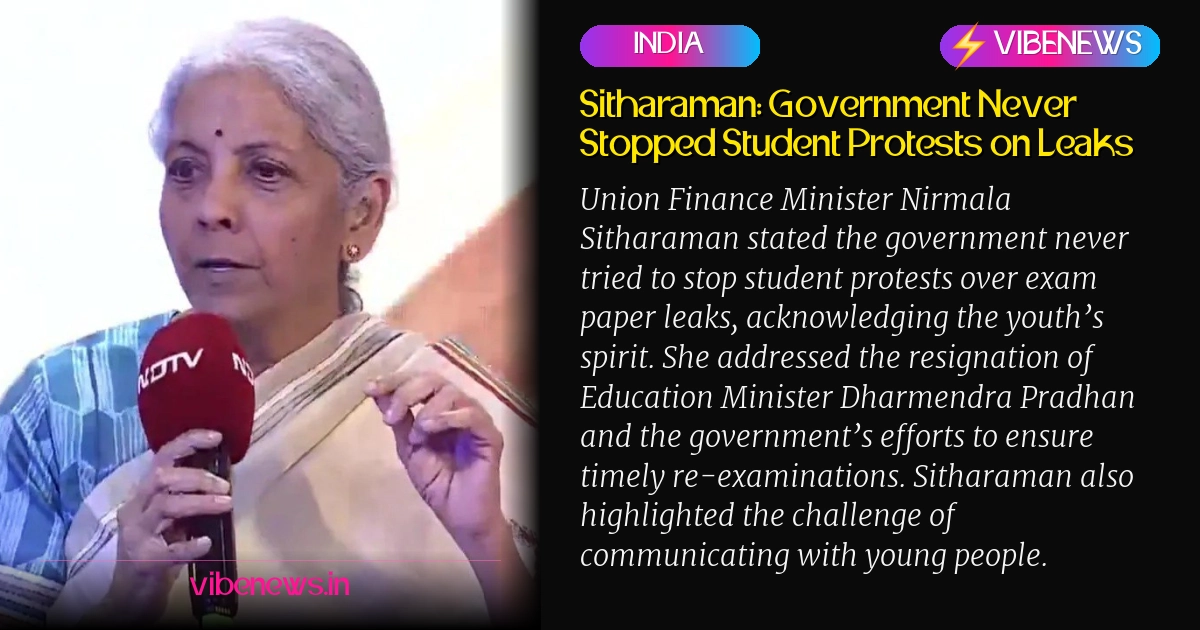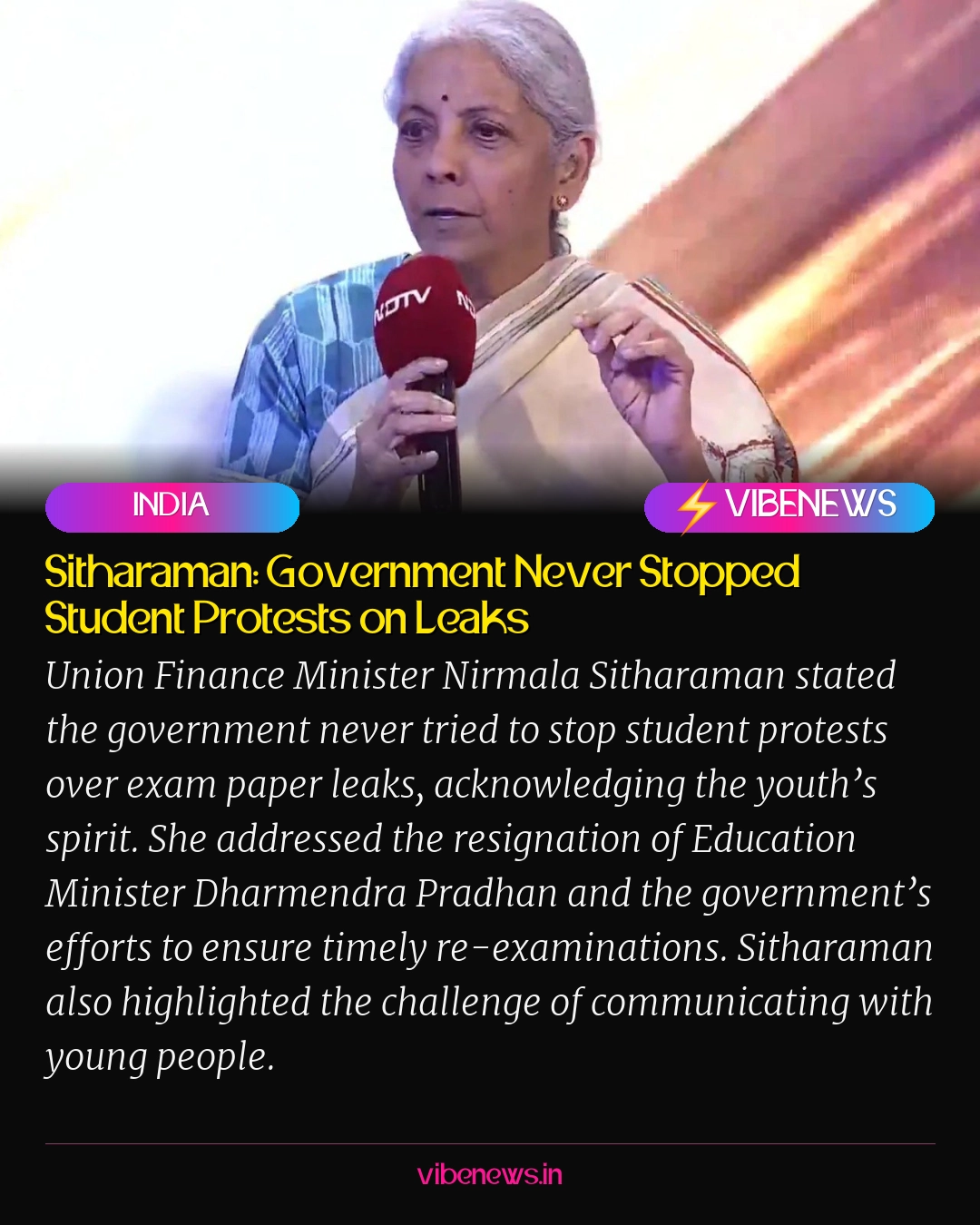
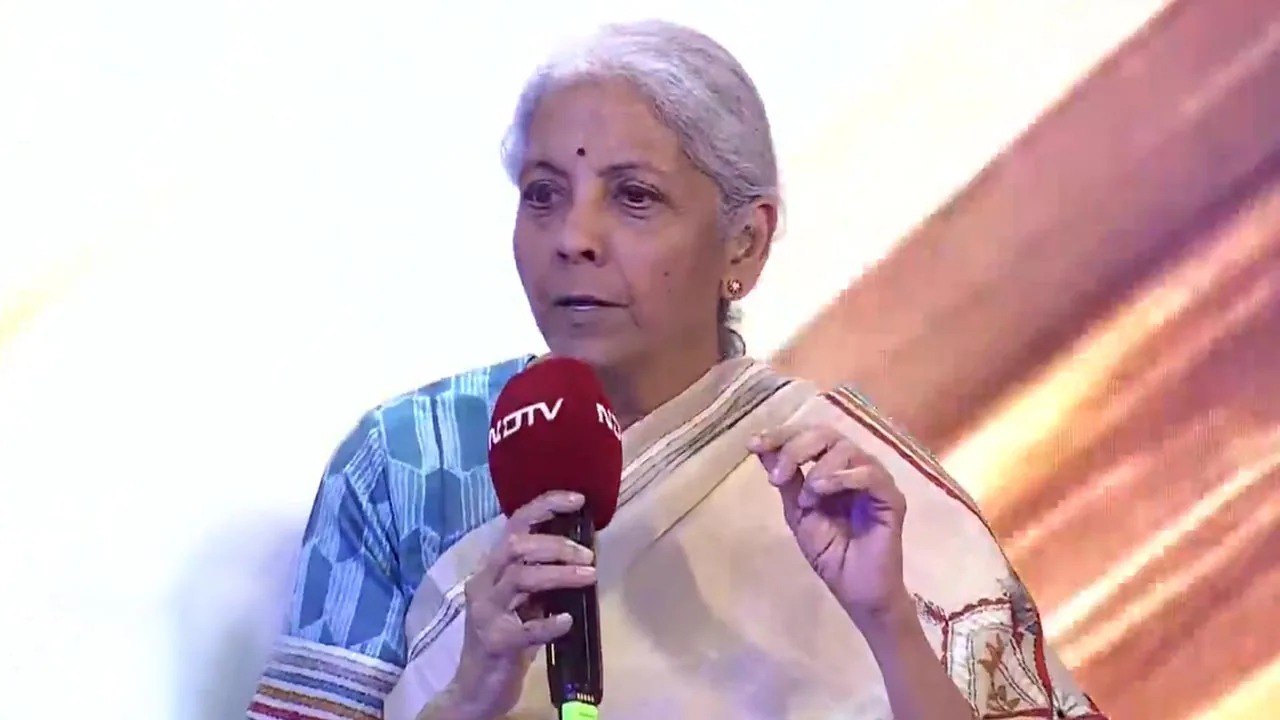
Union Finance Minister Nirmala Sitharaman recently affirmed that the government never attempted to halt student protests concerning exam paper leaks. Speaking at the Business Leadership Awards 2026, Sitharaman responded to queries about whether the widespread agitations had caught the administration off-guard.
The Finance Minister, an alumna of Jawaharlal Nehru University (JNU), acknowledged the inherent energy of youth in every generation to participate in protests. She stated that young people are deeply affected by perceived injustices and are driven to make a difference, a spirit she expressed happiness to witness.
The Catalyst for Dissent
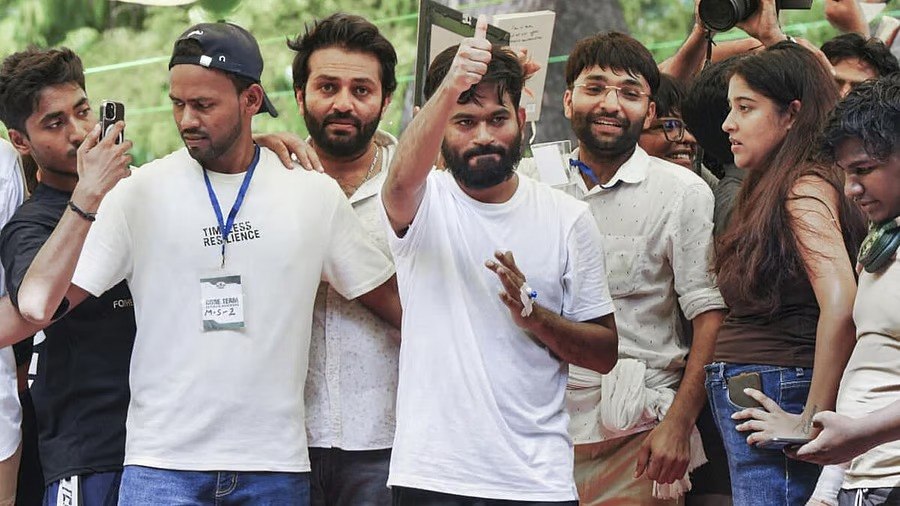
The recent wave of student protests was primarily spearheaded by the satirical political group, Cockroach Janta Party (CJP). Their central demand was the resignation of Union Education Minister Dharmendra Pradhan, following widespread outrage over multiple exam paper leaks that jeopardized the futures of countless students.
The agitation concluded after Pradhan tendered his resignation, a move that came after the government had completed the re-examination process and announced results. This sequence of events was crucial in addressing the immediate concerns of the protesting students.
Government’s Stance on Student Activism
Sitharaman emphasized that the government respected the protests and did not interfere with their conduct. She highlighted that permissions were granted, and no attempts were made to suppress the demonstrations, underscoring a commitment to democratic expression.
She clarified that the government’s primary focus, once the leaks became public, was twofold: to apprehend those responsible for buying and selling the papers and to ensure timely re-examinations. This approach aimed to prevent students from losing an entire academic year due to the irregularities.
The Finance Minister explained that Dharmendra Pradhan’s decision to step down came after successfully overseeing the re-examination process and ensuring results were declared. This, she suggested, was a responsible action to prevent further disruption and to uphold the integrity of the system for the students.
Bridging the Communication Gap
A significant challenge acknowledged by Sitharaman was the government’s difficulty in effectively communicating with young people. She noted that today’s youth are highly active on social media platforms like Instagram and employ a distinct vocabulary in their protests, which often differs from traditional bureaucratic language.
Sitharaman conceded that the government needs to adapt its messaging to be more accessible and understandable for this demographic. However, she also pointed out a fundamental limitation: official government communication is always subject to legal scrutiny, requiring precise, unambiguous language that can withstand judicial interpretation, which often contrasts with the informal, direct style preferred by youth.
Editorial Context
The recent student protests over exam paper leaks, culminating in a Union Minister’s resignation and a senior minister’s public acknowledgment, underscore a critical juncture in India’s socio-political landscape. Student movements have historically been potent forces for change in India, from the independence struggle to various social justice and political reforms. This latest wave of activism, amplified by digital platforms, highlights a growing disillusionment among youth regarding the integrity of competitive examinations, which are often seen as the sole gateway to upward mobility and stable careers.
The government’s response, characterized by allowing protests while simultaneously taking administrative action, reflects a delicate balancing act. While the arrests of those involved in the leaks and the swift re-conduct of examinations address immediate grievances, the underlying systemic vulnerabilities in examination bodies remain a significant concern. The recurring nature of such leaks erodes public trust in institutions and can have profound psychological and economic impacts on aspirants, many of whom invest years and substantial resources into preparation.
Furthermore, Nirmala Sitharaman’s candid discussion about the communication gap between the government and young people reveals a deeper challenge in modern governance. In an era dominated by instant information and social media, traditional bureaucratic communication often fails to resonate with a generation accustomed to direct, informal, and often emotionally charged discourse. Bridging this gap requires not just a change in language but a fundamental shift in how governments engage with and understand the aspirations and frustrations of their youngest citizens.
The episode serves as a vital reminder that democratic health relies not only on the right to protest but also on responsive governance that addresses the root causes of discontent. The long-term implications extend beyond education, touching upon issues of transparency, accountability, and the future of youth engagement in India’s democratic process. While the immediate crisis may have subsided with a ministerial resignation, the imperative for systemic reforms and more effective communication strategies remains paramount for fostering trust and stability.
TL;DR
- Union Finance Minister Nirmala Sitharaman stated the government never tried to stop student protests over exam paper leaks.
- She acknowledged the inherent energy and right of youth to protest for timely and correct measures.
- Education Minister Dharmendra Pradhan resigned after re-examinations were completed, a key demand of the ‘Cockroach Janta Party’ which spearheaded the protests.
- The government’s primary focus was on arresting those involved in the leaks and ensuring re-examinations to protect students’ academic year.
- Sitharaman highlighted the challenge of government communication with social media-savvy youth, noting the limitations imposed by legal scrutiny on official language.