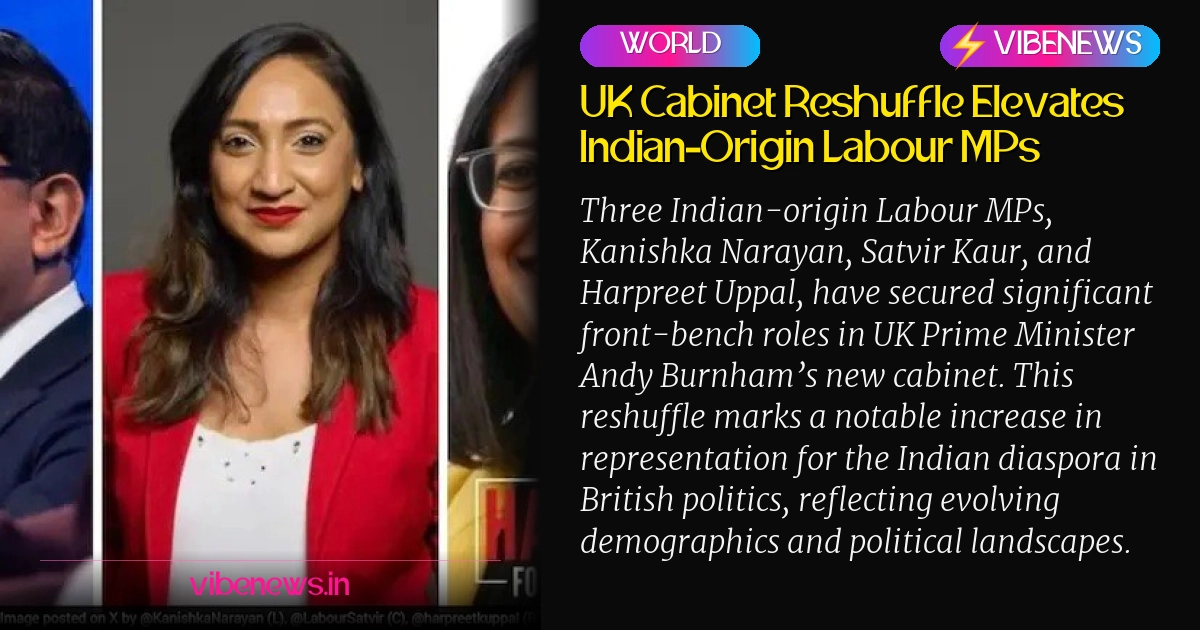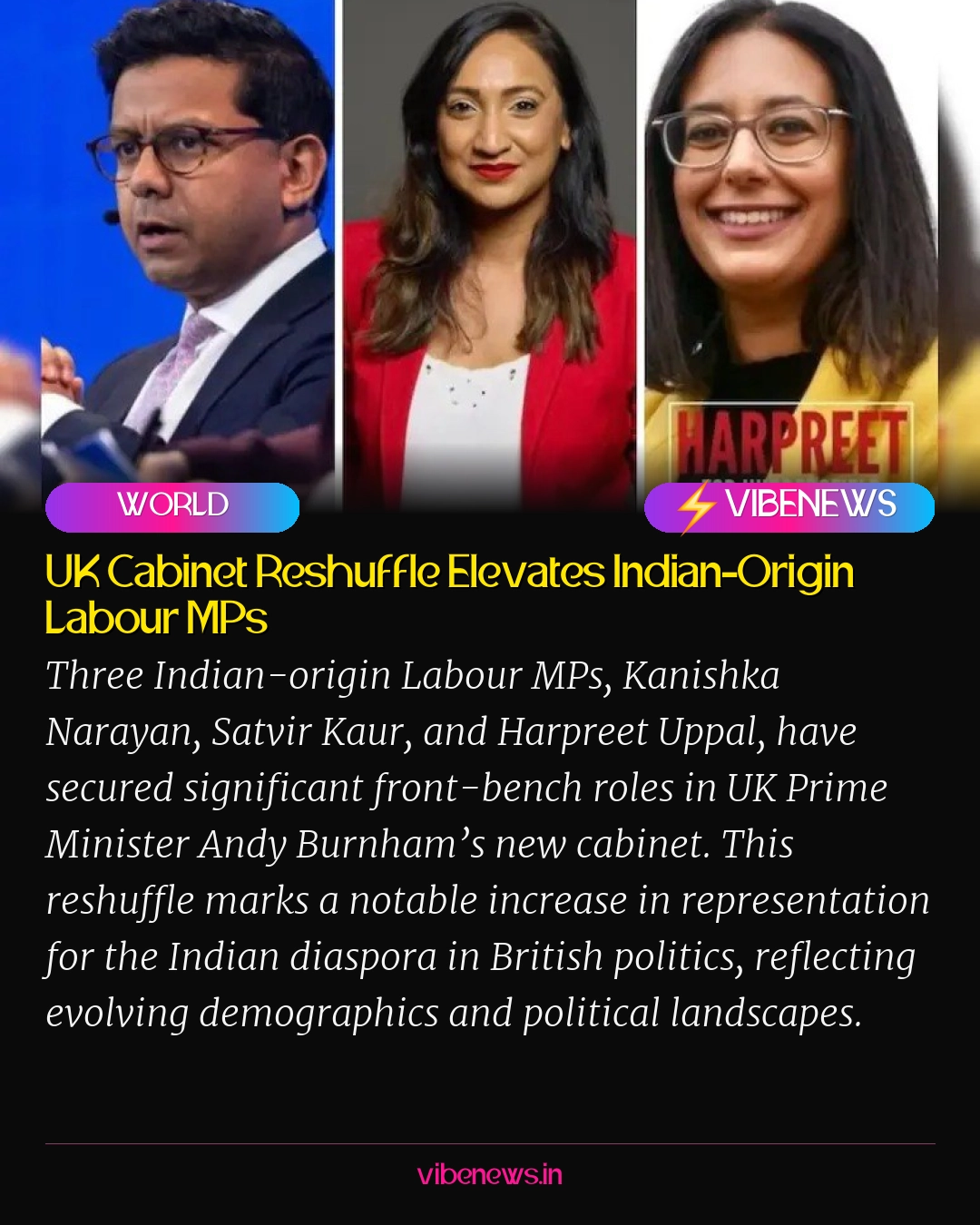
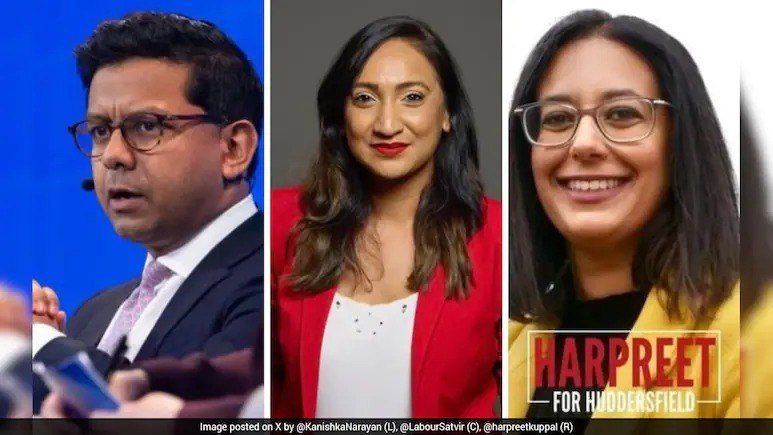
In a significant political development across the United Kingdom, Prime Minister Andy Burnham has unveiled a new cabinet, marking a notable shift in the composition of the Labour government’s front bench. This reshuffle has brought three prominent Indian-origin Labour Members of Parliament into key ministerial roles, underscoring a growing trend of diversity within British political leadership.
Kanishka Narayan, a rising star in the Labour Party, has been appointed as the Minister for Artificial Intelligence. This newly created portfolio highlights the government’s strategic focus on technological advancement and innovation. Narayan’s journey, from his birth in Bihar’s Muzaffarpur to his education at prestigious institutions like Eton College, Oxford University, and Stanford University, reflects a trajectory of academic excellence and political ambition. His prior experience as Parliamentary Under-Secretary of State in the Department for Science, Innovation and Technology positioned him well for this elevated role, which he will serve jointly in the Cabinet Office and the Department for Business, Innovation, Science and Trade.
Joining him on the front bench is Satvir Kaur, who now holds the dual responsibilities of Parliamentary Under-Secretary of State (Minister for Equalities) in the Ministry of Housing, Communities and Local Government, and Parliamentary Under-Secretary of State in the Home Office. Her extensive portfolio includes critical areas such as safeguarding, violence against women and girls, and broader equalities issues. Kaur, whose parents immigrated from Punjab and established a saree shop in Southampton, embodies the narrative of second-generation immigrants contributing significantly to public life. Her return to government service after maternity leave earlier this year further highlights her dedication.
Harpreet Uppal, representing Huddersfield, has been appointed as an Assistant Whip. Whips play a crucial role in parliamentary operations, ensuring party discipline, coordinating legislative business, and mobilizing MPs for important votes. Uppal’s appointment signifies her growing influence within the party, building on her prior involvement in Andy Burnham’s Greater Manchester mayoral campaign before her election as an MP in July 2024.
The Evolving Face of British Politics
These appointments are not isolated incidents but rather reflect a broader, ongoing transformation within British politics. The increasing representation of individuals from diverse ethnic backgrounds, particularly those of Indian heritage, speaks to the evolving demographics of the UK and the successful integration of diaspora communities into the nation’s political fabric. For decades, the British Parliament has gradually become more reflective of the country’s multicultural society, moving beyond a historically homogenous composition.
The Indian diaspora in the UK, one of the largest and most influential, has a long history of contributing to British society, economy, and culture. From early waves of migration in the post-war era to more recent arrivals, individuals of Indian origin have steadily built their presence across various sectors. Their journey into mainstream politics, initially slow, has gained considerable momentum in recent years, with both major parties actively seeking to engage and represent these communities.
This reshuffle also sees the front bench now including two Hindu and two Sikh ministers, alongside Uma Kumaran, a Hindu MP of Sri Lankan Tamil heritage, who has been named a junior minister in the Foreign Office. This religious and ethnic diversity within the government’s ranks signals a conscious effort to build a more inclusive leadership team that can better understand and address the varied concerns of a modern Britain.
Continuity and Strategic Shifts
While new faces emerge, some established figures have seen their roles change. Lisa Nandy, whose father was born in Kolkata, retains her significant position as Culture Secretary, continuing to sit in the Cabinet. Her consistent presence underscores the value placed on her experience and leadership within the party.
Conversely, two senior politicians of Indian origin, Seema Malhotra and Preet Kaur Gill, have returned to the backbenches. Malhotra previously served as Indo-Pacific minister, while Gill was the former junior health minister. Both were considered close allies of former prime minister Sir Keir Starmer. Their shift highlights the dynamic nature of cabinet reshuffles, where political alignments and strategic priorities often lead to changes in ministerial portfolios, even for experienced parliamentarians.
Editorial Context
The latest UK cabinet reshuffle, particularly the elevation of Indian-origin MPs to prominent front-bench positions, carries significant long-term implications for British politics and society. Firstly, it solidifies the trend of increasing diversity at the highest levels of government, moving beyond symbolic representation to substantive roles in critical policy areas like artificial intelligence and equalities. This ensures that a broader range of perspectives and lived experiences will inform national decision-making, potentially leading to more inclusive and effective governance.
Secondly, the appointment of a Minister for Artificial Intelligence signals a forward-looking approach by the Labour government, recognizing the transformative power of technology and the need for dedicated leadership in this rapidly evolving field. Kanishka Narayan’s background positions him to shape policies that will define the UK’s future economic competitiveness and ethical framework for technological development.
Finally, these appointments reinforce the enduring strength and integration of the Indian diaspora within the UK. Their journey from immigrant communities to influential political actors is a testament to their contributions and the evolving nature of British identity. Over the long term, this growing representation will likely foster stronger community engagement, inspire future generations from diverse backgrounds to enter public service, and potentially enhance the UK’s diplomatic and economic ties with India, leveraging shared heritage and mutual understanding.
TL;DR
- Kanishka Narayan has been appointed Minister for Artificial Intelligence, serving jointly in the Cabinet Office and the Department for Business, Innovation, Science and Trade.
- Satvir Kaur has been named Parliamentary Under-Secretary of State (Minister for Equalities) and Parliamentary Under-Secretary of State in the Home Office.
- Harpreet Uppal has secured the role of Assistant Whip, responsible for coordinating parliamentary business and party discipline.
- The reshuffle significantly increases the representation of Indian-origin lawmakers on the Labour government’s front bench.
- Lisa Nandy, of Indian heritage, retains her position as Culture Secretary and remains in the Cabinet.
- Two senior Indian-origin politicians, Seema Malhotra and Preet Kaur Gill, have moved to the backbenches from their previous ministerial roles.