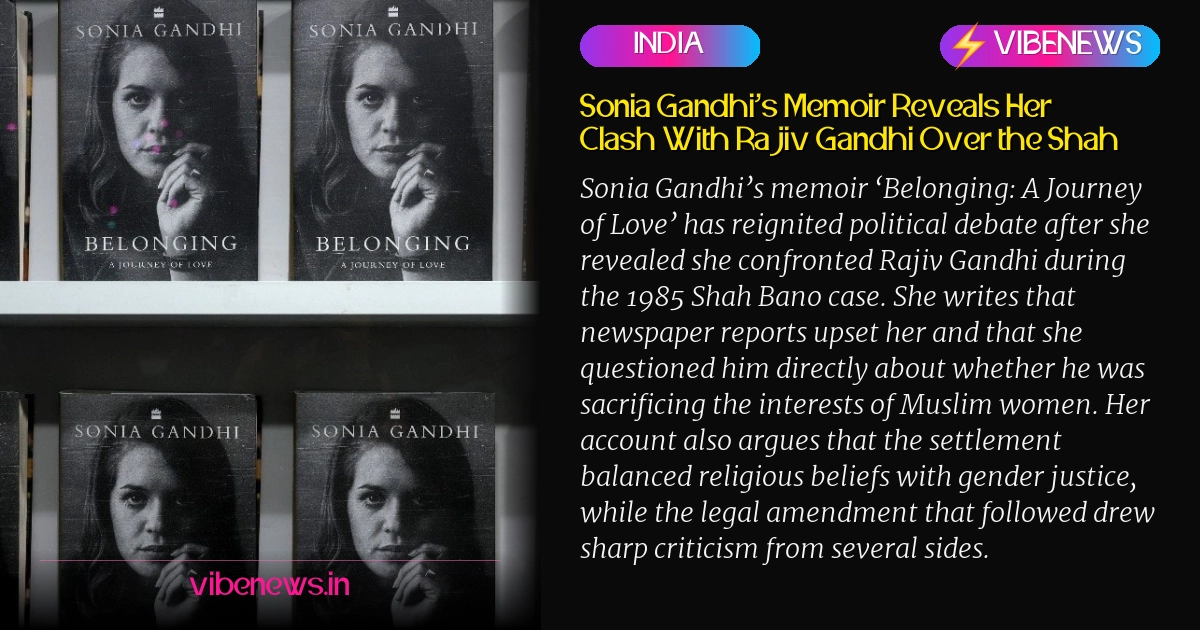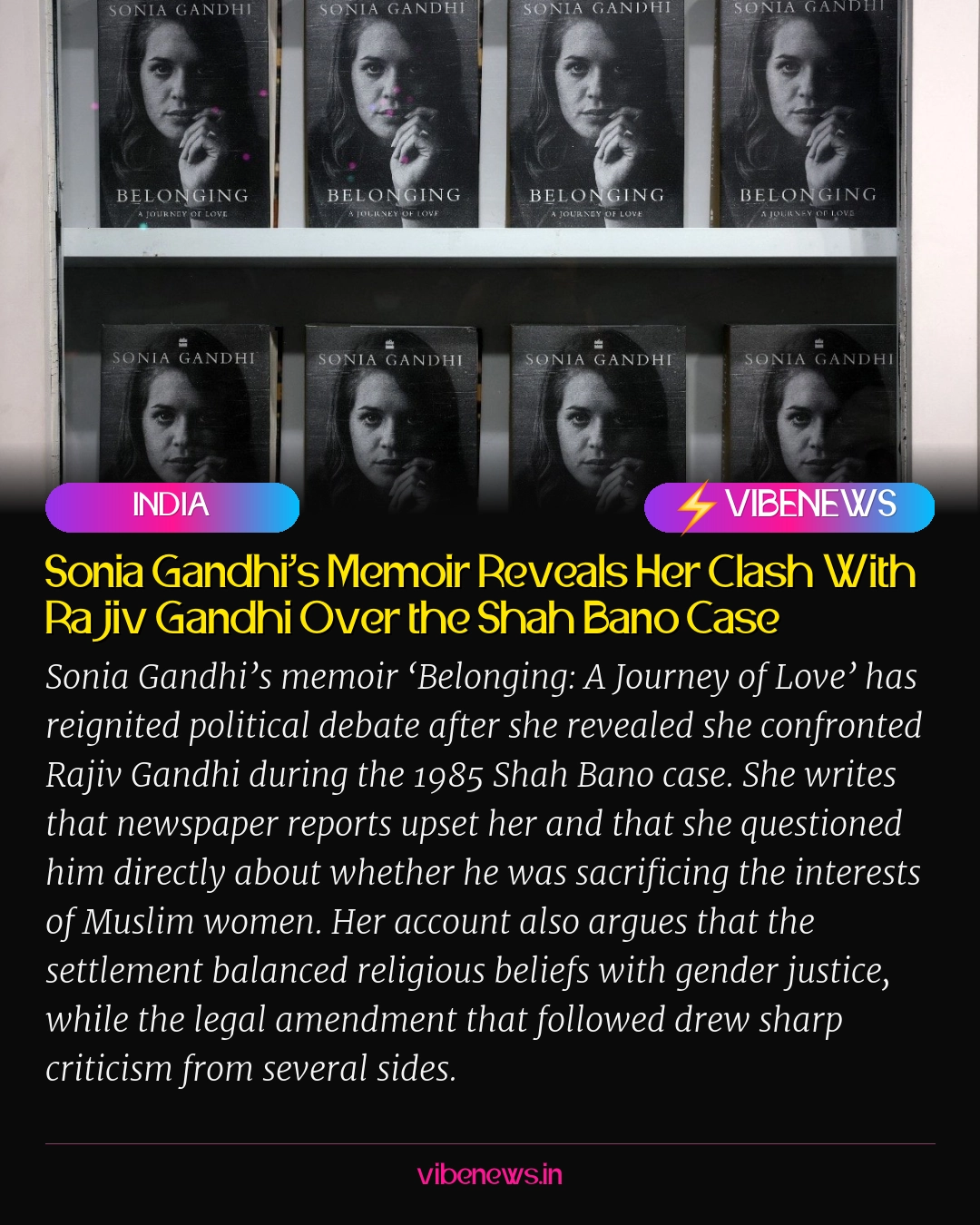
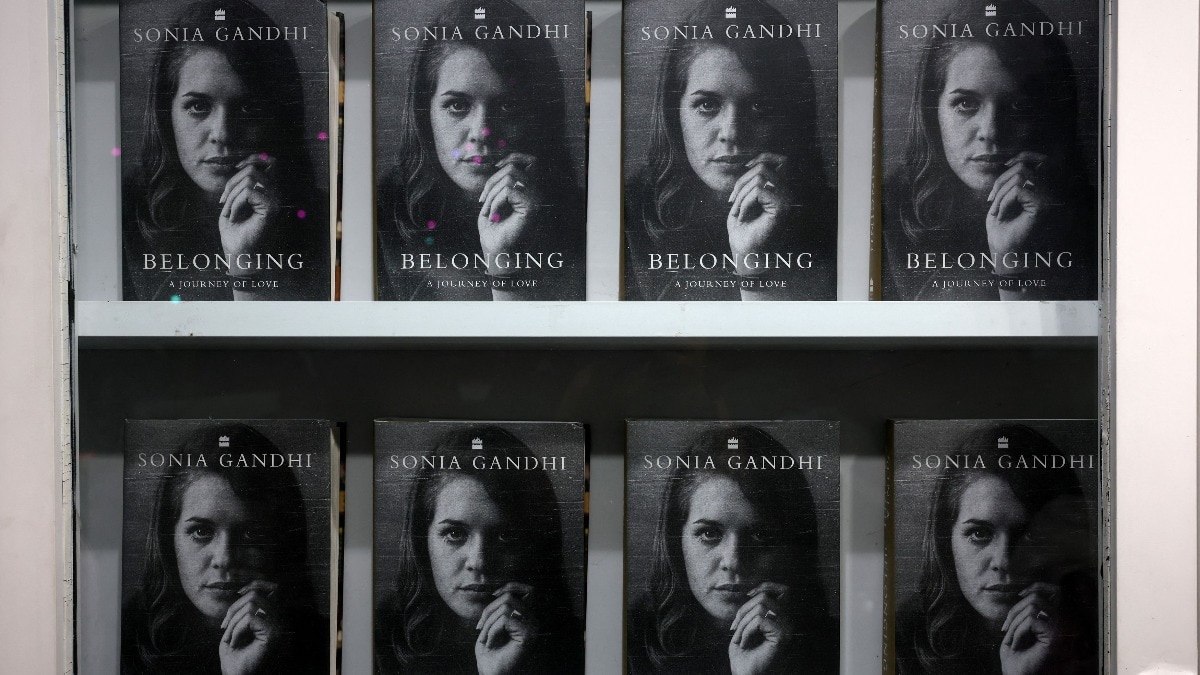
Sonia Gandhi has revealed a private argument with Rajiv Gandhi over one of the most contested episodes of his tenure as prime minister. In her memoir ’Belonging: A Journey of Love’, the senior Congress leader writes that she confronted her husband during the 1985 Shah Bano case, and the book’s release has already set off fresh political debate.
The memoir has been on the market for only a short time, but the Shah Bano passage is drawing the most attention. Sonia writes that newspaper reports during the case left her deeply troubled. She did not keep those concerns to herself. According to her account, she pressed Rajiv Gandhi on whether the government was letting the interests of Muslim women be sacrificed.
“I argued with him and asked: the newspapers are accusing you of sacrificing the interests of Muslim women. What is going on? Why are you letting this happen?”
The exchange did not end quietly. Sonia says Rajiv Gandhi reacted with irritation. He told her he was trying to deal with a difficult situation fairly and asked whether he would not protect women’s rights. He also asked whether she did not know him. The moment is a rare public look at a disagreement between a sitting prime minister and his wife, described in her own words.
The settlement she defends
Sonia’s account is not only a story of conflict. She also defends the outcome Rajiv Gandhi accepted. In her telling, he was trying to solve the problems faced by Shah Bano and women like her without undermining the entire framework of Muslim personal law. She argues that the settlement balanced religious beliefs with gender justice.
She also points to money. The court had awarded Shah Bano a monthly maintenance of Rs 179.2, which Sonia describes as miserable. In her view, the settlement gave Muslim women a far more proper and dignified share than that amount.
Her position comes with a caveat. Sonia acknowledges that the legal amendment that overturned the court’s ruling was a political step, and it drew heavy criticism. The BJP accused the government of practising vote bank politics. Progressive liberals, according to the memoir, saw the move as a surrender to the conservative elements of the Muslim community.
The Supreme Court question
Sonia uses a later verdict to make her case. She writes that in 2001, the Supreme Court upheld Rajiv Gandhi’s stand on the 1986 Muslim Women (Protection of Rights on Divorce) Act. For her, that ruling is a vindication of the position her husband took, even as the political storm around the law continued.
A wider attack on the RSS and BJP
The memoir does not stop at the Shah Bano episode. Sonia also attacks the RSS and the BJP. She writes that the RSS envisioned a Hindu nation that would give Muslims, Christians and other religious minorities second-class citizenship. In her argument, that would replace the constitutional ideals of equality, pluralism and secularism.
She ties this ideology to the present. According to Sonia, the supremacist thinking of the RSS later became the political agenda of the BJP. That link is central to how she frames the Shah Bano story. The 1985 argument, in her telling, was not just about one divorced woman’s maintenance. It was part of a longer fight over what kind of country India should be.
Why the book matters now
The memoir lands in a politically charged climate, and the Shah Bano case has long been a flashpoint between secularism, personal law and women’s rights. What makes this account stand out is its personal quality. Readers are hearing a version of the argument from inside the household, with Sonia describing her own anger, her questions and her husband’s reply.
The book does not settle the debate, and the sources offer only Sonia’s account of these events. Her claims about her husband’s intentions and the political reaction to the amendment come from her own writing. What is clear is that she has chosen to put a private disagreement on the public record, and that choice has pushed one of India’s most argued-over decisions back into the headlines.
TL;DR
- Sonia Gandhi’s memoir ‘Belonging: A Journey of Love’ reveals she argued with Rajiv Gandhi during the 1985 Shah Bano case.
- She writes that newspaper reports on the case left her troubled and that she questioned whether Muslim women’s interests were being sacrificed.
- Rajiv Gandhi reportedly grew irritated and asked whether she did not know him, according to her account.
- Sonia defends the settlement, arguing it balanced religious beliefs with gender justice and gave women a more dignified share than Rs 179.2 monthly maintenance.
- She notes the 1986 legal amendment drew heavy criticism, and says the Supreme Court upheld Rajiv Gandhi’s stand in 2001.
- The memoir also attacks the RSS and BJP, linking the RSS’s vision of a Hindu nation to the BJP’s political agenda.