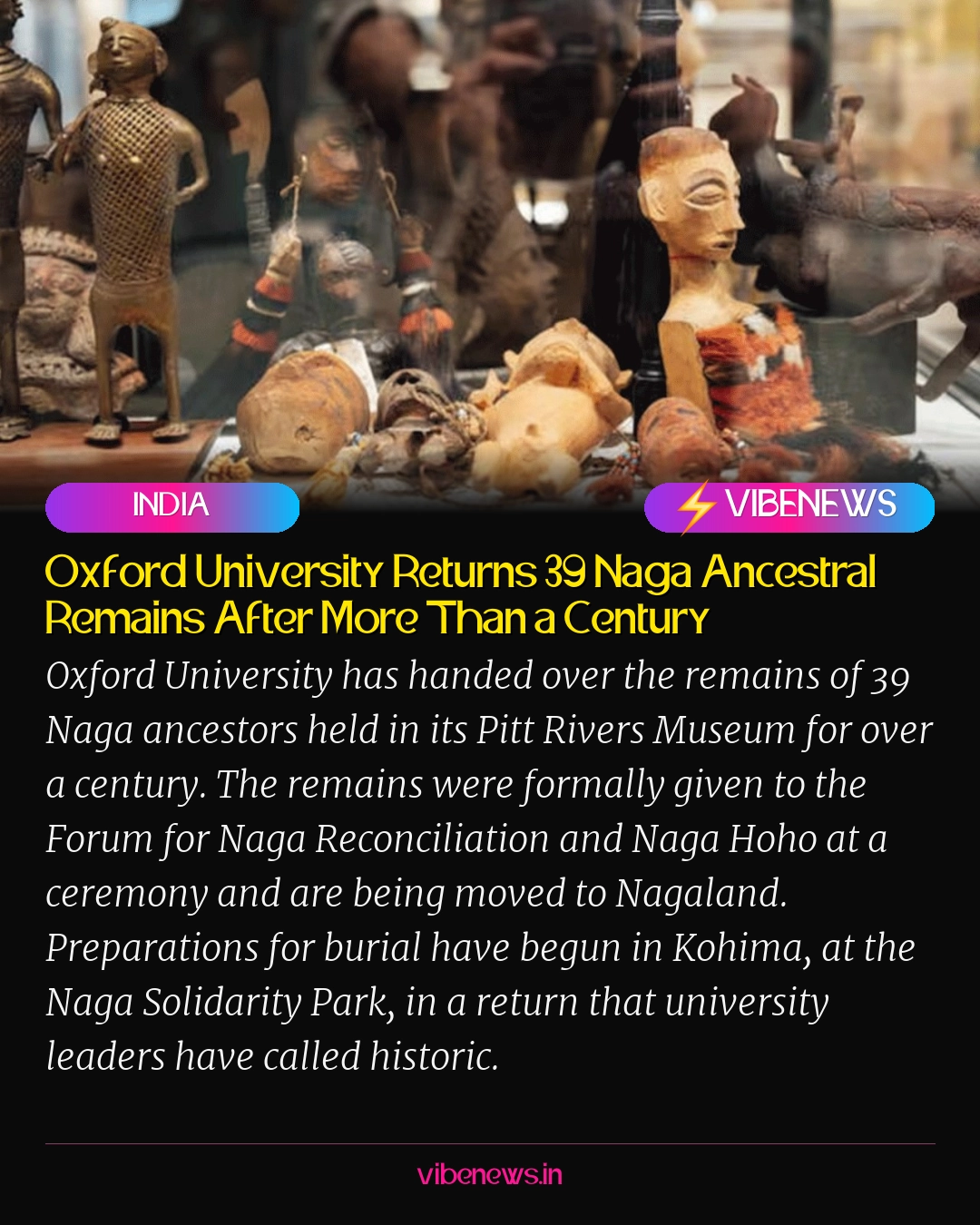
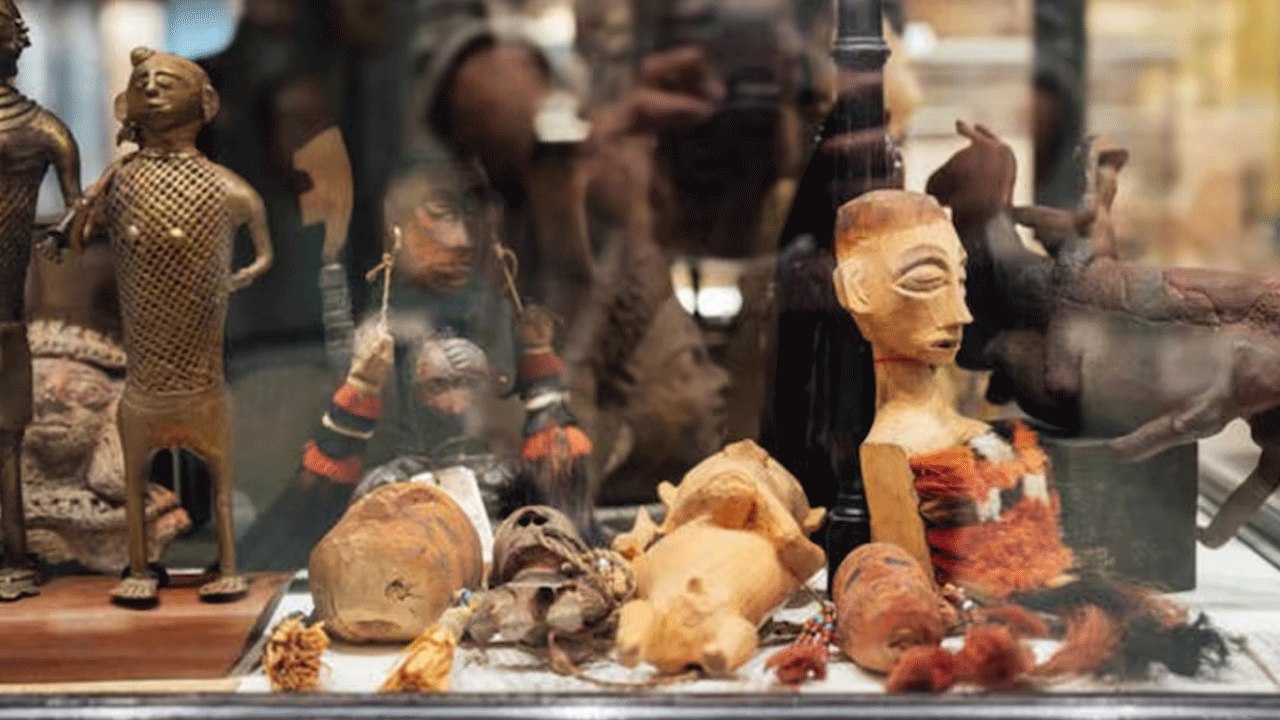
Oxford University has returned the remains of 39 ancestors of the Naga people, which had been kept in its museum for more than a century. The handover took place at the Pitt Rivers Museum, where the university formally gave the remains to the Forum for Naga Reconciliation (FNR) and the Naga Hoho organisation.
The FNR said the remains are being moved to Nagaland. In a statement, the group confirmed the transfer was part of the formal handover and that the remains would be taken back to the region they came from.
Professor Irene Tracey, the university’s Vice-Chancellor, described the return as a historic milestone in the relationship between Oxford University and the Naga people. Her words underline how much weight the event carries for an institution that has held these remains for generations.
For the Naga community, the return is more than a logistical handover. An FNR representative, Sanyu, recalled how his own village was set on fire during British colonial rule. That personal memory shows why the question of who holds ancestral remains, and how they were acquired, still matters to families whose history was shaped by colonial violence.
The remains are now heading to Kohima, the capital of Nagaland, where preparations for burial have already started at the Naga Solidarity Park. The park will be the place where the ancestors are laid to rest, bringing the remains back to the soil of their homeland after more than a hundred years away.
The story sits at a point where Indian states and communities have increasingly pressed for the return of human remains and cultural objects held in overseas museums. Nagaland is an Indian state, so the handover reaches home in a direct way. Families and community groups in the region now have a clear example of a British university returning remains to Naga representatives.
Several details remain unclear from the available reporting. The reports do not describe how the remains were originally collected, nor do they give a timeline for the burial beyond the start of preparations. They also do not say how many more Naga remains might remain in other collections. Readers should watch for further statements from the FNR, Naga Hoho and the university as the burial in Kohima takes shape.
What the reporting does make clear is that the remains of 39 people, held in an Oxford museum for more than a century, are now on their way home. The ceremony at the Pitt Rivers Museum marks the moment the university let go of them, and the burial in Nagaland will mark the moment they come to rest.
The university’s Vice-Chancellor, Professor Irene Tracey, described the handover as a historic milestone in the relationship between Oxford University and the Naga people.
TL;DR
- Oxford University handed over remains of 39 Naga ancestors held in its museum for more than a century.
- The handover took place at the Pitt Rivers Museum in the UK.
- The remains were given to the Forum for Naga Reconciliation and the Naga Hoho organisation.
- The FNR said the remains are being moved to Nagaland.
- Vice-Chancellor Professor Irene Tracey called the return a historic milestone.
- Burial preparations have begun at the Naga Solidarity Park in Kohima.