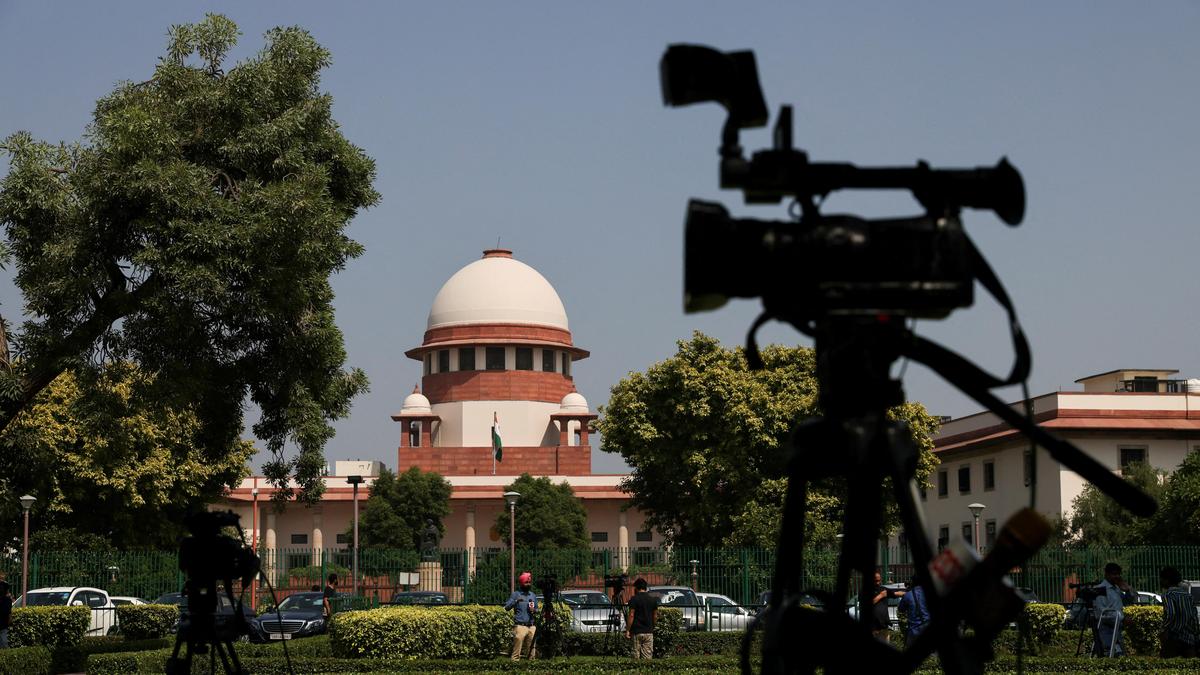
The Supreme Court on Friday, November 6, 2026, reaffirmed its March 11, 2026 judgment and upheld a 1993 Office Memorandum that excludes parental salary and agricultural income from the income and wealth test used to decide OBC non-creamy layer status. The ruling keeps that rule firmly in place, and the Centre has now come back to the court asking for clarity on what the March verdict means in practice.
The court did not simply move on from the March judgment. It went back to it and stood by it. For families who had hoped the earlier verdict might be read in a narrower way, that is a hard outcome to absorb, and it closes off one line of argument for now.
What the creamy layer test is meant to do
The creamy layer is the idea that better-off households within the Other Backward Classes category should not receive the benefits of reservation meant for those who remain socially and economically disadvantaged. To sort families into or out of that group, authorities look at income and wealth. The question is which income counts, and whose.
That is where the 1993 memorandum comes in. It set out that parental salary and agricultural income would not be counted under the income and wealth test. In other words, the money a parent earns from a salaried job, and the income a family draws from farming, sit outside the calculation used to decide non-creamy layer status. The Supreme Court’s decision on November 6 confirmed that this exclusion still stands.
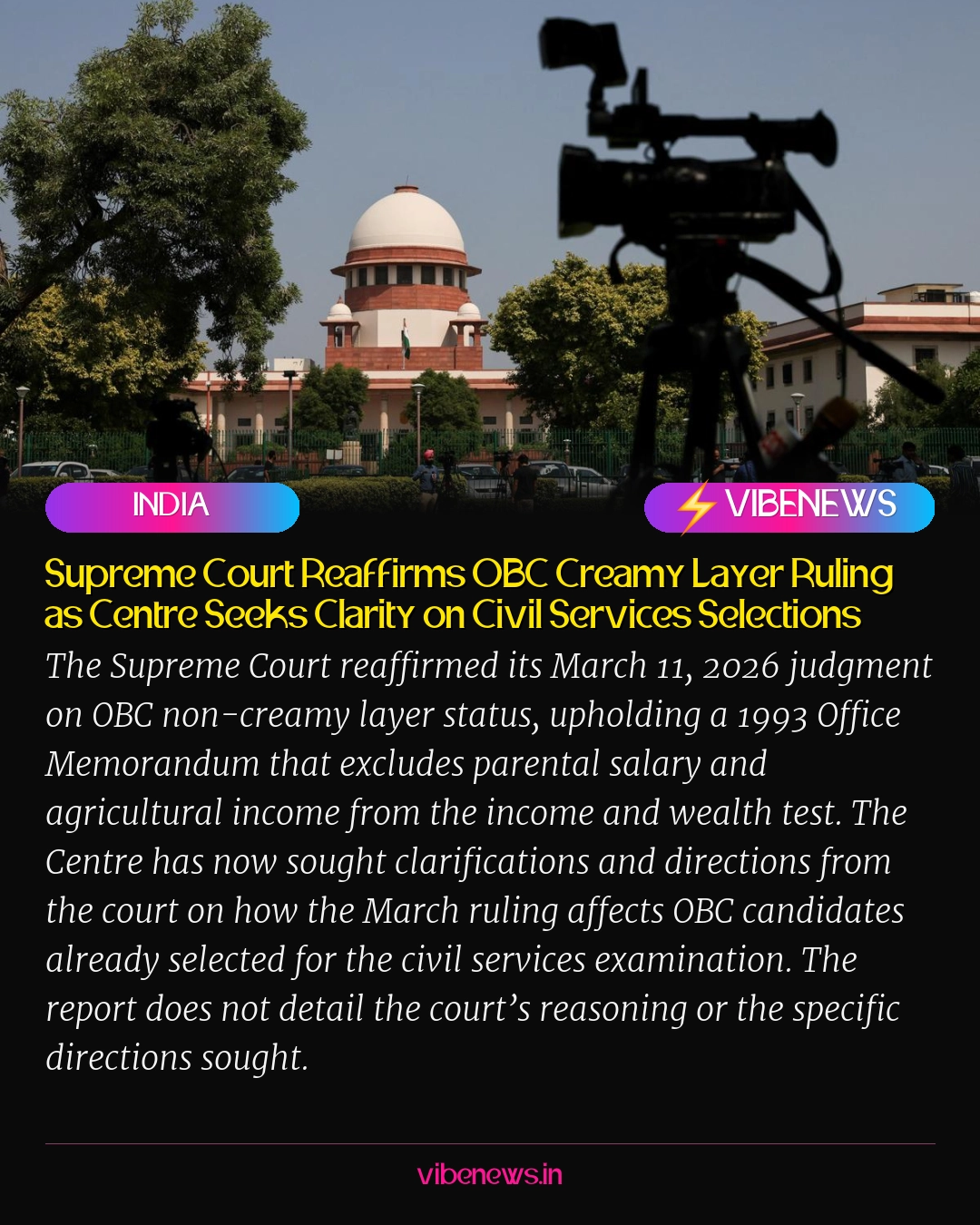
The Supreme Court reaffirmed its March 11, 2026 judgment, upholding a 1993 Office Memorandum which excluded parental salary and agricultural income from the income/wealth test for determining OBC non-creamy layer status.
Why the Centre is asking for more
Reaffirming a judgment is one thing. Applying it to people who have already been through a selection process is another. The Centre has sought clarifications and appropriate directions from the Supreme Court on the liability of the March 11 judgment when it comes to claims made by OBC candidates who were selected for the civil services examination.
The phrase liability is the one to watch. It points to a practical question that goes beyond legal theory. If the March judgment changes how OBC status is assessed, what does that mean for candidates whose selections were made under a different understanding? The source report does not spell out the specific directions the government wants, and it does not say how the court is likely to respond. Those details will matter a great deal to the candidates involved.
The Centre’s request also shows that the government is not treating the matter as closed. Asking for directions means it wants the court to say, in clear terms, how the earlier verdict should be handled for those already in the system. Until that comes, uncertainty hangs over the civil services claims that are still under consideration.
Who this touches
The most direct impact falls on OBC candidates who were selected for the civil services examination and whose claims are now being weighed against the March judgment. Beyond them, the reaffirmed 1993 memorandum sets the rule for how income and wealth are read for every OBC family seeking to establish non-creamy layer status. Any change in how that rule is applied would ripple well past the exam halls.
It is worth being precise about what the court has and has not said, based on the information available. The reaffirmation confirms the March 11 judgment and upholds the 1993 memorandum. The Centre’s application seeks further clarity on the judgment’s effect on selected candidates. Beyond that, the available reporting does not describe the detailed reasoning, the bench composition, or a timeline for the next hearing. Readers should treat those gaps as open questions rather than settled facts.
What happens next
The next step is in the court’s hands. It will have to decide whether to issue the directions the Centre has requested and, if it does, how far those directions reach. Candidates who were selected, along with those whose claims are still pending, will be watching closely, because the answer will determine how the March judgment plays out in real cases rather than in principle.
For now, the position is clear on one point. The 1993 memorandum remains the rule, and the exclusion of parental salary and agricultural income from the income and wealth test has been reaffirmed at the highest level. What the Centre wants to know is what that rule means for people who have already crossed the finish line.
TL;DR
- The Supreme Court reaffirmed its March 11, 2026 judgment and upheld a 1993 Office Memorandum on OBC creamy layer status.
- The 1993 memorandum excludes parental salary and agricultural income from the income and wealth test.
- The ruling was delivered on Friday, November 6, 2026.
- The Centre has sought clarifications and directions on the March 11 judgment’s impact.
- The government’s request centres on OBC candidates selected for the civil services examination.
- The report does not detail the court’s reasoning or the specific directions the Centre has sought.