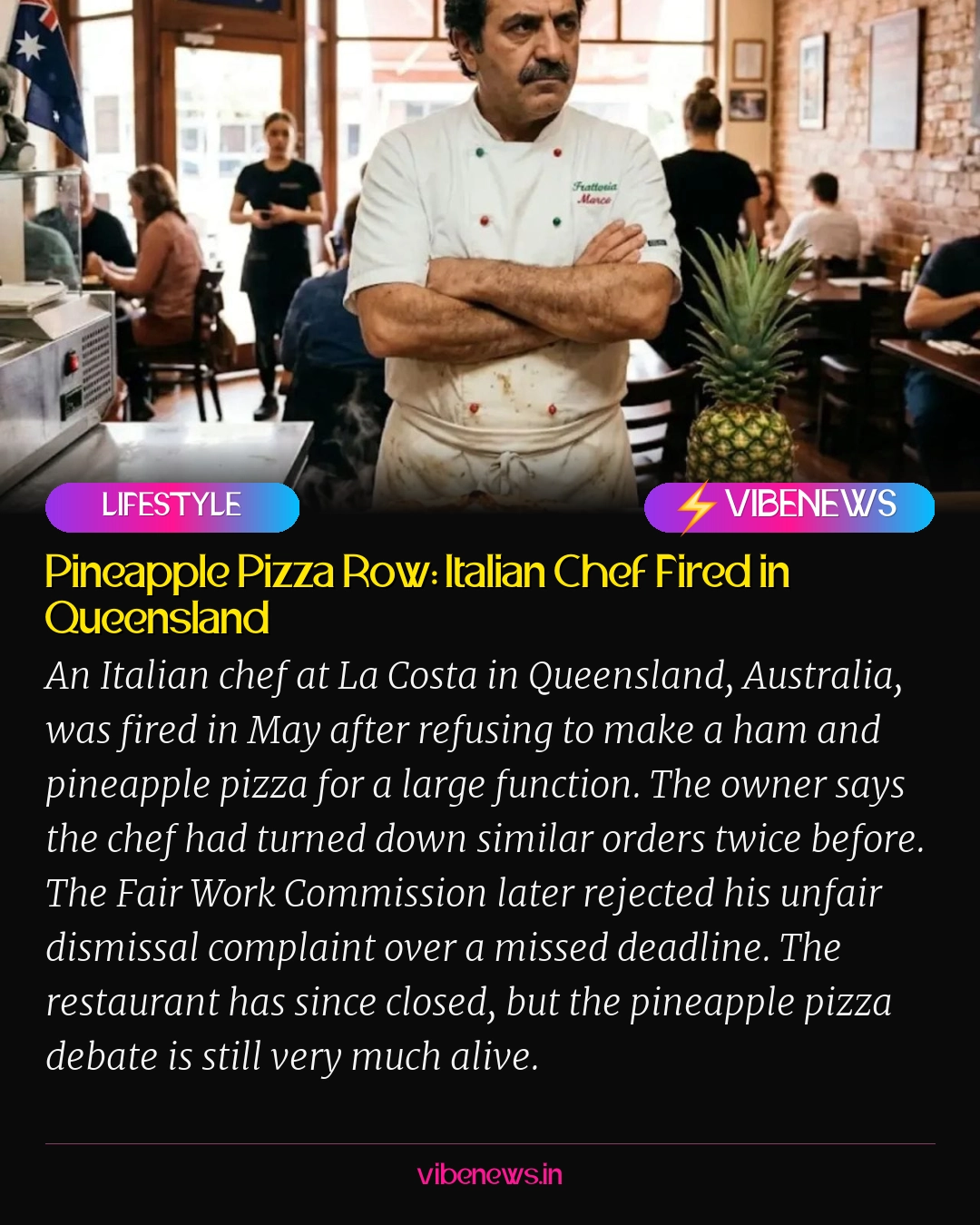
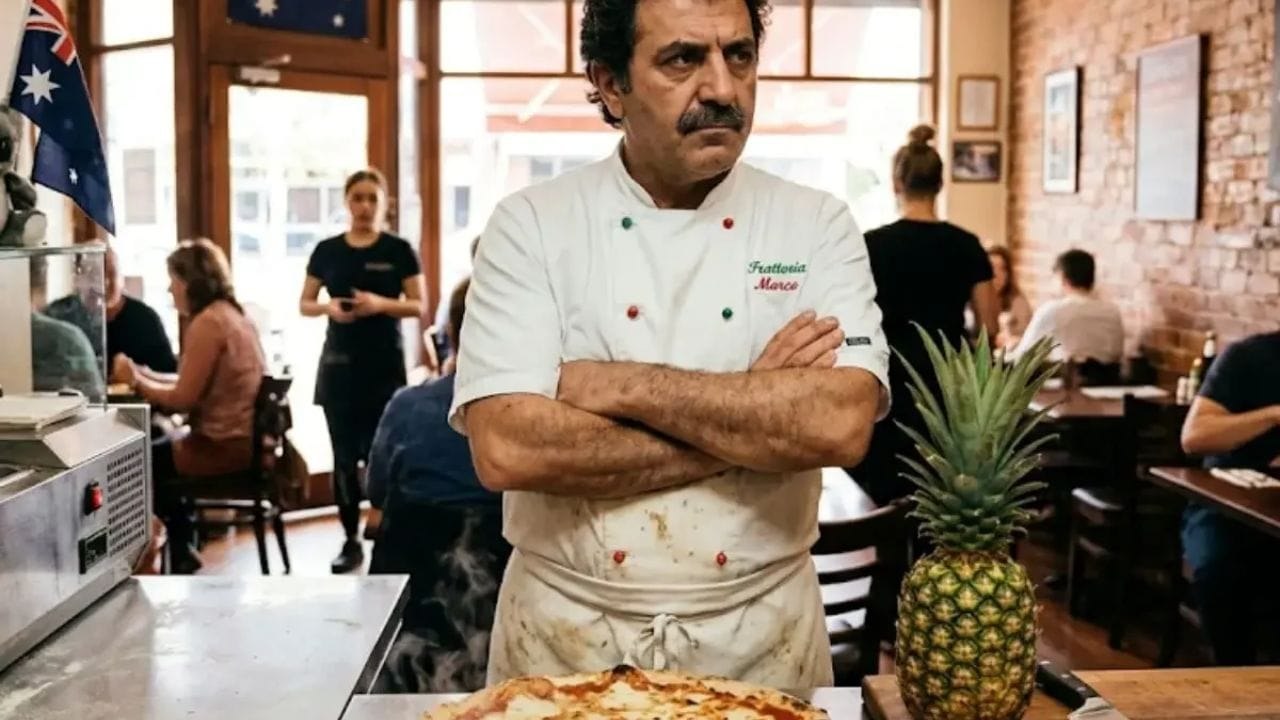
An Italian chef at La Costa, a restaurant in Queensland, Australia, lost his job after refusing to put pineapple on a pizza. The chef, David Tamburella, was dismissed in May, about two weeks after the incident that triggered the dispute. The restaurant’s owner, Elliot Ingram, says the pizza was ordered for a large function, and the chef would not make it.
La Costa is known for traditional Italian cooking. The order came from a guest at a big event held at the restaurant. The guest asked for a pizza topped with ham and pineapple. The chef looked at the order and refused outright.
Putting pineapple on a pizza, the chef said, was an insult to his Italian culture, and he could not make one.
Management says this was not the first time. According to the restaurant’s owners, Tamburella had turned down similar orders twice before. Management raised his conduct and called a meeting with him. The situation did not change, and the restaurant terminated his employment two weeks after the function incident.
The price of the pizza
The owner put a number on the booking that made the story travel further. The customer behind the function was spending 15,000 Australian dollars, which the report puts at roughly Rs 9 lakh in Indian currency. That is a lot of money for one party, and it makes the refusal look far more expensive than a single pizza.
Ingram did not defend the topping as a favourite. He admitted that ham and pineapple is not his own preferred pizza. His argument was about service, not taste. He said a restaurant should respect the preferences of the customers who walk through its doors.
Ingram said he has 17 years of experience in hospitality and ten years of experience running restaurants. In his view, that experience has taught him where to hold a line and where to accommodate a guest. He was clear on which side he thinks a restaurant should land on when a customer asks for something specific. The restaurant, he said, has to be ready to serve the dish the customer wants.
The chef takes his case to the commission
Tamburella did not accept the dismissal quietly. He challenged the decision at the Fair Work Commission, the body that handles workplace disputes in Australia, and argued that his firing was unfair.
He also raised a second issue. He said that while working at the restaurant, he collided with a metal handrail. The impact broke bones in two places in his right hand. He argued that the injury was also one of the reasons he was let go.
The commission did not accept the complaint. Commissioner Jennifer Hunt found that Tamburella had lodged his application after the deadline for filing had passed. He also failed to show the exceptional circumstances needed to excuse the delay. That ruling closed the unfair dismissal case, and the chef’s challenge did not succeed.
A pineapple-growing region at the centre of it
There is a detail in this story that gives the argument a strange twist. The Queensland region where the restaurant operates is known for growing pineapples. A large share of the pineapples grown commercially in the country come from that area. So the pizza dispute played out in the very place that supplies so much of the fruit.
The restaurant itself is no longer open. La Costa closed in July. The chef, meanwhile, has found work at another Italian restaurant. According to the report, the menu there does not include any pizzas with pineapple toppings. The chef appears to have made his own rule clear, even in a new kitchen.
A small order, a big question
A simple question about one pizza topping ended with a chef losing his job, a legal challenge that failed on a deadline, and a restaurant closing months later. The story raises an old question in a new way. When a kitchen has its own traditions, how much should it bend for the person paying the bill?
One side of the argument is about heritage. Italian cooking has strong views about what belongs on a pizza, and the chef framed the request as an affront to that culture. The other side is about hospitality. The owner argued that a restaurant has to be willing to serve what customers ask for, even when the dish is not its own favourite.
The report does not settle that debate, and it does not need to. What it does show is how quickly a food argument can move from the kitchen to a courtroom-style hearing and then to the global conversation. The pineapple on pizza question has divided people for years, and this case gave it a new set of facts.
So the question for readers is the one the report leaves open. Would you eat a pizza with pineapple on it, or do you think it is not a pizza at all?
TL;DR
- An Italian chef in Queensland, Australia, was fired in May after refusing to make a ham and pineapple pizza for a large function.
- The chef, David Tamburella, reportedly turned down similar pineapple orders twice before, and management held a meeting about it.
- A function booking worth 15,000 Australian dollars, roughly Rs 9 lakh, was part of the dispute at La Costa restaurant.
- The Fair Work Commission rejected Tamburella’s unfair dismissal complaint after finding he had filed it past the deadline.
- La Costa closed in July, and Tamburella now works at another Italian restaurant whose menu has no pineapple pizzas.