The gorinka, known in English as the Common Myna, is a clever bird that lives close to human homes across the Indian subcontinent. It can mimic speech, often stays with a single partner for life, and is willing to take on birds much larger than itself.
Most people have seen one without really looking. Scan a wall or a rooftop in a village or a city and a gorinka is likely to be sitting there, moving with quick, restless energy. That everyday presence hides a set of traits that most people never learn about.
What the bird looks like
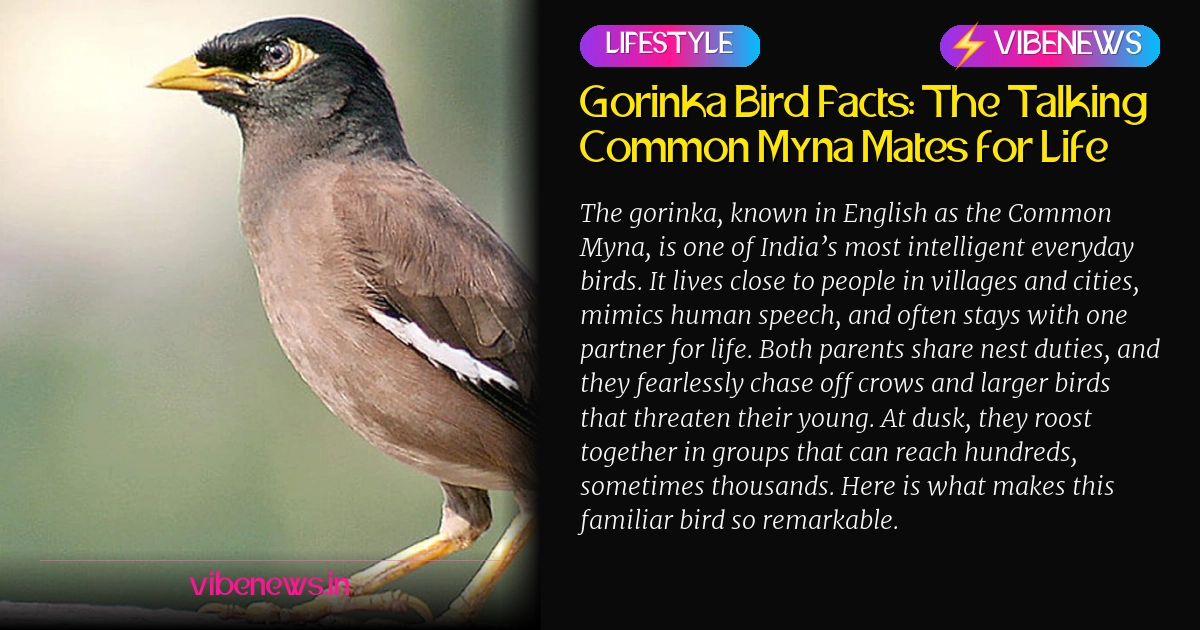
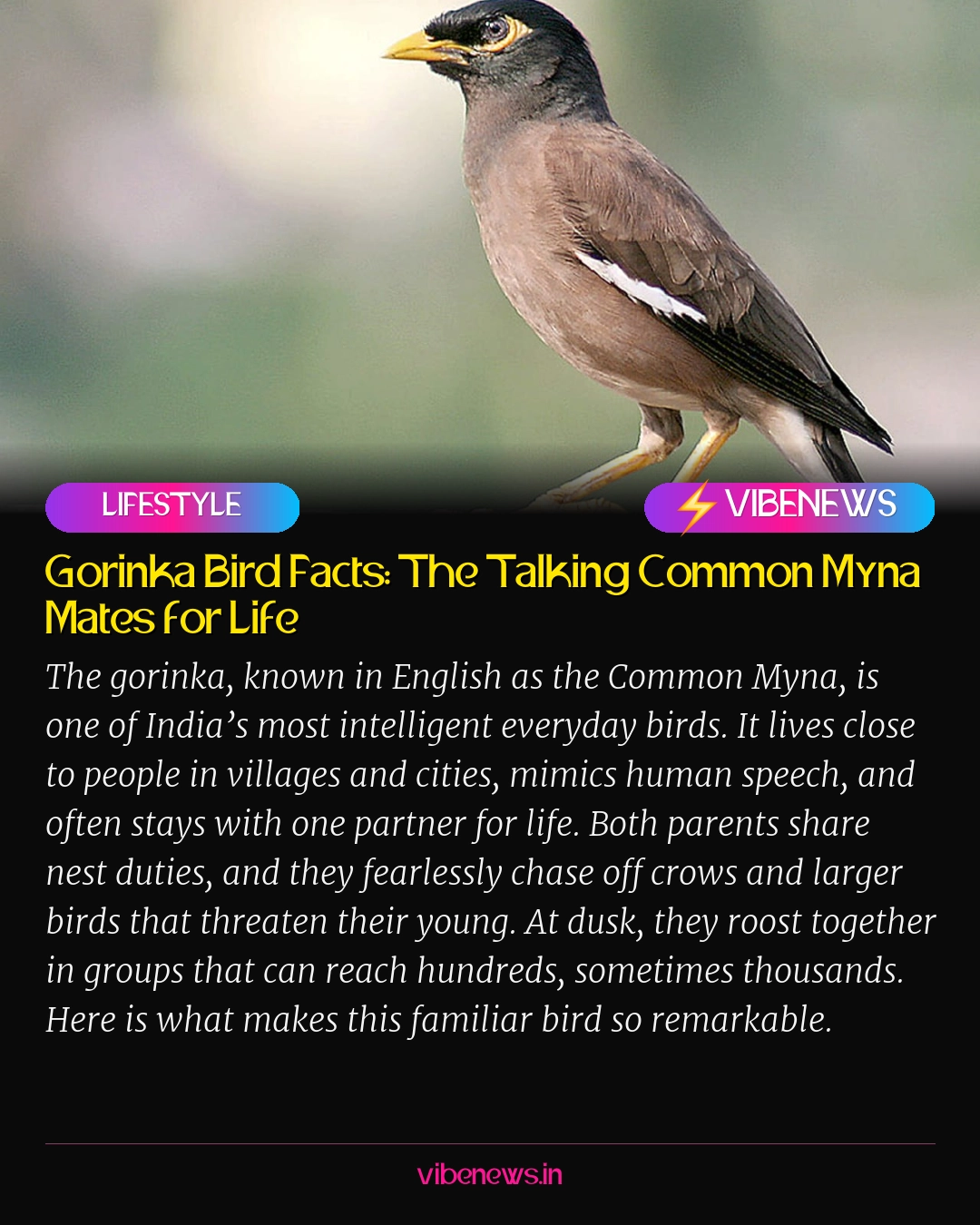
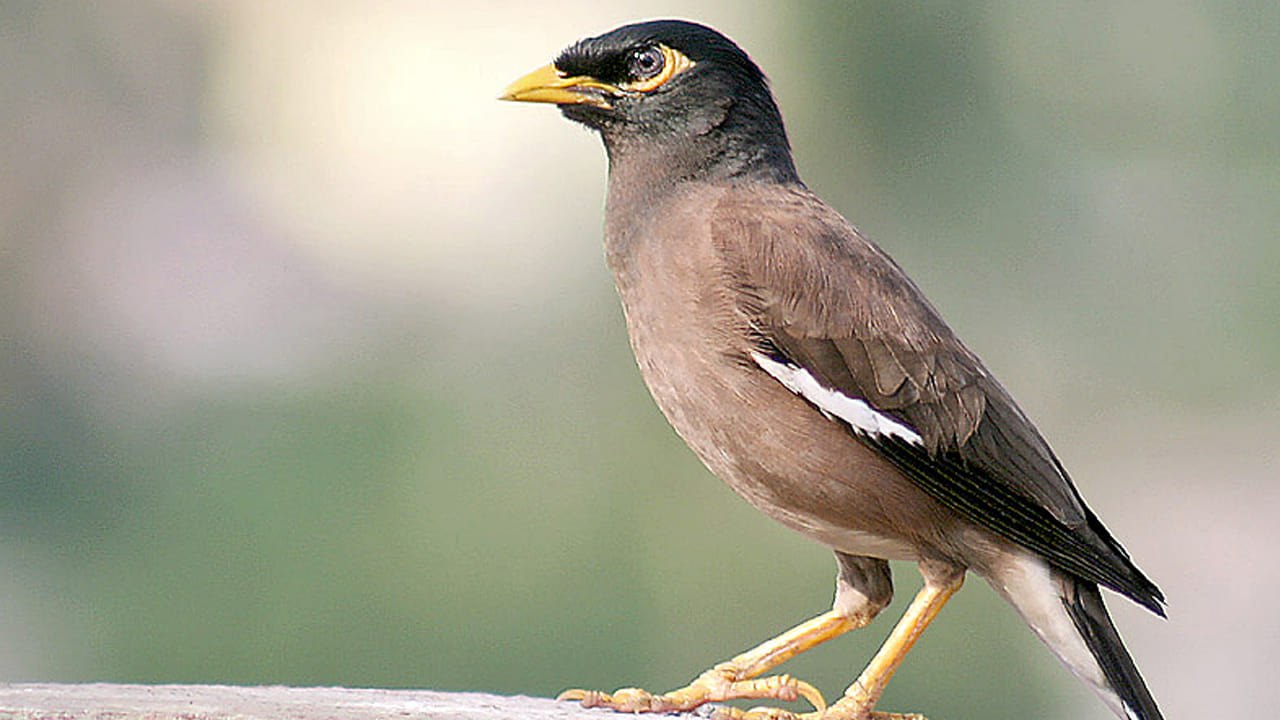
The Common Myna has a black head and a brown body, set off by a yellow bill and yellow legs. Behind each eye is a patch of yellow bare skin, and white patches show under its wings. These markings matter. They help separate the gorinka from the titu pitta, a bird it resembles at first glance.
Body shape, colours and the yellow skin behind the eyes are the features that make the gorinka easy to recognise once you know what to look for.
Where it lives and what it eats
Gorinkas prefer to stay near the places where people live, whether that is a village or a busy city. They do not seem to need wild forest to thrive. Their habitat is shaped by human settlements, and they settle comfortably into the spaces people build.
Their diet is broad. Gorinkas eat fruits, worms, insects and other small food items, which makes them a common sight wherever there is food to find.
The Indian subcontinent is the bird’s natural home. The story looks different in other parts of the world. In some foreign regions, the gorinka has turned into an invasive species, competing with local birds for food and places to nest. In India, it lives alongside people and plays a key role in the environment.
A voice that copies the world around it
Mimicry is the trait that makes the gorinka stand out. The bird can imitate the words people speak, the calls of other birds and the sounds it hears around it. A single bird can sound like a neighbour, a passing bird or a noise from the street.
Gorinkas can copy the words people speak, the calls of other birds, and the sounds heard all around them.
That skill is more than a party trick. It shows how closely the bird watches and listens to the world it shares with people. Its ability to absorb sounds from its surroundings is one of the clearest signs of why it is counted among India’s most intelligent everyday birds.
Partners for life
Loyalty is the second big surprise. Gorinkas usually pair with one partner, and many couples stay together for their entire lives. That bond is visible at nesting time, when the pair works as a team.
The birds build nests in tree hollows and in the gaps between buildings. Once the eggs are laid, both parents take part. They share the job of incubating the eggs, and they keep feeding the chicks until the young are raised. Few birds in the neighbourhood share the workload this evenly.
Fearless defenders
Size does not seem to scare the gorinka. When its nest or chicks are under threat, it takes on large birds, including crows, and drives them away. A bird that looks modest on a wall turns into a determined guard the moment its family is in danger.
That courage is one reason the gorinka is so easy to admire. It does not wait for a bigger bird to back down. It moves in and pushes the threat out.
Gathering at dusk
When evening falls, gorinkas gather together to sleep. They choose a single tree or a suitable spot and settle there in large numbers. Groups can range from tens to hundreds of birds, and in some cases the number climbs into the thousands.
The sight of a roost filling up at sunset is a reminder that these birds are social as well as sharp. Their communal nights and their tight family bonds show two sides of the same nature.
Why the gorinka matters in India
The gorinka is a bird that has adapted to human life without losing its character. It stays near homes, eats a varied diet, copies sounds from around it, raises its young as a pair and defends its family with force. Those traits make it one of the clever and useful residents of the places where people live.
The next time a gorinka lands on a wall outside your house, watch closely. You may hear it copy a familiar sound, or see it chase away a crow. Either way, you are looking at one of India’s most interesting everyday birds.
TL;DR
- Gorinka, known in English as the Common Myna, is a clever bird that lives near human homes across the Indian subcontinent.
- It can mimic human speech, the calls of other birds and sounds from its surroundings.
- Many gorinkas pair with one partner, and some couples stay together for life.
- Both parents share incubating eggs and feeding chicks until the young are raised.
- Gorinkas drive away crows and other large birds that threaten their nests or chicks.
- At dusk, they roost together in groups ranging from tens to thousands of birds.