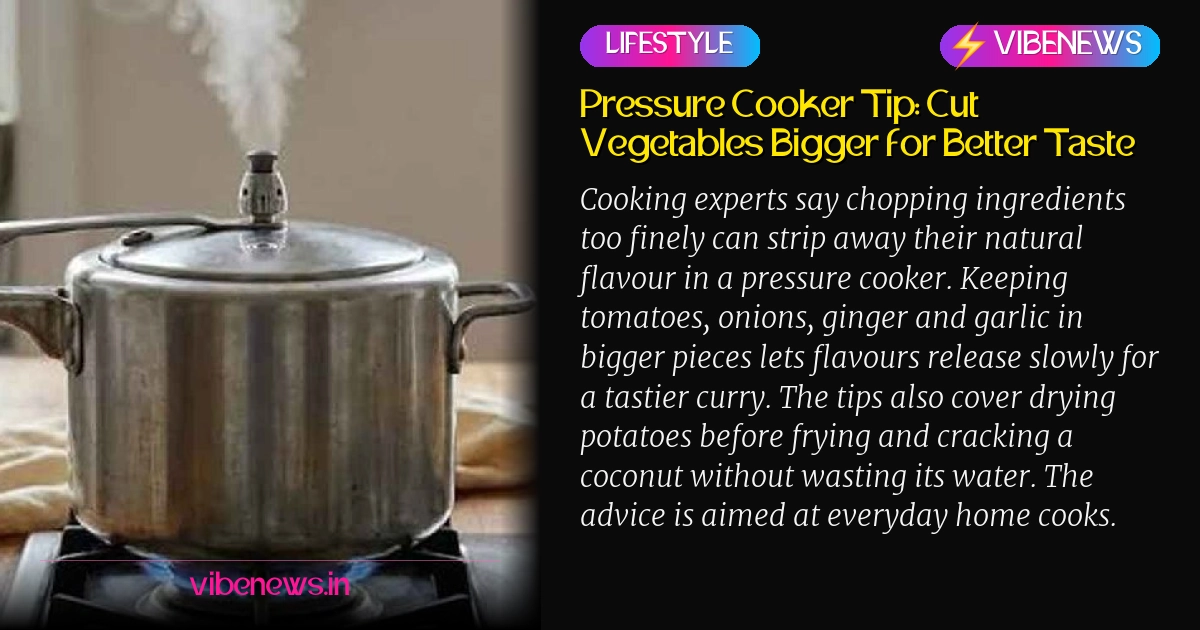
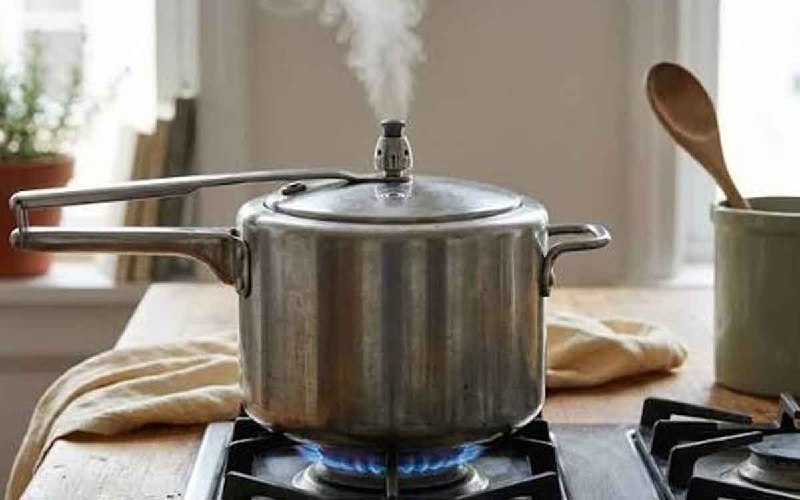
Cooking experts say chopping ingredients too finely can strip away their natural flavour inside a pressure cooker, and the fix is surprisingly simple: use a bigger knife cut. The advice was shared on November 2, 2026, and it targets the everyday habits that shape how a home-cooked meal tastes.
The experts say vegetables and other ingredients cut into very small pieces lose their natural taste once they go into the cooker. Slightly larger chunks, they argue, hold on to what makes the food taste like itself. The tip is especially useful for dishes that need a long cook time in the pressure cooker, such as curries and other slow-simmered meals.
The reasoning comes down to how the cooker works. Inside a pressure cooker, ingredients cook intensely and tend to break down quickly. Finely chopped pieces can lose their character in that process. Bigger pieces give the flavours room to develop gradually, so the dish comes out tasting fuller and more balanced.
Tomatoes, onions, ginger and garlic
The core ingredients in most everyday gravies are the ones the experts are most concerned about. Tomatoes, onions, ginger and garlic should be kept in larger pieces instead of being chopped into tiny bits or grated too thinly.
Tomatoes, in particular, should be cut into big pieces. Ginger does not need to be grated into fine threads. Instead, it can be crushed into coarser chunks. The experts stressed that this approach matters most for the tempering, known in Telugu as popu, which is added at the start of cooking. When those ingredients are larger, their flavours come out slowly as the dish simmers. The result, the experts said, is a curry with better taste and a richer aroma.
One line from the advice sums up the approach. In the experts’ words, roughly translated from Telugu:
Chop the ingredients too fine and the pressure cooker can strip away the natural taste that makes the food worth cooking.
Why slow release changes the result
Flavour in cooking is not a single burst. It builds over time as the ingredients break down and mix with liquid, oil and spices. Larger pieces release that flavour gradually, which is exactly what the experts want for longer cooking. Smaller pieces give up their taste too quickly, and the pressure cooker can then flatten the overall flavour of the dish.
That is why the tip applies most strongly to recipes that stay in the cooker for a while. Quick dishes may not show much difference. Long-cooked vegetable dishes and gravies, however, are where the change in taste becomes most noticeable, according to the advice.
Potatoes need to be dry before they hit the oil
The experts also shared an older kitchen tip that pairs well with the pressure cooker advice. Before frying potatoes, they should be dried completely. Any water left on the surface can cause hot oil to splatter, which is a real kitchen hazard.
Potatoes also follow the same logic as other ingredients. When preparing potatoes for curries or pressure cooker dishes that need longer cooking, they should be cut into bigger pieces rather than grated or chopped finely. That keeps them intact through the cooking process and helps them hold their taste.
Cracking a coconut without losing the water
Coconut is another ingredient that often feels tricky in a home kitchen, and the experts offered a method that is easy to follow. Look at the three eyes on top of the coconut. Between them, there are visible lines. Choose one of those lines and tap it gently with a heavy object.
Three taps should be enough, the experts said. After the third tap, the coconut should split into two halves. To avoid wasting the liquid inside, place a bowl underneath before you start. The coconut water will drain into the bowl as you crack the shell open, so it can be saved for use.
The coconut tip matters because it pairs practical kitchen skills with the bigger point of the advice. Small habits, from how a vegetable is cut to how a coconut is opened, shape how smoothly a meal comes together. The experts framed these tips as ways to make daily cooking easier and more rewarding.
What home cooks can take from the advice
The message from the experts is clear and easy to test in any kitchen. Cut tomatoes, onions, ginger and garlic into larger pieces when you use a pressure cooker, especially for dishes that take time. Dry potatoes before frying. Place a bowl under a coconut before you crack it open.
None of these changes requires special equipment. The advice relies on knife technique and simple preparation, which is why it suits everyday cooking. For anyone who has wondered why a pressure cooker curry tastes flat, the experts suggest looking first at the size of the pieces that went into the pot.
TL;DR
- Cooking experts say finely chopped ingredients can lose their natural taste in a pressure cooker.
- Tomatoes, onions, ginger and garlic work better in larger pieces, the experts advise.
- Larger cuts let flavours release slowly as the dish cooks, improving both taste and aroma.
- Experts also advise drying potatoes fully before frying to prevent hot oil from splattering.
- To crack a coconut, tap one of the lines between its three eyes with a heavy object three times.
- Place a bowl underneath to collect the coconut water while you crack the shell open.