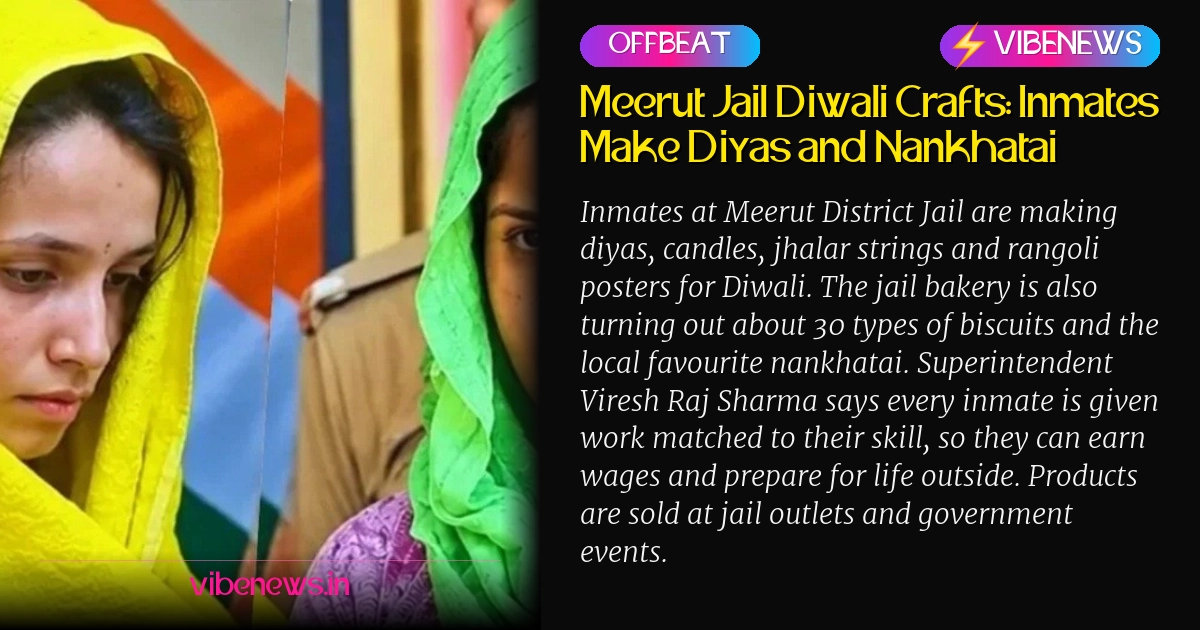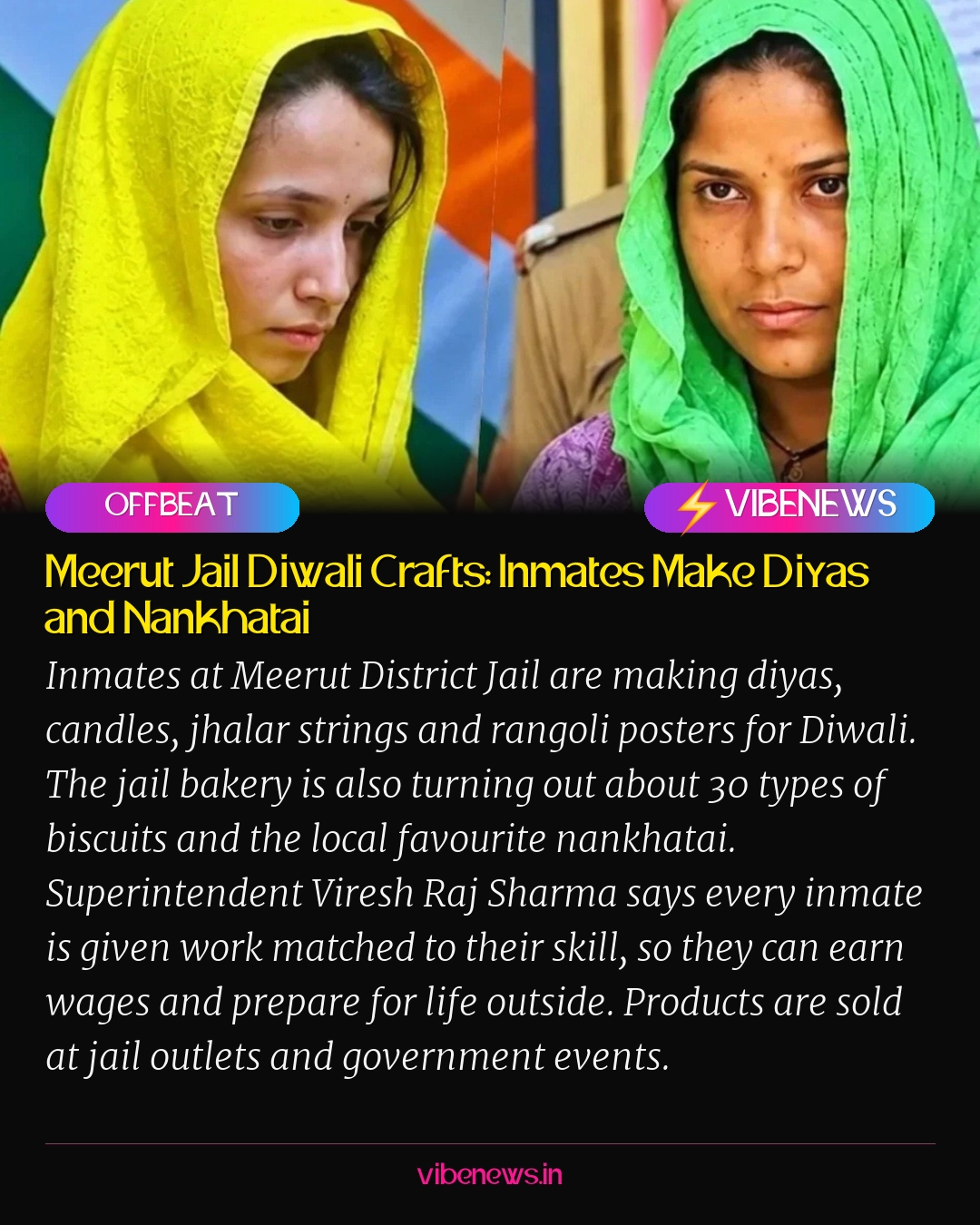

Inmates at Meerut District Jail are making Diwali lamps, candles and decorations inside the walls, and the jail is using their skills to give them work, wages and a path toward a new life. Female prisoners are producing thousands of diyas, coloured candles, wicks, jhalar strings and rangoli posters, while male inmates are handling cleaning, gardening and other tasks across the premises.
Diyas, Candles and Rangoli Posters Made Behind the Walls
The women’s barracks has become a busy workshop in the run-up to the festival. Thousands of diyas, coloured candles and their wicks are being prepared there, along with eye-catching jhalar strings and rangoli posters. The jail administration assigns work according to each inmate’s interest and ability, and the finished products are placed on sale at jail outlets.
The arrangement does two things at once. It gives the women paid employment, and it gives their handiwork a market beyond the prison gates. Inmates receive wages for their labour, which the jail says helps them move toward becoming self-reliant.
Familiar Names Among the Workers
Among those contributing to the Diwali preparations are Muskan and Ravita, two women whose names have drawn public attention for reasons linked to serious criminal cases. Muskan is lodged in the case known as the Neela Drum case, which is the murder case of Saurabh Rajput. Ravita is a convict in the murder case of Amit Kashyap. Inside the jail, Muskan is making diyas and jhalars and also doing stitching and embroidery work, while Ravita is making bags.
Male inmates Sahil and Amardeep are working on cleaning and the pruning of trees and plants within the jail campus.
Nankhatai and Thirty Kinds of Biscuits from the Jail Bakery
The jail bakery is another major centre for inmate skills. Around 30 varieties of biscuits are being prepared there, along with Meerut’s well-known nankhatai, which the jail is giving special attention. These products are being sold through various outlets and government programmes.
The bakery’s work has already reached official tables. Biscuits made inside the jail were served recently at a meeting in Meerut of officials from 18 districts, held in connection with preparations for the upcoming assembly elections.
Footballs That Crossed Oceans
The jail also makes footballs. Superintendent Viresh Raj Sharma said the footballs produced there were sent to Australia last year. For a prison workshop, that is a striking piece of proof that the work being done inside these walls can meet demand far beyond the local market.
Why the Work Matters to the Inmates
The aim goes beyond production. The jail administration wants to connect every inmate with work, build skills that stay with them, and prepare them to return to mainstream society. Earning a wage, even while still inside, gives people something concrete to hold on to.
Senior Jail Superintendent Viresh Raj Sharma explained the thinking behind the programme.
The jail administration’s effort is to give every inmate work according to their interest, so that they can earn a livelihood through their own hard work.
For the people making the lamps, the message is simple. The skills they sharpen now could support them after release, and the candles and biscuits lining the outlet shelves carry the proof that their hands are capable of making something people want to buy.
As Diwali approaches, the jail’s workshops are lit by something more than the lamps on the production line. Inmates are finding a purpose, a paycheck and a reason to look forward, and the festival they are preparing for is becoming a symbol of a fresh start.
TL;DR
- Inmates at Meerut District Jail are making diyas, candles, jhalar strings and rangoli posters ahead of Diwali.
- Women prisoners are producing thousands of diyas, coloured candles and wicks inside the barracks.
- The jail bakery is preparing about 30 varieties of biscuits along with Meerut’s famous nankhatai.
- Jail products are sold through jail outlets and government programmes, giving inmates wages and a market.
- Superintendent Viresh Raj Sharma says every inmate is assigned work matching their interest and skill.
- Footballs made inside the jail were sent to Australia last year.