Nellutla Ramadevi, a Telugu writer and former tuition teacher, recalled in a Sunday column published on November 15, 2026, how a young student once tried to sell her two sarees, bought from relatives in Surat. The student’s family had ordered the sarees to sell locally, and the deal that followed became a small family negotiation that the writer still remembers years later.
For seven or eight years, Ramadevi ran tuition classes, and more than sixty children studied with her during that time. She describes those years as full of happy memories. In the same period, village level workers, known as VLWs, who worked in nearby villages rented houses in her village, and their children came to her for lessons.
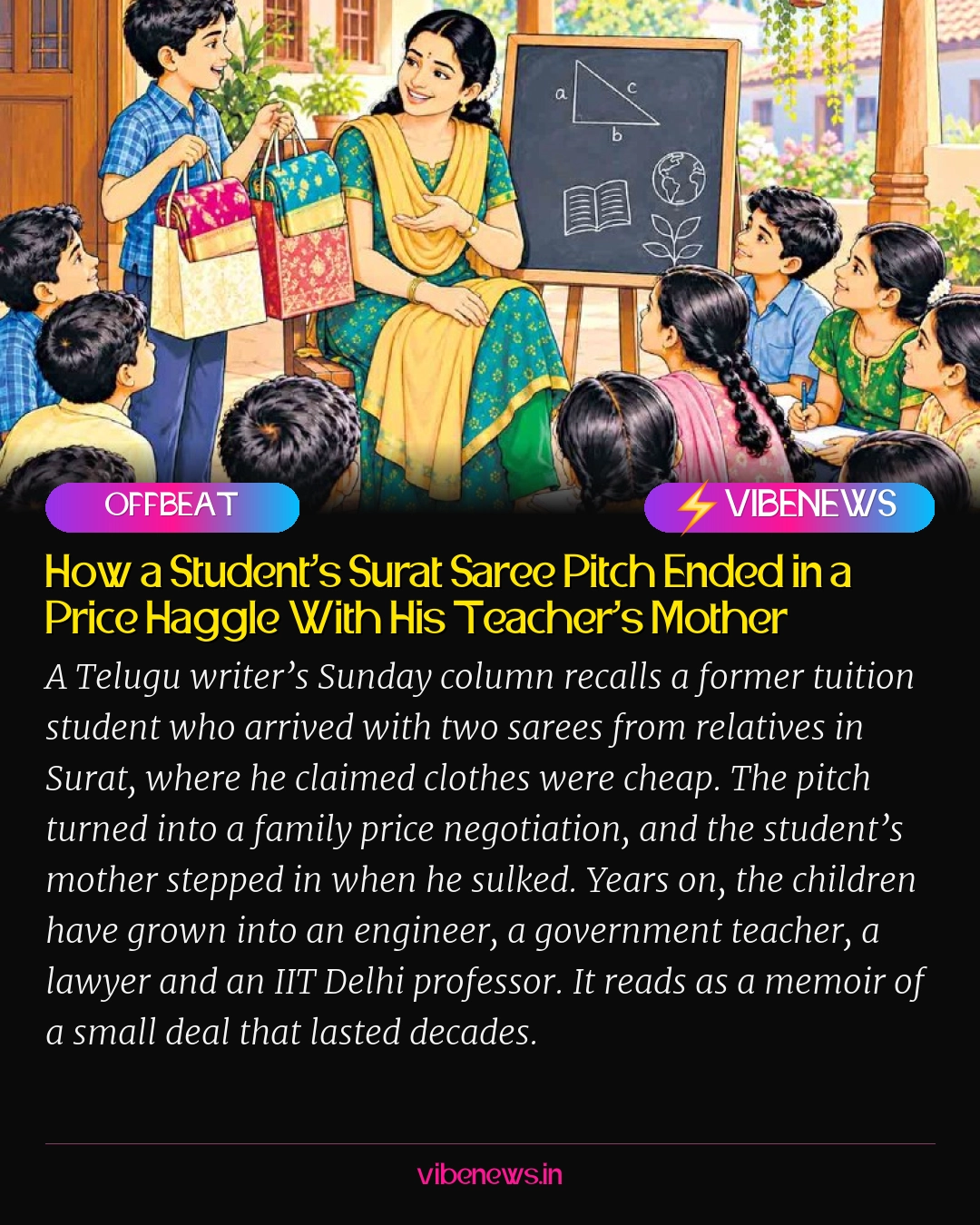
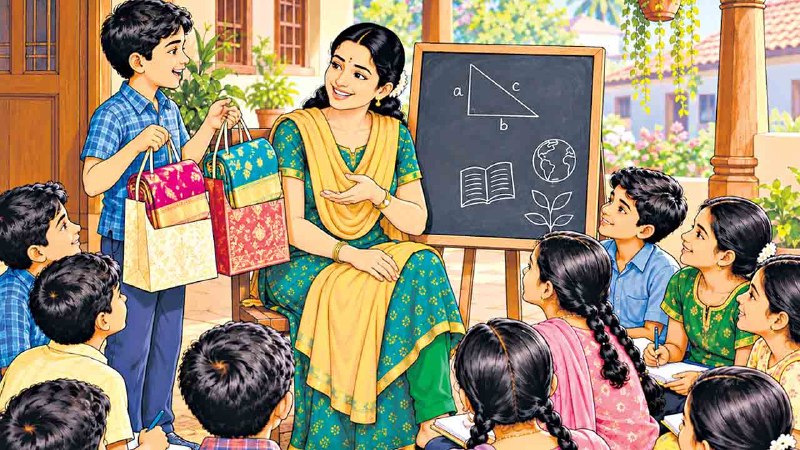
One of those students, Raghuveer, was the son of Venkatesham. After one tuition session, he handed her a packet. Inside were two sarees. When she asked why, he gave her a simple explanation. Relatives in Surat had told the family that clothes were available cheaply there. His father had ordered some, and the family wanted to sell them in their own town. His mother had told him to ask his teacher whether she would be interested in buying.
Ramadevi was not wearing sarees at that point, and she was still a minor. She admits she was nervous about buying one without telling her mother. She was also flattered that a cloth seller, through a child, had asked her to buy. Raghuveer was not shy about his pitch. He told her that each saree normally cost 200 rupees, but for her, the price would be 180. Ramadevi thought to herself that the boy had a real talent for marketing. She told him she would think about it.
At home, the family examined the sarees carefully. Ramadevi liked a pista-green saree with a silver border the most. Her wish to own it grew, in her words, like the tail of Hanuman. Her mother was not convinced. She asked why anyone would buy a new saree without a festival or occasion to celebrate. She also pointed out that the writer’s sister should get one too. Ramadevi says the two sisters almost always buy things together. If one of them buys something, the other gets one as well.
Her mother then did her own research. She looked into dates, shops and past sales of similar sarees, and she came to a firm conclusion. In her view, the saree was not worth more than 150 or 160 rupees, and not a single rupee above that. Ramadevi could not argue with the figures, and the decision was final. The next day, Raghuveer arrived and asked which saree she had chosen. Ramadevi avoided the question and changed the subject. Later that day, when he asked again on the way home, she gave him both sarees back. She told him she was sorry, that the saree was lovely, but that her mother would only agree to 160 rupees.
Raghuveer went home quietly. For the next two or three days, he looked unhappy. Ramadevi writes that she felt helpless as well. Then his mother, Sarojini, came to her house. She said her son had refused to eat dinner the night before, after sulking over the saree. He insisted that his teacher should get the saree she liked at a lower price. Sarojini appealed to Ramadevi to explain the situation to him.
Ramadevi’s mother stepped in and settled the matter quickly. She said the family could accept the price the boy’s mother had mentioned. She asked Sarojini to tell Raghuveer that the family had bought the saree at his price. That, she said, would make the boy happy, and it would cause no trouble for anyone. The writer says she was both relieved and surprised at how easily her mother solved the problem. Sarojini left, visibly lighter.
The next day, Raghuveer returned with a smile and handed her the packet with the saree inside. Ramadevi asked him why he had been sulking and why he had insisted so hard on the sale. He became shy and said something she has kept in her memory since then. In rough English translation, he told her:
“Teacher, you didn’t ask for them. I picked them out and brought them myself. If you liked them and I didn’t give them to you, it would not feel right to me.”
Ramadevi says she was won over completely by that answer. The boy who had pushed a sale so hard had, in the end, been more concerned about her feelings than about the money.
The column then follows the lives of her former students. Raghuveer now works as an engineer in the state’s Panchayat Raj department. Rajaram became a government teacher. Narsingam works in a bank, as the writer does. Timothy is now a lawyer. Ramadevi recently had a photo taken with these three at the wedding of Suresh’s son. Kumaraswamy, who lived near her house and topped his class in mathematics, stayed with her for only a short time. He now works as a professor at IIT Delhi, and he still visits the village from time to time and stops by her house whenever he is home.
Ramadevi writes that many of the children she taught have settled into good lives. The column is short on drama and long on small, human details. It is a reminder that a childhood sales pitch, a stubborn mother and a sulking student can stay with a teacher for a lifetime.
TL;DR
- A Telugu teacher recalls a former tuition student who tried to sell her sarees brought from relatives in Surat.
- The student’s mother and the teacher’s mother ended up settling the price, with the boy’s mood the main concern.
- The writer taught tuition for seven or eight years, and more than sixty children studied with her during that time.
- The former student, Raghuveer, later became an engineer in the state’s Panchayat Raj department.
- The column is by Nellutla Ramadevi and was published on Sunday, November 15, 2026.