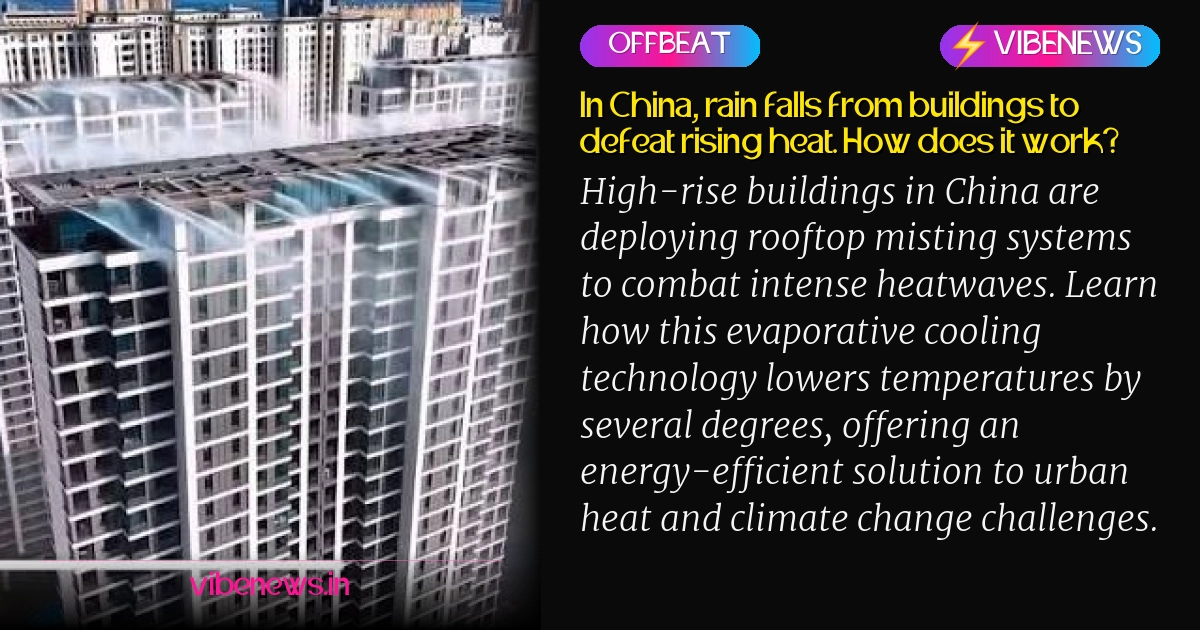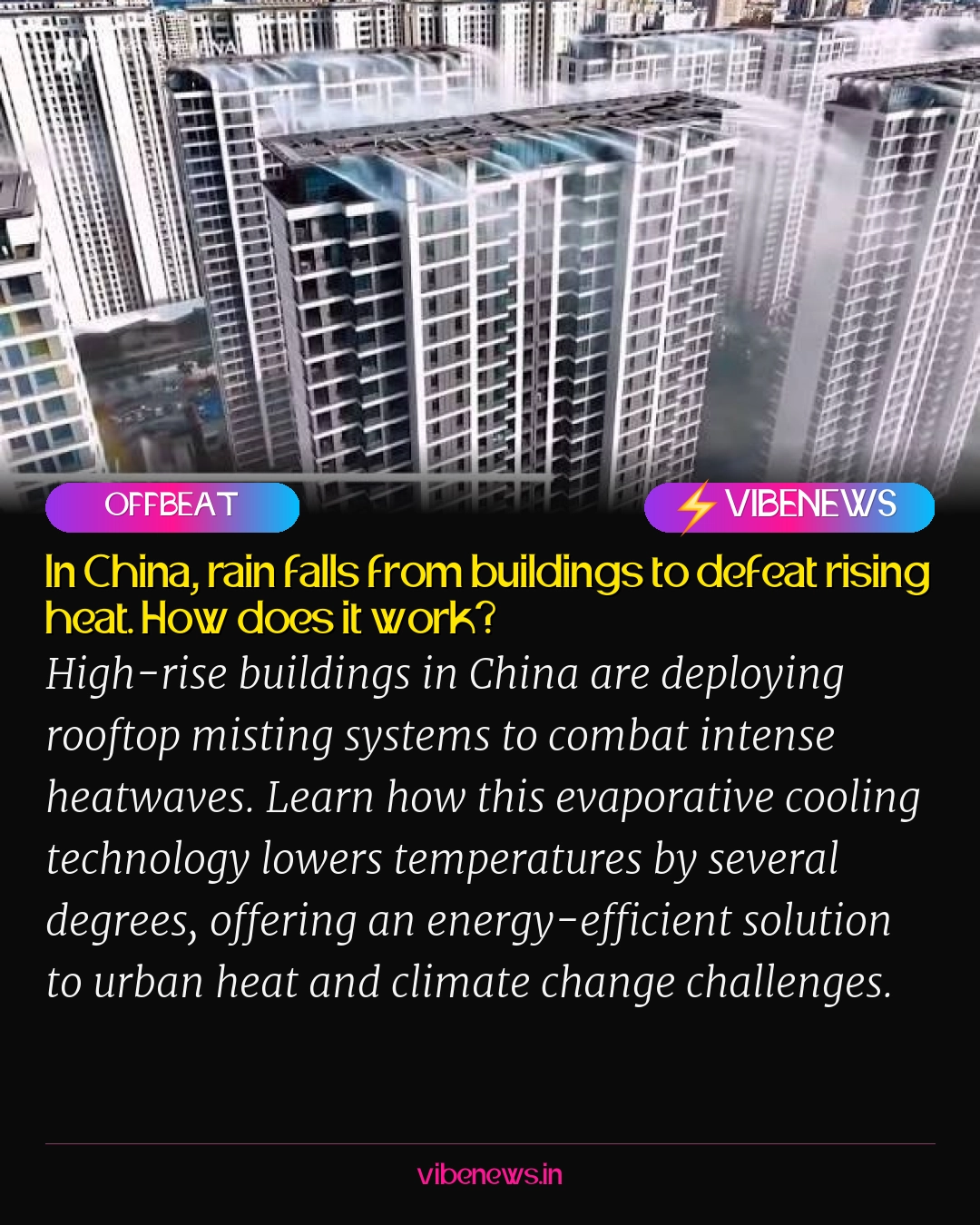
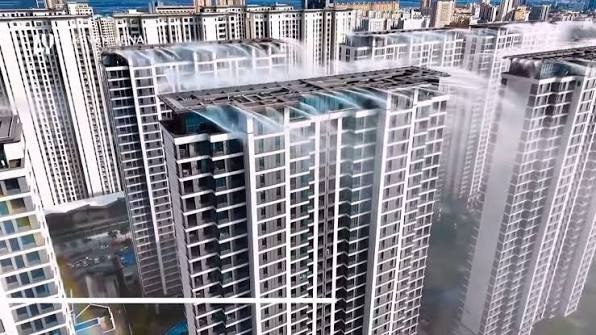
High-rise buildings in a northern Chinese city are deploying an innovative rooftop misting system, effectively creating a localized ‘rain’ to combat the intense summer heatwaves gripping the region. This novel approach, observed in Yuncheng, Shanxi Province, has garnered global attention as cities worldwide seek sustainable solutions to rising urban temperatures.
This ingenious system harnesses the fundamental scientific principle of evaporative cooling, a natural process familiar to anyone who has felt the cooling sensation of sweat evaporating from their skin. Installed on the rooftops of apartment complexes, high-pressure nozzles release an ultra-fine mist of water droplets into the air. As these minuscule droplets rapidly transition from liquid to vapor, they absorb latent heat from the surrounding environment, thereby lowering the ambient temperature.
According to reports from Chinese media, this system can dramatically reduce local air and surface temperatures by approximately 5 to 8 degrees Celsius within minutes, particularly effective when outdoor conditions approach 38°C. Crucially, the extremely fine nature of the mist ensures swift evaporation under hot, dry conditions, meaning the cooling effect is achieved without leaving streets, pavements, or pedestrians noticeably wet.
The adoption of such innovative cooling solutions comes as China has experienced a significant increase in the frequency and duration of heatwaves in recent years. Scientists widely link this escalating trend to the broader impacts of climate change, which are manifesting globally with more extreme weather events. Furthermore, densely populated urban centers like Yuncheng are particularly susceptible to the ‘urban heat island’ effect. This phenomenon occurs when man-made structures such as buildings, roads, and concrete absorb and retain solar radiation, making cities considerably warmer than their surrounding rural areas.
Beyond providing immediate relief, the rooftop misting system presents a compelling energy-efficient alternative to conventional air conditioning. Unlike energy-intensive AC units that consume substantial electricity, this system primarily relies on water, pumps, and high-pressure nozzles, resulting in significantly lower power consumption. This makes it an attractive option for large residential complexes and public spaces looking to reduce their carbon footprint and operational costs.
The concept isn’t entirely new to China; similar outdoor misting systems have already been implemented in various public spaces across several Chinese cities. These include parks, public squares, pedestrian streets, and bus stops, offering respite to citizens during the scorching summer months. The viral videos showcasing the Yuncheng system highlight its potential for broader application on residential buildings, directly impacting daily life for urban dwellers.
Despite its apparent benefits, the system has prompted some discussion regarding water consumption, especially in regions that face existing water scarcity challenges. However, proponents of the technology argue that the rapid evaporation of the fine mist means the overall water usage is relatively small and localized, making it a viable option even in drier areas where the need for cooling is most acute. Chinese Foreign Ministry spokesperson Mao Ning has also highlighted such projects as examples of efforts to improve people’s daily lives.
The project in Shanxi exemplifies a growing global imperative to develop practical and sustainable urban cooling solutions. As cities worldwide grapple with the escalating challenges posed by rising temperatures and the urgent need to adapt to a changing climate, innovations like these are gaining increasing attention from urban planners and policymakers. With heatwaves projected to become more intense and widespread, such ingenious urban cooling strategies, from rooftop misting systems to other green infrastructure initiatives, are poised to become an increasingly common and vital feature of cityscapes around the globe, shaping how urban populations live and thrive in a warmer world.
TL;DR
- High-rise buildings in Yuncheng, China, are using rooftop misting systems to combat intense heatwaves.
- The system operates on the principle of evaporative cooling, where fine water droplets absorb heat as they evaporate.
- It can reduce local air and surface temperatures by 5-8°C within minutes when outdoor temperatures are around 38°C.
- The mist evaporates quickly, preventing surfaces and pedestrians from getting wet.
- This method is more energy-efficient than traditional air conditioning, requiring less electricity.
- China is adopting these solutions due to increased frequency of heatwaves and the urban heat island effect.
- While effective, some concerns exist regarding water consumption, though proponents argue usage is minimal due to rapid evaporation.
- The initiative is part of a broader global effort to find sustainable urban cooling solutions amidst climate change.