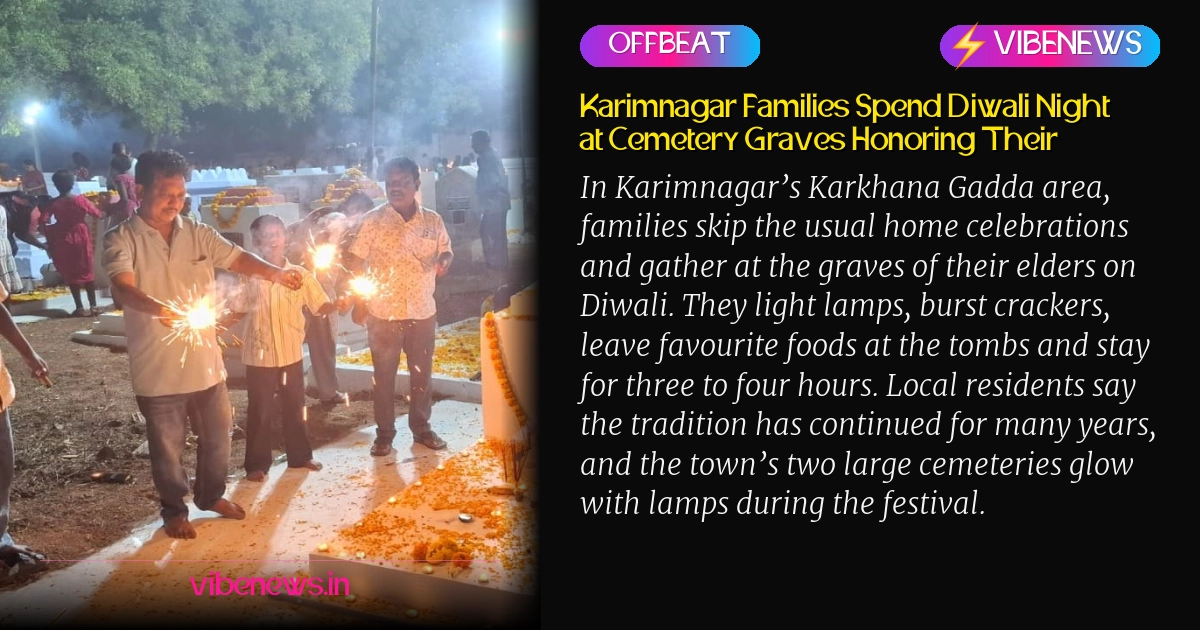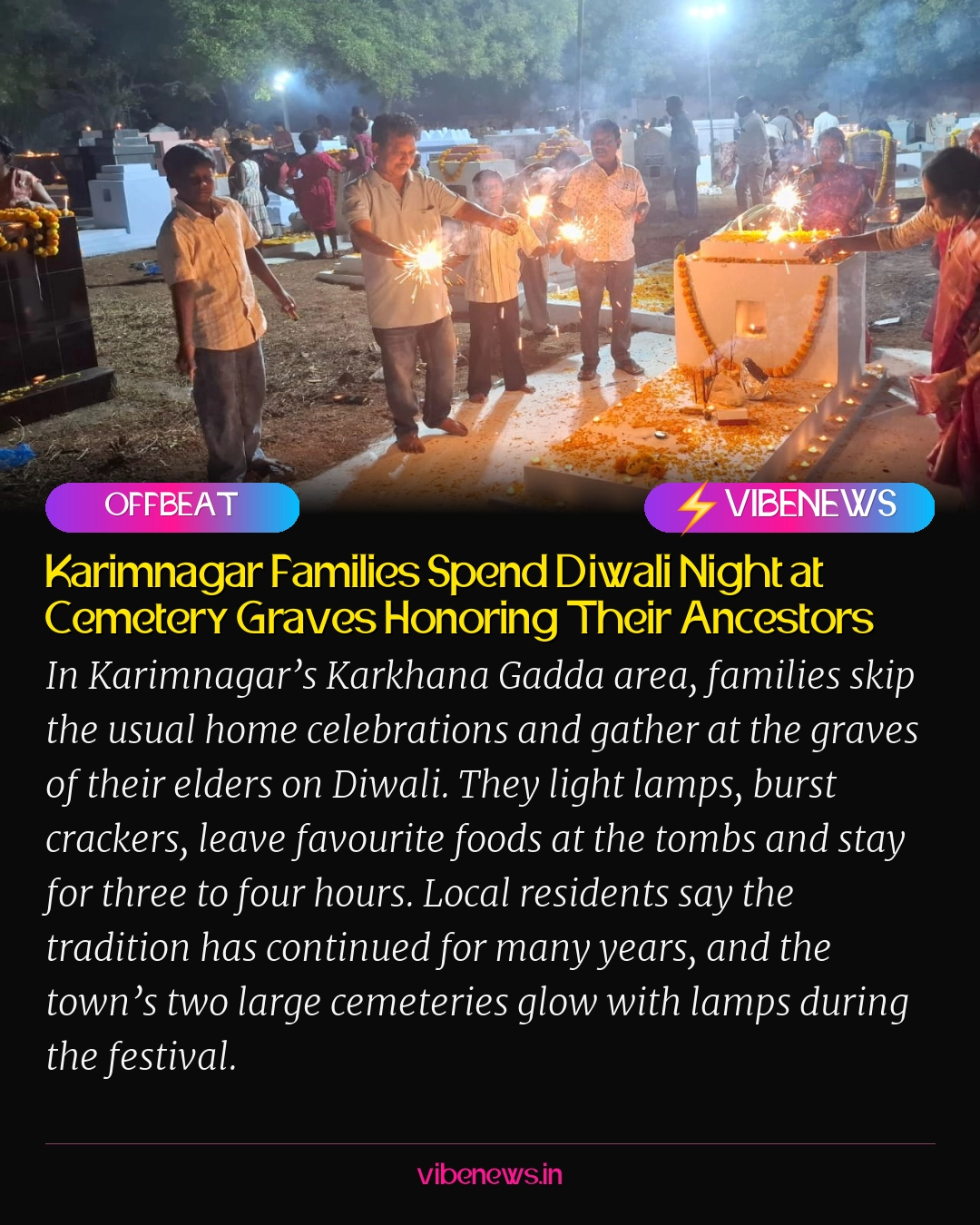
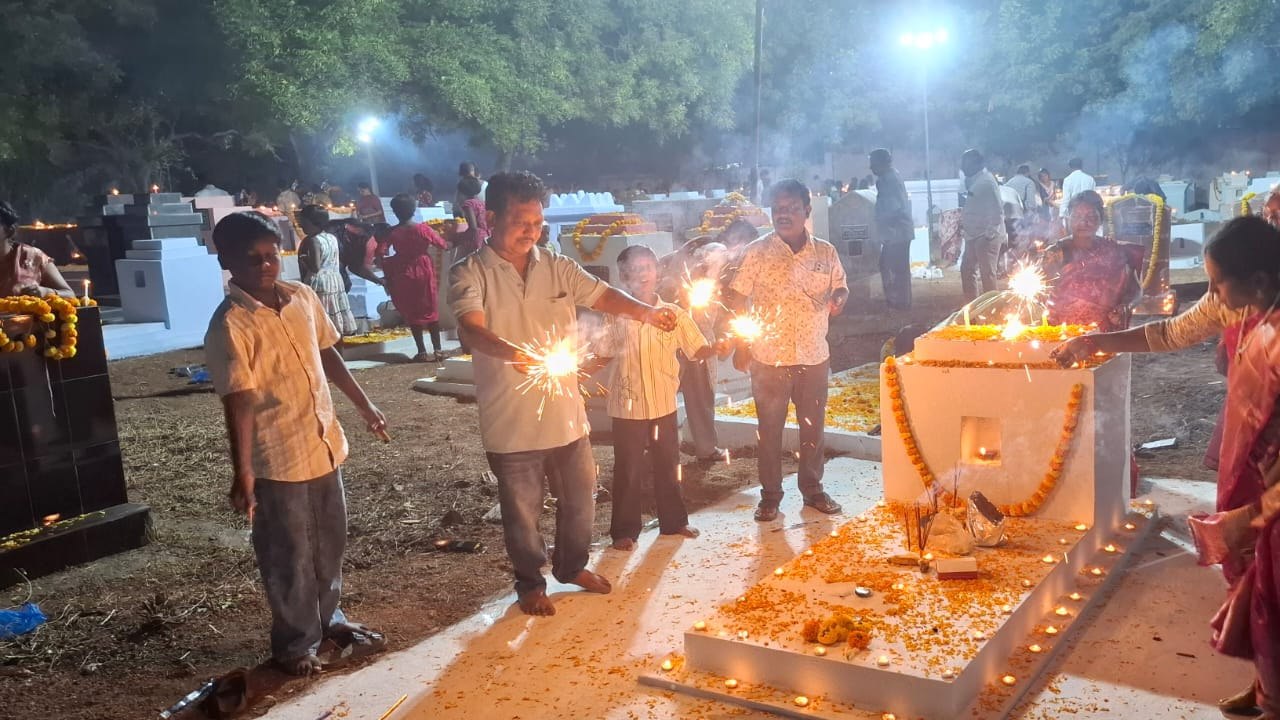
Families in Karimnagar’s Karkhana Gadda area are celebrating Diwali inside cemeteries instead of at home, lighting lamps and bursting crackers beside the graves of their dead ancestors. The tradition has been followed for many years, and on the festival evening the burial grounds look as bright as any residential street in the city.
Diwali usually means lit homes, shared meals and crackers set off in the street. Most families gather indoors or visit friends and relatives. In Karkhana Gadda, the celebration moves to the graveyard. Families come to the cemetery, sit near the tombs of their elders and spend three to four hours there before going home.
The area has two large cemeteries in the Karimnagar district headquarters. They serve people who die in nearby neighbourhoods, including Kisan Nagar and Pasula Narayana Colony. Funerals in those localities are held at these two grounds, so the cemeteries are part of daily life for many families in the area.
The ritual has its roots in an older custom. Before Dussehra, families traditionally offer rice to their departed elders on Pitru Amavasya, the day set aside for remembering ancestors. In Karkhana Gadda, that act of remembrance has moved to Diwali. Families choose the festival night to honour the dead, and the timing gives the visit a different mood from the usual solemn observance.
Preparation starts before the festival itself. Families clean the graves and repaint the tombs ahead of Diwali, so the sites look ready for the visit. On the evening of the festival, relatives arrive together. They light lamps on each grave and set out food that the deceased person liked. The family then bursts crackers on the spot, turning the cemetery into a noisy and colourful gathering.
The celebration is not all noise. After the lamps are lit and the food is placed, the family observes a short silence as a sign of mourning. The pause is a reminder of why they came. Then the family returns to the celebration, stays by the graves and talks, and keeps the lamps burning. Children are part of it too, and the report says people of all ages take part in lighting the lamps.
"To remember our elders on Diwali, we light lamps at the graves and burst crackers," visitors say.
Local people say they come in large numbers. Some families come from nearby neighbourhoods and others travel to the cemetery to join relatives who are buried there. As the evening goes on, the grounds fill with families moving between graves, lamps flickering in the dark and the smell of firecrackers hanging in the air. Those who visit say the scene is the way they mark the festival, and they describe it as a way of staying close to the people they have lost.
What sets Karkhana Gadda apart is how little the scene resembles a typical Diwali anywhere else. Festival lights usually belong to homes, temples and public spaces. Here, they belong to graves. The report notes that such scenes are not seen in other places, and that the custom is found only at these cemeteries in Karimnagar.
The practice also shows how families in the town connect festivals with memory. Diwali is a celebration of light and new beginnings, while cemeteries are often places of quiet grief. In Karkhana Gadda, the two come together. Families do not treat the visit as a break from the festival. For them, lighting a lamp at a grave is part of the festival.
For readers outside Karimnagar, the story offers a view of a local tradition that is rarely written about. It shows that festival customs can change shape from one place to another, even within the same state. The families who keep this custom are not doing anything unusual in their own minds. They are doing what their parents and grandparents did, and they are passing it on to their children.
The account of the celebration comes from the reporting on the tradition and from local visitors who spoke about it. The details about the cemetery, the timing and the three to four hours spent at the graves are drawn from those accounts. Readers who want to see the scene for themselves can visit the cemeteries in Karkhana Gadda during Diwali, when the grounds are open to families.
TL;DR
- Families in Karimnagar’s Karkhana Gadda celebrate Diwali at cemetery graves instead of at home.
- They light lamps, burst crackers and place favourite foods of their ancestors on the graves.
- Families stay at the cemeteries for three to four hours and observe a short silence as mourning.
- Two large cemeteries serve neighbourhoods including Kisan Nagar and Pasula Narayana Colony.
- The custom has roots in Pitru Amavasya, when families traditionally offer rice to their departed elders.
- Local visitors say the tradition has continued for many years and draws people in large numbers.