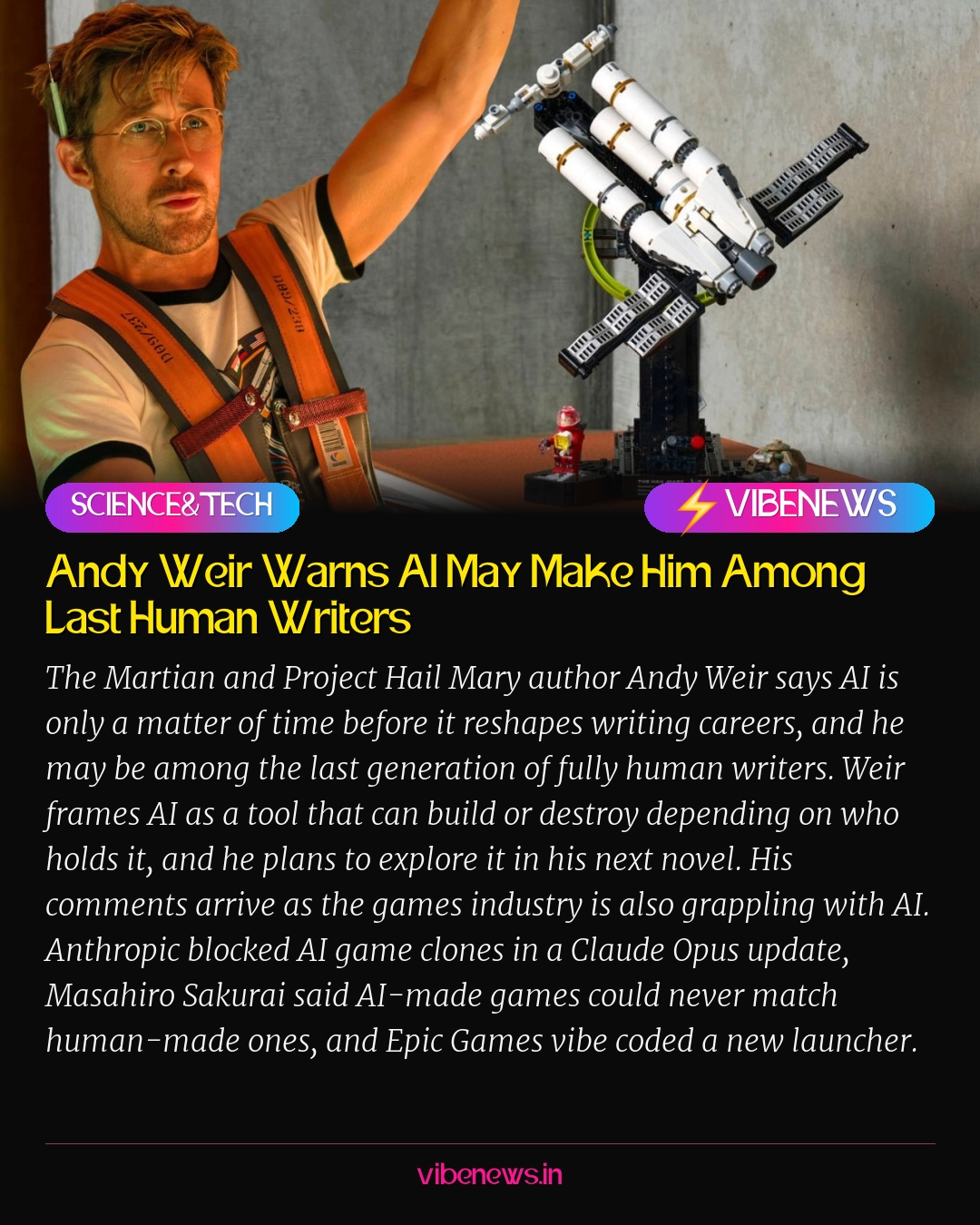
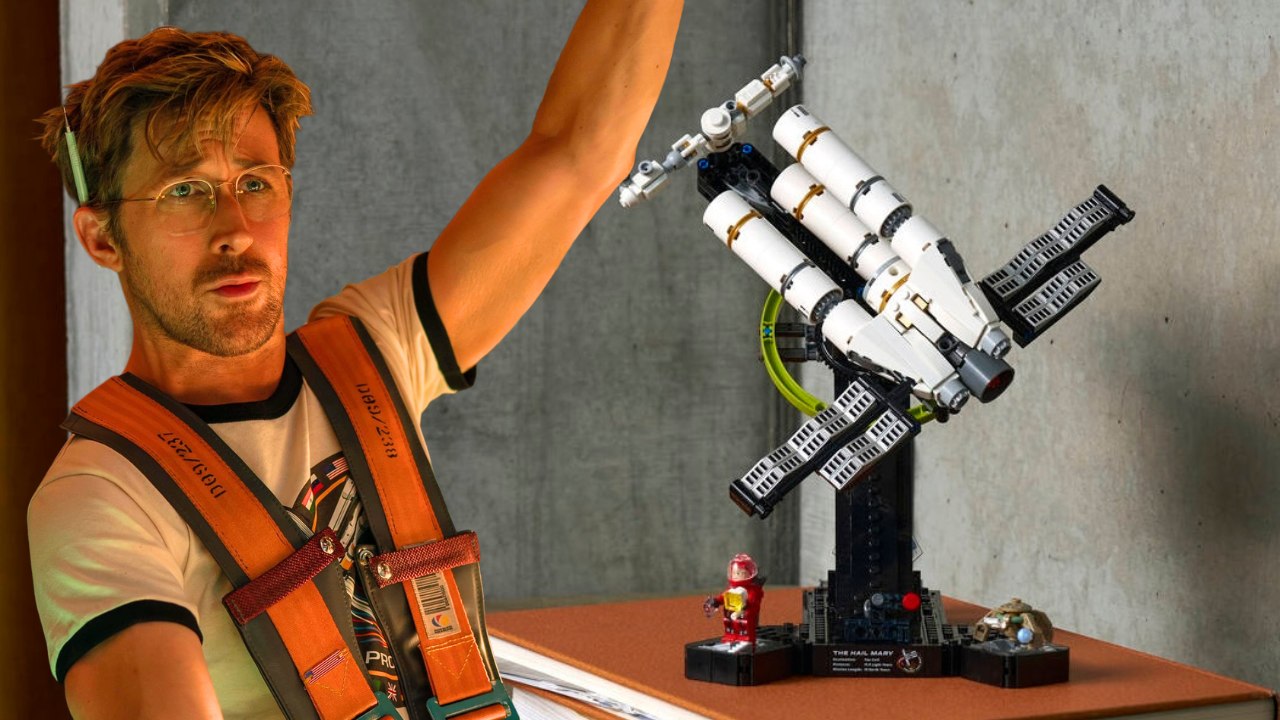
Andy Weir, the author of The Martian and Project Hail Mary, says he may be among the last generation of fully human writers. In a recent interview, the novelist said he believes it is only a matter of time before AI changes careers like his.
Weir was blunt about his own position. He said he feels lucky to have started writing when he did, and he framed the risk in personal terms rather than as an abstract industry trend.
“Honestly, I think I’m lucky that I ended up being a writer right when I did, because I might be among the last generation of fully human writers.”
That line lands hard because Weir is not a fringe voice warning about machines. He is one of the most commercially successful science fiction writers working today, and he is admitting that the ground under his own profession is shifting.
Still, Weir does not describe AI as a monster waiting to take over. He sees it as a tool, and he puts it in the same category as technology that already beats humans at specific jobs. Race cars outpace any person on speed, and forklifts far exceed human strength. In his view, AI’s intelligence belongs in that group.
The tool comparison has a darker edge, and Weir leans into it. He pointed to the way a single object can serve opposite purposes, and he chose a hammer to make the point.
“In the end, if I give you a hammer, you can build a house or you can murder someone. It’s not the tool that’s the issue; it’s the user.”
That argument puts the danger in human hands, not the software. It is a comforting idea for anyone who wants to believe the technology is neutral. It is a far less comforting idea when you consider how quickly a tool can be turned against the people who depend on it.
Weir also said the off switch matters to him. He noted that AI is something people can unplug when they choose not to use it. Whether that control stays in the hands of individual writers, studios, or corporations is the question that keeps coming back in discussions like this one.
Weir is putting AI inside his next book
The concern is not theoretical for Weir, because he is writing about it. He has said that AI plays a significant role in his next novel. In an earlier interview from 2024, he teased the project and explained how he planned to approach it.
“I’m working on my next book now. AI plays a significant role in it. But I’m doing it my way, not writing a story about robots falling in love or anything. Writing a story that involves AI is kind of in my wheelhouse because I know how computers work. And I know more about machine learning than most fiction writers, I think. So yes, I’m having some fun with that,” he said.
That is a notable choice for a writer whose work has long been built on technical problem solving. Weir is not using AI as a costume for a sci-fi villain. He is using his knowledge of how computers actually function, and that gives his fiction a different kind of credibility.
Games are facing the same fight
Weir’s warning is part of a wider reckoning across creative industries. Fiction and filmmaking are wrestling with what AI means for their futures, and the games industry is now dealing with the same pressure, sometimes in the same week.
Just this week, Anthropic blocked AI game clones in a Claude Opus update. The move signals that AI companies are being pushed to set limits on how their models can be used to copy existing creative work.
Super Smash Bros. creator Masahiro Sakurai also weighed in. He declared that AI-made games could never compare to those made by humans. For a designer who has spent decades shaping one of the most recognizable fighting game franchises, that is a firm line in the sand.
Epic also revealed that it had vibe coded a new Epic Games Launcher. That detail is striking because it shows AI-assisted development is not just a debate. It is already happening inside major platforms, even as prominent creators argue that human-made work is irreplaceable.
The real question is who holds the hammer
Put Weir’s comments next to Sakurai’s and Epic’s, and a pattern emerges. Everyone agrees AI is powerful. The disagreement is over whether that power replaces human creativity or simply changes how it gets done.
Weir’s answer is the most unsettling because it does not promise safety. He accepts that the technology is already capable of things that once belonged only to people. He also suggests that writers may be living through the last stretch before that line disappears completely.
The hammer analogy will stick with readers because it refuses to let anyone off the hook. A tool does not decide what gets built or destroyed. People do. In creative fields, that means the choices made by studios, publishers, developers, and individual creators will shape what AI becomes in art.
For now, Weir is still writing, and he is writing about the very technology that worries him. Whether he is one of the last fully human writers or simply one of the first to say it out loud, his warning is clear. The tool is already in the room, and the people holding it are the ones who will decide what comes next.
TL;DR
- Andy Weir says he may be among the last generation of fully human writers as AI advances.
- The Martian and Project Hail Mary author calls AI a tool, comparing it to race cars and forklifts.
- Weir says the real danger is the user, not the technology, using a hammer as his example.
- His next novel features AI, which he says he knows well because of his background in computers.
- Anthropic blocked AI game clones in a Claude Opus update this week.
- Masahiro Sakurai says AI-made games could never compare to those made by humans.