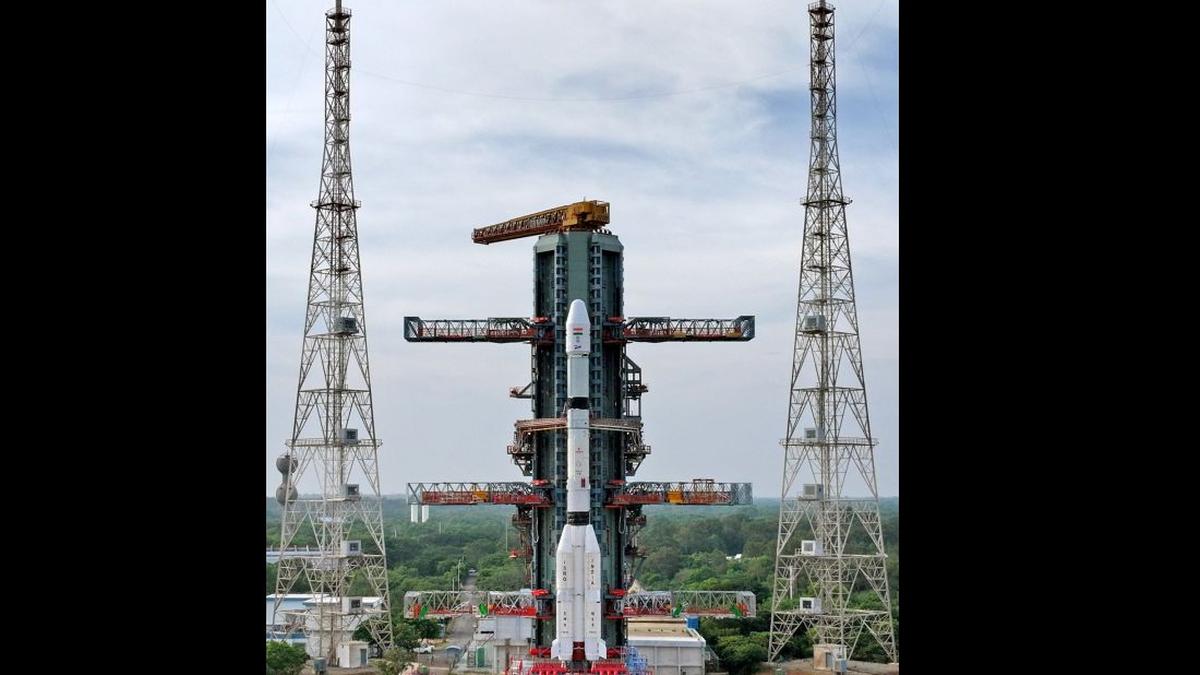
ISRO was set to launch its next-generation navigation satellite, NVS-03, aboard the GSLV-F18 rocket at 11.51 pm IST on October 30, 2026, from the second launch pad at the Satish Dhawan Space Centre (SDSC-SHAR) in Sriharikota. The agency said on Friday that the 24-hour countdown had commenced and was progressing. The countdown officially began at 11.51 pm on Thursday, October 29, 2026.
The mission is one of the most closely watched launches on India’s space calendar this year. ISRO began live coverage from 23:20 hours IST, ahead of the scheduled liftoff. The source material for this report does not confirm the flight outcome, so readers should check ISRO’s official channels for the final result.
The Rocket and Its Target Orbit
The GSLV-F18 is a 50-metre-tall, three-stage rocket with a lift-off mass of 420 tonne. Its job is to deliver the 2,232 kg NVS-03 satellite into a Geosynchronous Transfer Orbit, or GTO.
According to the mission brochure released by ISRO, the targeted orbit has a planned perigee, the closest point to Earth, of 170 km. The apogee, the farthest point, is set at 37,023 km. The orbit’s inclination is 20.75 degrees.
After injection into GTO, the satellite will perform orbit-raising manoeuvres to reach its final Geosynchronous slot at 32.5 degrees East. Only after that stage does the satellite move toward its operational role.
A Deliberate Break From Safety Protocol
The most unusual detail in this mission is the engineering choice behind it. During the Mission Readiness Review (MRR), ISRO cleared an unprecedented configuration. The NVS-03 satellite will fly with its pyrotechnic, or pyro, valves already open.
That is a major departure from standard safety protocols. Normally, spacecraft propellant is isolated during the intense vibrations of liftoff. ISRO is doing the opposite here, and the reason is specific. The change is designed to bypass the connector failure that stranded the previous NVS-02 mission in January 2025.
Sources said the corrective measures recommended by a high-level committee have been fully integrated into this flight. Those measures aim to enhance redundancy and improve how the pyro system operates. In other words, the fix goes beyond one workaround. It is a set of changes meant to make the flight more reliable.
Why the Launch Matters for Andhra Pradesh
The launch is taking place on home ground for Andhra Pradesh. Sriharikota, where the Satish Dhawan Space Centre is located, sits within the state. Every countdown from this coastal base puts the state at the centre of India’s space effort, and this one carries extra weight because it aims to repair a setback from January 2025.
What NVS-03 Brings to NavIC
NVS-03 is the third satellite of the second-generation NVS series. It is intended to augment the NavIC constellation and support continuity of navigation services. For a system that depends on every satellite in orbit, continuity is the core promise.
The satellite carries an indigenous Rubidium atomic clock developed by the Space Applications Centre. Precise timing is the backbone of any navigation system, so the clock is central to what NVS-03 is meant to do.
NVS-03 will transmit signals in the L1, L5, and S bands. The inclusion of the L1 band is the detail most likely to matter to everyday users. It ensures compatibility with modern civilian smartphone chipsets and wearable devices. That means the satellite is not only for defence or specialist use. It is designed to reach the phones and watches that people carry.
ISRO has described the launch as a critical step in restoring and strengthening the country’s regional positioning services. The restoration framing points back to NVS-02, which was stranded in January 2025. NVS-03 is meant to close that gap.
The Rocket’s Reputation Is on the Line
The GSLV Mk II carries a reputation of its own. Experts and observers have long pointed to the complexities of its cryogenic third stage. That stage has earned the launch vehicle a historical nickname that ISRO would prefer to leave behind.
The space agency will be closely monitoring the performance of the GSLV Mk II throughout the flight. The goal is a clean run from liftoff to injection, and a chance to put the old label to rest.
The space agency will be closely monitoring the performance of the GSLV Mk II, looking to execute a flawless flight and shake off the launch vehicle’s historical ‘naughty boy’ moniker stemming from the complexities of its cryogenic third stage.
The Road Ahead for NavIC
A successful launch would be a major step, but it would not finish the job. Experts point out that the broader NavIC constellation still has a significant distance to cover before it reaches its full operational potential. The system needs continuous reliability across the grid it serves.
That is why NVS-03 matters beyond one night at Sriharikota. Each satellite that reaches its slot adds to a network meant to keep Indian users positioned, timed, and connected. The next few days will show whether the fixes built into this flight have worked. The next few years will show whether NavIC can deliver the reliability it was built to provide.
For now, the countdown has given way to the flight itself. ISRO has framed this mission as a test of engineering discipline, and the pyro valve decision is the clearest sign of how seriously the agency is treating the risk. Whatever the result, the story of NVS-03 is a story about learning from a stranded satellite and trying to get it right the second time.
TL;DR
- ISRO scheduled GSLV-F18 liftoff with the NVS-03 navigation satellite for 11.51 pm IST on October 30, 2026.
- The launch was set from the second pad at the Satish Dhawan Space Centre in Sriharikota, Andhra Pradesh.
- The 2,232 kg satellite targets Geosynchronous Transfer Orbit before reaching its final slot at 32.5 degrees East.
- NVS-03 flies with pyro valves already open, bypassing the connector failure that stranded NVS-02 in January 2025.
- The satellite carries an indigenous Rubidium atomic clock and the L1 band for civilian smartphones and wearables.
- The GSLV Mk II must shake off its ‘naughty boy’ reputation tied to its cryogenic third stage.