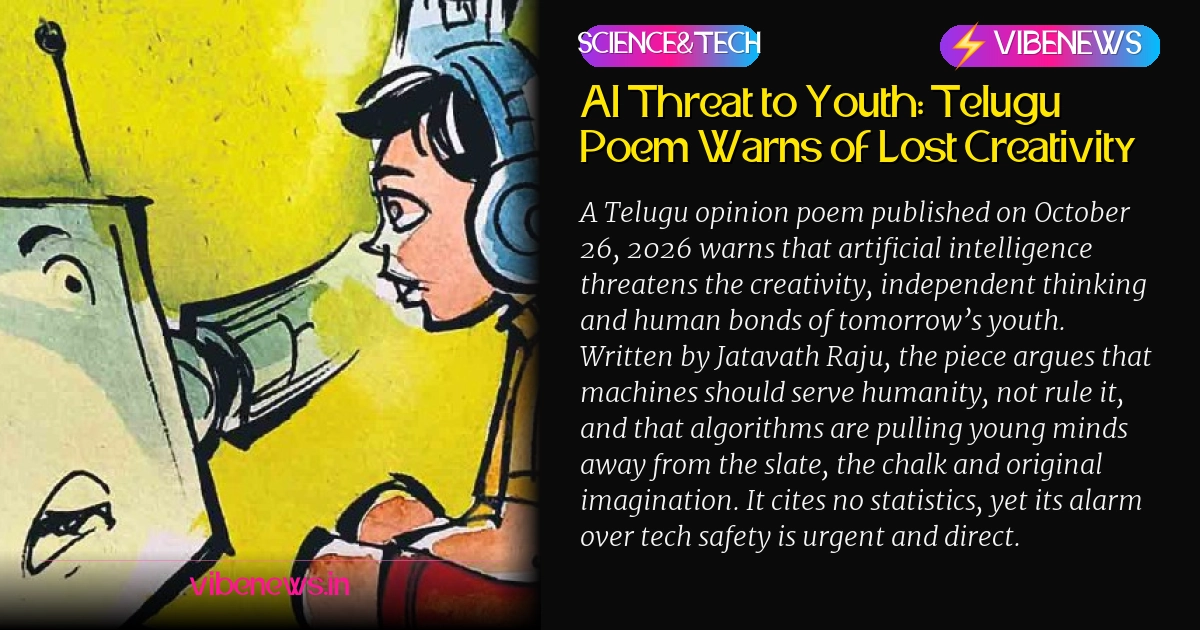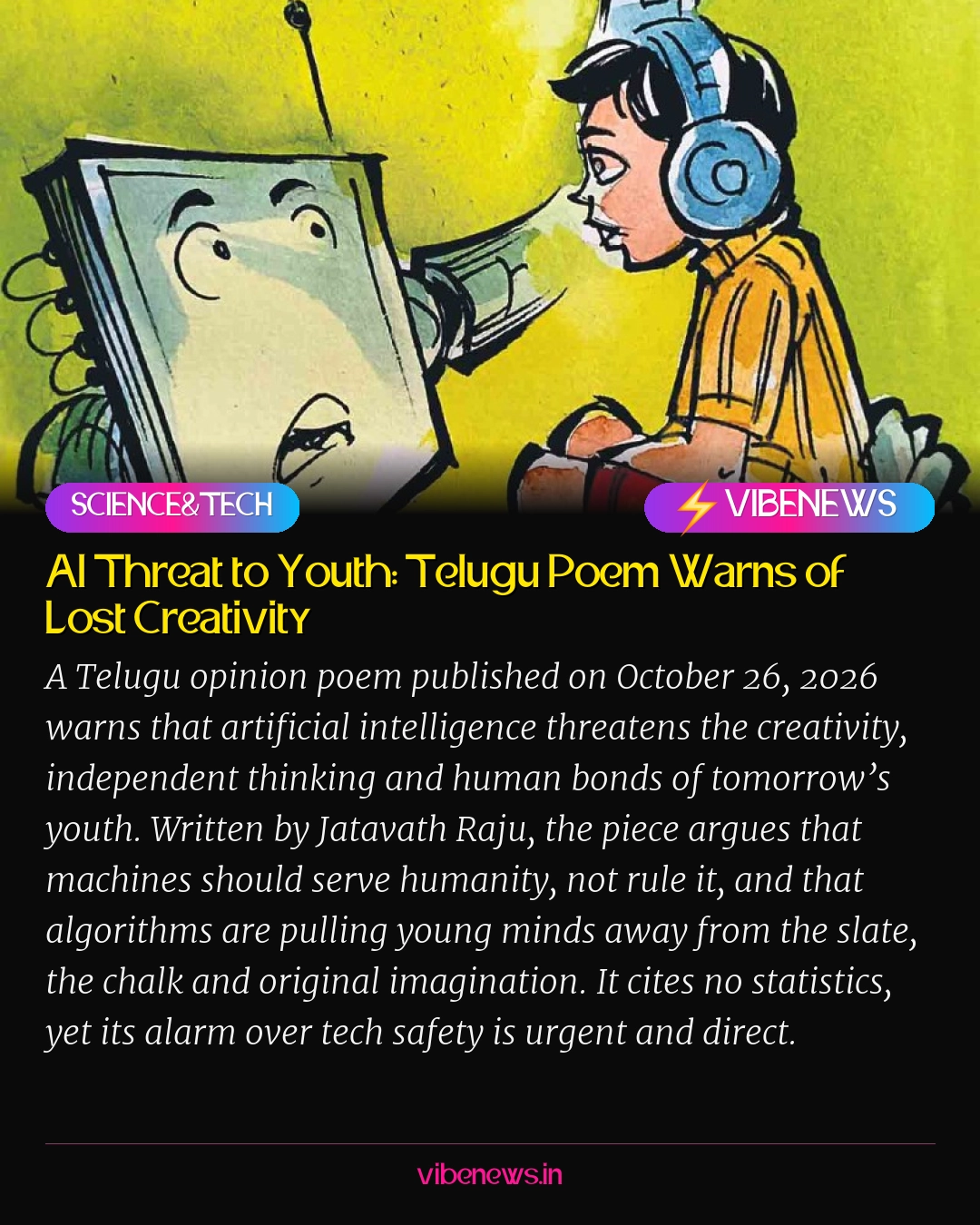
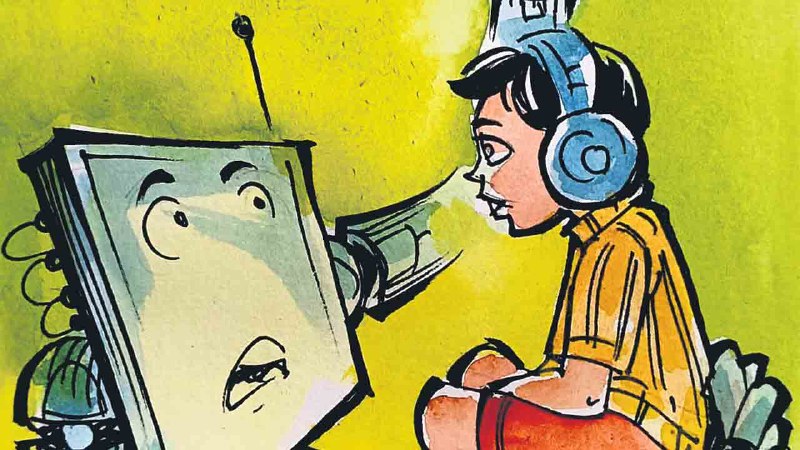
A Telugu opinion poem published on October 26, 2026 warns that artificial intelligence poses a direct threat to the next generation, arguing that machines are pushing out original thought, creativity and human connection. The piece, headlined in Telugu as "Artificial Intelligence: A Threat to Tomorrow’s Generation," is credited to writer Jatavath Raju and ran on the editorial page at 2:40 AM IST.
This is a work of verse, not a reported investigation. It does not cite studies, job figures, company data or official statements. Its force comes from the images it builds, and those images are blunt. The writer treats the danger as immediate, not distant.
The concern lands squarely in the middle of a wider global argument over technology safety and the future of work. Governments, educators and parents are already asking what happens to young people who grow up with machines doing their thinking. The poem asks the same question, but in the language of warning.
Creativity under the glow of the screen
The central image is of silicon chips swallowing the pure creativity in young eyes. The poem says the depths of knowledge once hidden inside verses written by hand are now wearing away inside lines of code. Words on the page, it claims, have no soul behind them.
The writer also points to the body. Nerves in the brain grow dull, the poem says, under the light of computer screens. That is a physical image, and it is meant to unsettle. Attention is being drained, and the writer suggests nobody is noticing the loss until it is complete.
From slate and chalk to machine dependence
The sharpest line in the poem describes young people setting aside the slate and chalk, the simplest tools of learning, and becoming slaves to machines. Youth thought, the writer says, gets caught in the net of a lifeless algorithm. The act of learning shifts from struggle to surrender.
That is where the poem’s urgency sits. It is not only about jobs or tools. It is about whether a generation keeps the habit of thinking for itself. The writer frames dependence as a quiet trap, one that feels like convenience until the independent mind has been replaced.
Human bonds turning into shadows
The poem goes further than the classroom. It warns that relationships between people are turning into virtual shadows. The natural world of imagination, the writer says, is being ruled by digital illusion. Hopes that once lived behind the eyelids are now held captive on data servers.
In the final stretch of the verses, the writer asks what remains of human existence in an age that moves at the speed of this robotic empire. The question is left hanging. It is meant to force the reader to answer it.
Where the writer draws the line
The poem is not a call to smash the machines. It accepts that technology has a role. What it rejects is the idea that a tool should become the master. The writer draws a clear boundary between service and control.
యంత్రం మనకు సేవకుడే కానీ సృష్టిని శాసించే శక్తి కాకూడదు (The machine is our servant, but it must never become the power that rules creation.)
The closing lines carry the same confidence. The writer insists that technological threat has never defeated the resolve of human will. That claim is an article of faith rather than a reported fact, and the poem presents it that way. It is a call to hold on to human judgment while there is still time.
Why the alarm matters now
The poem arrives at a moment when AI tools are being adopted quickly in schools, workplaces and homes. Yet the piece offers no data on how fast that adoption is happening, and it makes no claims about specific jobs being lost. Its value lies in the question it puts to readers: what kind of thinkers will the next generation become if the machine does the thinking first?
For readers who want to act on that question, the poem points toward a simple discipline. Keep the slate and the chalk in use. Write by hand. Build original ideas before reaching for a prompt. Keep human relationships in the room, not on a screen. The writer’s warning is not that tools will disappear. It is that people may stop practising the skills that make them human.
The piece closes on its central demand: the machine must serve, and the human must still decide. Whether the next generation hears that demand in time is the open question the poem leaves behind.
TL;DR
- Poet Jatavath Raju’s Telugu poem warns artificial intelligence threatens the creativity of the next generation.
- The poem says young people are trading slate and chalk for machines, losing independent thought.
- The writer describes human bonds turning into virtual shadows as algorithms take hold of daily life.
- The piece argues machines should serve humanity, but must never become the power that rules creation.
- The poem offers no statistics, yet it presents AI risk as an immediate alarm for the future.