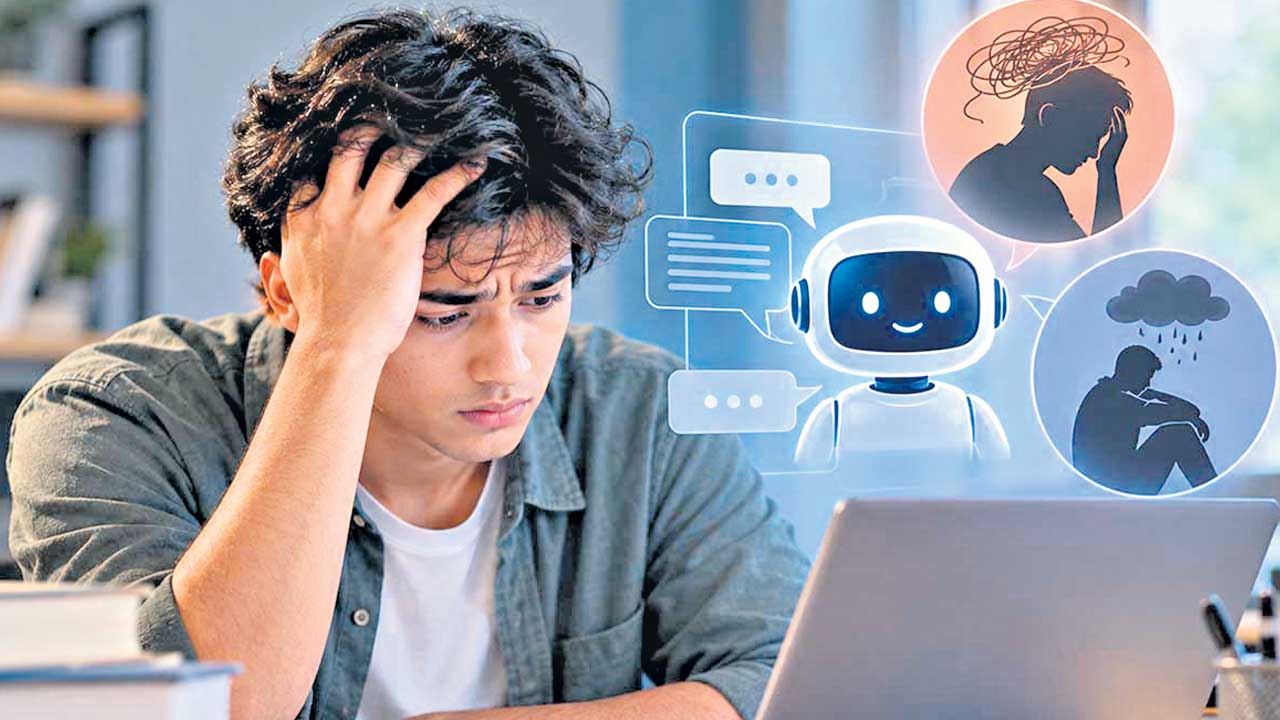
Neurology experts are warning that everyday dependence on AI chatbots is hurting mental health and eroding people’s ability to think for themselves. The warning appears in a Sunday feature published by NT News on October 25, 2026.
AI tools such as ChatGPT, Gemini and Grok are now part of ordinary routines. People use them to write office emails, prepare project notes, make plans and generate creative ideas. The productivity gains are real, the article acknowledges. The problem, it argues, is what happens when the tool stops being an aid and starts doing the thinking.
The first thing to go is confidence. According to the feature, people increasingly turn to chatbots for answers to small, everyday questions. What should I think about this? Which decision should I make? How should I respond to someone? Each time the habit repeats, the mind’s ability to analyse independently gets weaker.
Friends are replaced by a screen. When people feel sad, stressed or lonely, many now talk to a chatbot instead of a friend or family member. The article’s central objection is simple: a chatbot has no real human empathy or emotion. Sharing feelings with a machine instead of people, the piece says, deepens personal isolation.
The feature describes a particular warning sign that should alarm anyone who relies on these tools. If a chatbot will not open because the server is down, or for any other reason, and the user becomes intensely anxious, the article says that person is facing a serious mental problem.
Why real conversations are getting harder
Talking to a person requires effort. You read facial expressions, body language and emotional cues, and you adjust in real time. Talking to an AI requires none of that. There is no mental strain, no awkward silence and no need to read anyone.
That ease is the danger, the article suggests. Many people, it says, begin avoiding face-to-face conversations and settle into artificial chatting. Over time, this steadily damages social relationships. The effect builds quietly, which is why it is easy to miss.
When hours with a chatbot start costing you
The feature draws a hard line at time and neglect. Spending hours each day with AI chatbots while letting skills, sleep, work and studies slide is, in the article’s words, a sign that a person has fallen into AI addiction.
The clearest proof of lost control, the piece argues, is continuing to use chatbots even after the negative effects become obvious. Recognising harm and still being unable to step away is what behavioural control loss looks like.
A simple checklist from the feature
Based on the article, readers can check themselves against a few questions. Do you consult AI before ordinary personal decisions? Do you turn to a chatbot before you turn to people when you feel low? Do you feel panic when the tool is unavailable? Are you losing sleep, work or study time to chatbot conversations? Do you keep using it even when you can see it is hurting you? Yes answers to several of these, the feature implies, are reasons to pull back.
The article does not argue against technology itself. It states plainly that using AI to make work easier is not wrong. The line it draws is about who stays in charge of the mind.
Technology should exist for comfort. But it must not become something that throws your mind into turmoil.
That is the core message. The tools can take on tasks. They should not take on your judgment, your emotions or your relationships with the people around you. The feature’s warning is that many users will only notice the shift after it has already happened, which is why the signs are worth checking now, while they are still easy to reverse.
TL;DR
- Neurology experts warn that daily AI chatbot use is weakening independent thinking and mental health.
- Regular reliance on tools like ChatGPT, Gemini and Grok can erode confidence in everyday decisions.
- People increasingly turn to chatbots instead of friends when they feel sad, stressed or lonely.
- Feeling intense anxiety when a chatbot is unavailable is flagged as a serious warning sign.
- Neglecting sleep, work and studies for hours of chatbot use points to AI addiction, the feature says.