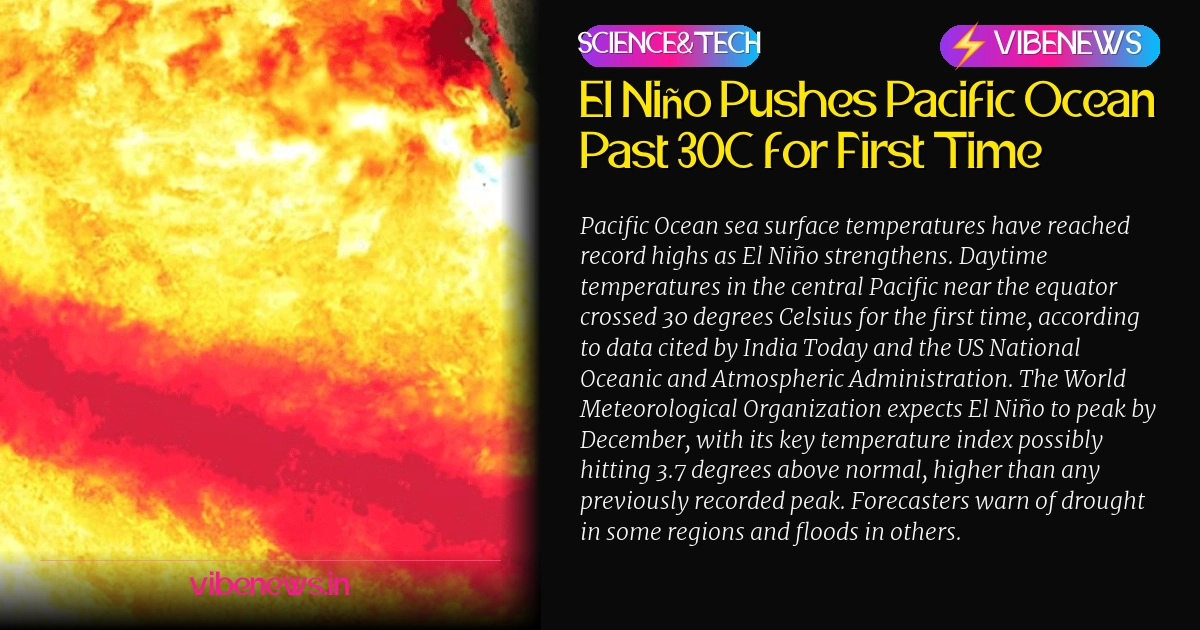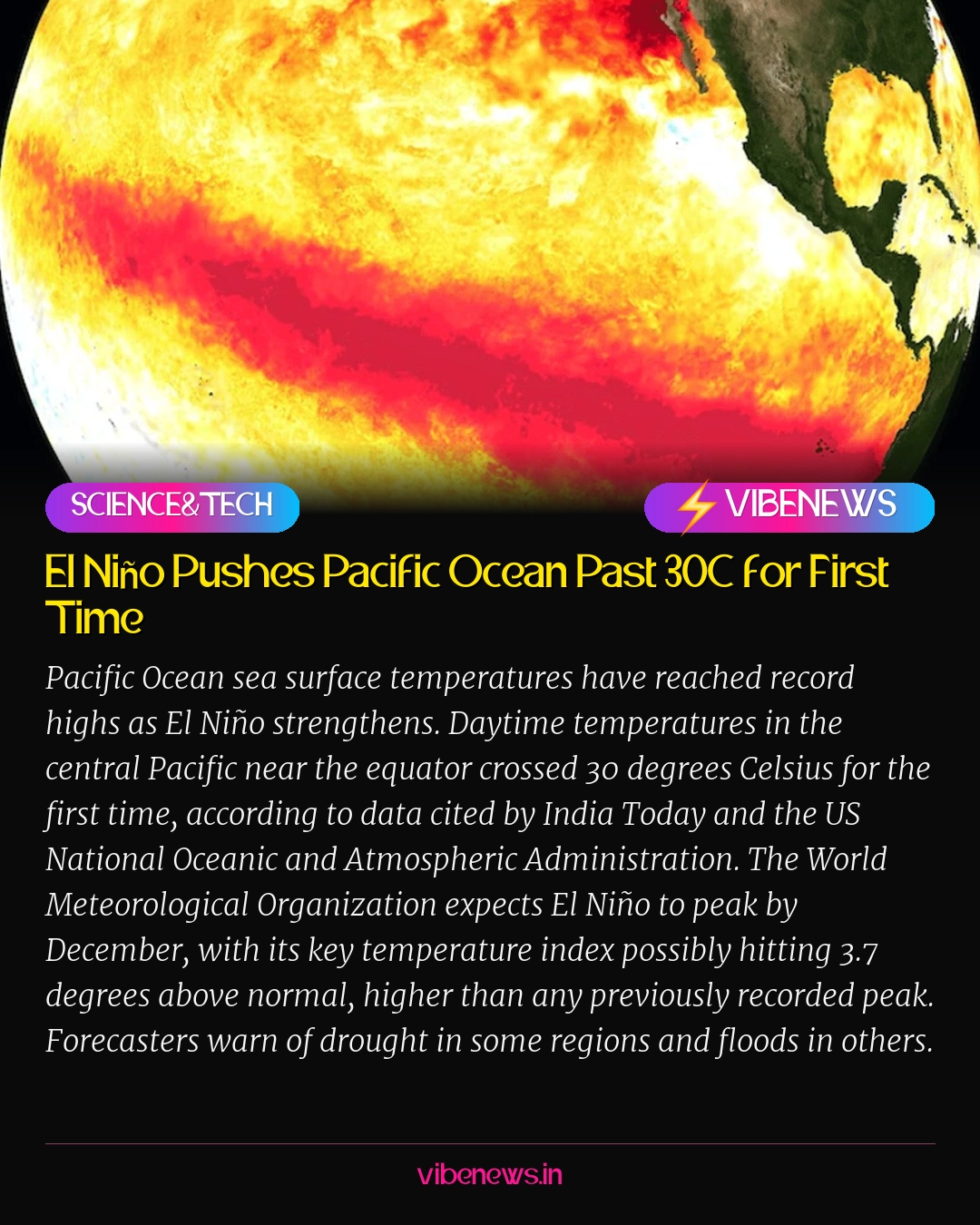
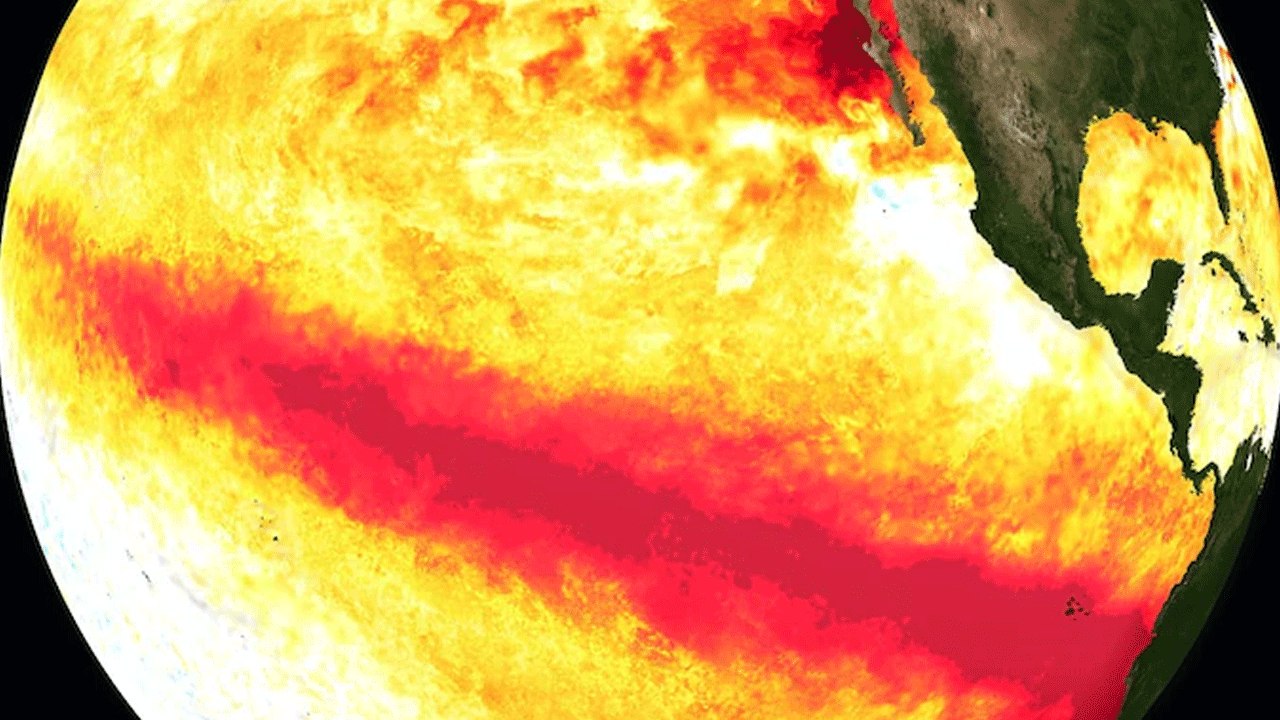
Sea surface temperatures across the Pacific Ocean have climbed to their highest levels on record, and daytime temperatures in the central Pacific near the equator have crossed 30 degrees Celsius for the first time. The data comes from the US National Oceanic and Atmospheric Administration, and the reading was recorded on October 22, according to India Today.
The heat is tied to El Niño, which is strengthening. El Niño is a natural climate pattern in which surface waters in the central and eastern tropical Pacific warm well above normal. When that happens, it shifts the winds that blow over the ocean, changes how clouds move and alters rainfall patterns.
The effects will not stay inside the Pacific. Scientists say the phenomenon can reshape weather in many countries at once. Some regions could face drought and higher temperatures. Others could see heavy rain and the threat of flooding. Nothing about this pattern is local.
Records fall in the central Pacific
Historical records available to researchers show that daytime temperatures in the Pacific have never reached this level before. Ocean heat in the central Pacific, close to the equator, is rising alongside the broader warming of the sea surface. That combination is what pushed the region past the 30-degree mark.
The numbers behind the warning
Scientists track El Niño using the Niño 3.4 index, a measure of sea temperatures in a specific zone of the Pacific. In June, that index ran 1.6 degrees above normal. By August, it had climbed to 2.5 degrees above normal.
The World Meteorological Organization now estimates that the gap could widen to 3.7 degrees during the October to December period. That figure would exceed the highest level previously recorded. The agency expects El Niño to strengthen between October and December 2026 and could reach its peak by December.
Why India is watching closely
Weather experts say India could feel the impact. The 2026 southwest monsoon season ended with rainfall 13 percent below normal. Now the India Meteorological Department expects below-normal rainfall over most parts of the country between October and December.
The southern peninsula is the exception in the forecast. The department expects overall normal rainfall there for the period. That region includes Andhra Pradesh and Telangana, which means the forecast will matter to farmers, water planners and residents in both states once the season unfolds.
Experts are quick to add a caveat. Conditions will vary from one area to another, and El Niño alone does not decide India’s weather. Other factors will shape what actually happens on the ground.
El Niño alone does not decide India’s weather, and conditions will vary sharply from one region to another.
What comes next
The next few months will test how quickly this warming turns into measurable impact. Forecasters say El Niño should build toward its peak by December, and the ocean readings already suggest the event is running hot. Drought, heat and floods could all show up in different parts of the world, sometimes at the same time.
For now, the headline number is the one that stands out. Daytime temperatures in the Pacific have crossed 30 degrees Celsius for the first time, and the ocean is still warming.
TL;DR
- Pacific Ocean sea surface temperatures have reached record highs as El Niño strengthens.
- Daytime temperatures in the central Pacific near the equator crossed 30 degrees Celsius for the first time.
- The reading was recorded on October 22, according to data cited from the US National Oceanic and Atmospheric Administration.
- The World Meteorological Organization says El Niño could peak by December, with its key index possibly reaching 3.7 degrees above normal.
- El Niño can bring drought and heat to some regions and heavy rain and floods to others.
- India’s 2026 monsoon ended 13 percent below normal, and the southern peninsula is forecast to see overall normal rainfall.