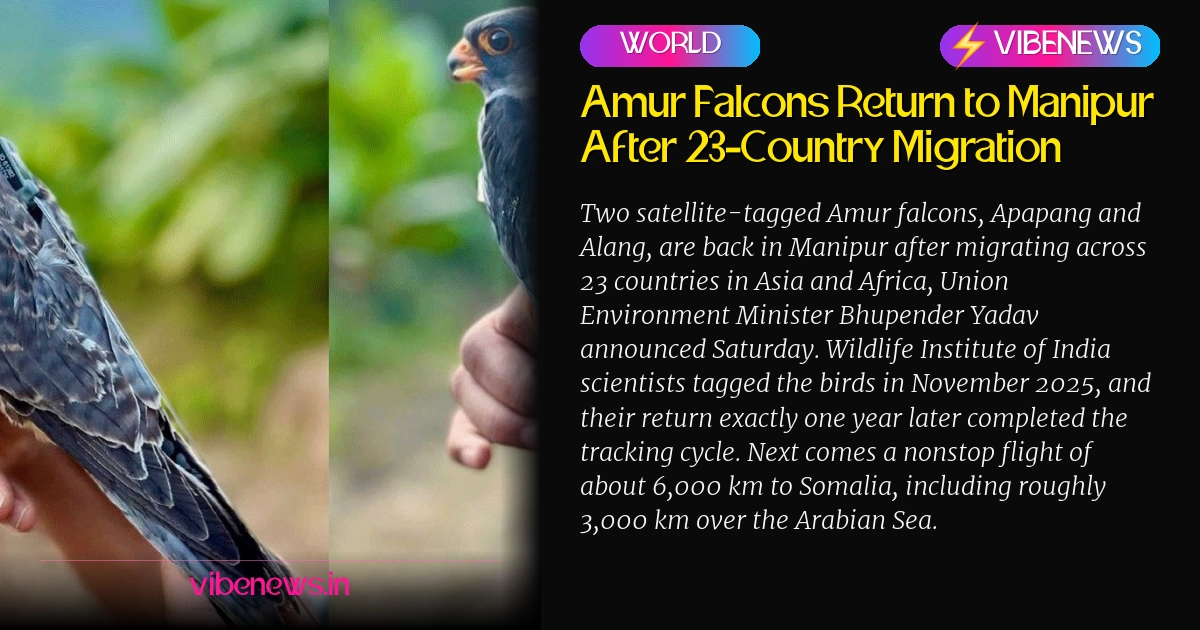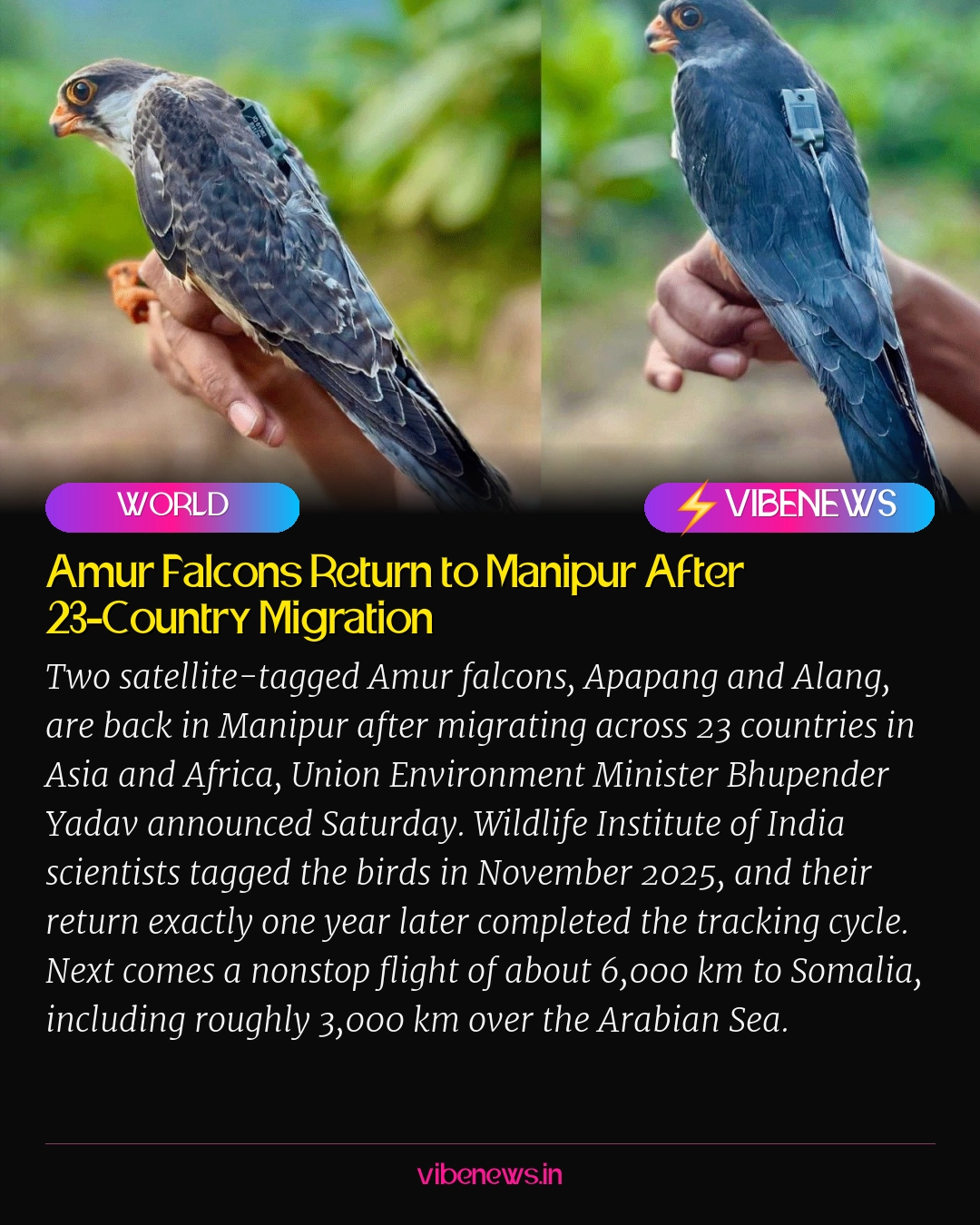
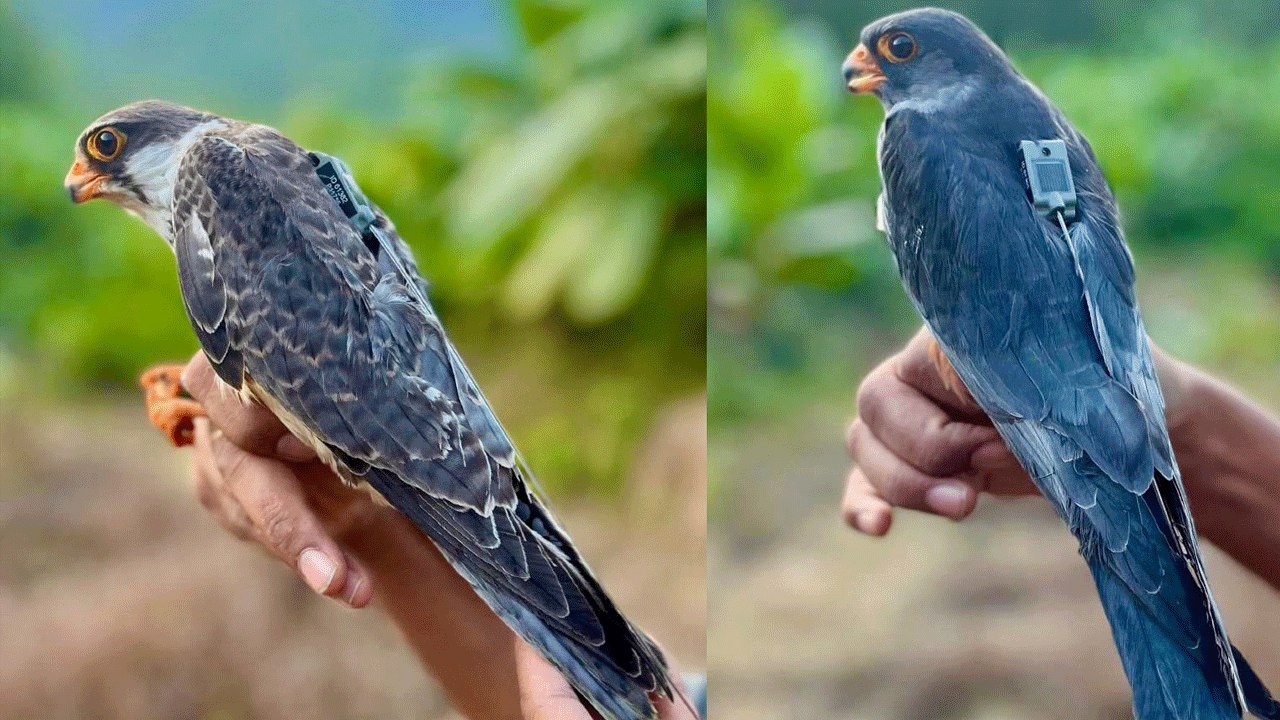
Two satellite-tagged Amur falcons, named Apapang and Alang, have returned safely to Manipur after flying across 23 countries in Asia and Africa on their annual migration. Union Environment Minister Bhupender Yadav made the announcement on Saturday.
The birds landed in the northeastern Indian state 11 days after leaving their breeding grounds in northeast China. For two birds, that is a journey measured in thousands of kilometres, and the tracking data behind it is what turned a seasonal movement into a story that is now spreading fast online.
A Tag Fitted in November 2025
Scientists from the Wildlife Institute of India fitted satellite tags to the two falcons in November 2025 and released them. From that point on, researchers kept a constant watch on the route the birds took.
The timing is what makes this return stand out. The falcons came back to Manipur exactly one year after the tags went on, and that return successfully closed the tracking cycle. Every stage of the trip was recorded, from the breeding grounds in China to the wintering routes further west.
The news has drawn happy reactions from bird lovers and environmentalists, who have been following the falcons’ progress.
A Rest Stop in the Hills of Tamenglong
The falcons will stay in the hill areas of Tamenglong district in Manipur for two to three weeks. During that time, they feed on termites and build up body fat.
That fat is not a side detail. It is the fuel the birds need for what comes next, and the stopover is where they gather it.
The Hardest Leg Still Lies Ahead
After resting, the falcons begin the most demanding stage of their migration. Their next destination is Somalia, roughly 6,000 kilometres away, and they cover that distance without stopping.
About 3,000 kilometres of the journey runs over the Arabian Sea. The birds must keep flying through that stretch without a break. It is the part of the route that makes this migration so hard to imagine.
Why Northeast India Matters on the Route
Amur falcons breed in northeast Asia and migrate to Africa for the winter. On that path, northeast India serves as a key resting point.
Local communities in the region welcome these visitors every year and play an important role in looking after them. Their care is part of why the birds keep returning to the area as they pass through.
What the Tracking Reveals
Satellite tracking is giving scientists a clearer picture of how these birds move. The data offers valuable information about their travel routes and their endurance over vast distances.
The satellite tracking is providing scientists with valuable information about the falcons’ travel routes and their remarkable endurance.
Each completed cycle adds to what researchers know about how small migratory birds cross two continents. For readers who have ever wondered how a bird can fly across so many borders, this single tracked journey offers a rare, concrete answer.
The falcons now have a rest in Manipur ahead of them, and then the long, nonstop crossing toward Somalia. Watch for the next update on whether the birds continue their route as planned.
TL;DR
- Amur falcons Apapang and Alang have returned to Manipur after migrating across 23 countries in Asia and Africa.
- Union Environment Minister Bhupender Yadav announced the return on Saturday.
- Wildlife Institute of India scientists fitted the two birds with satellite tags in November 2025.
- The falcons returned exactly one year later, completing the tracking cycle successfully.
- They will rest two to three weeks in Tamenglong district before their next long flight.
- The next leg covers about 6,000 km to Somalia, including roughly 3,000 km over the Arabian Sea.