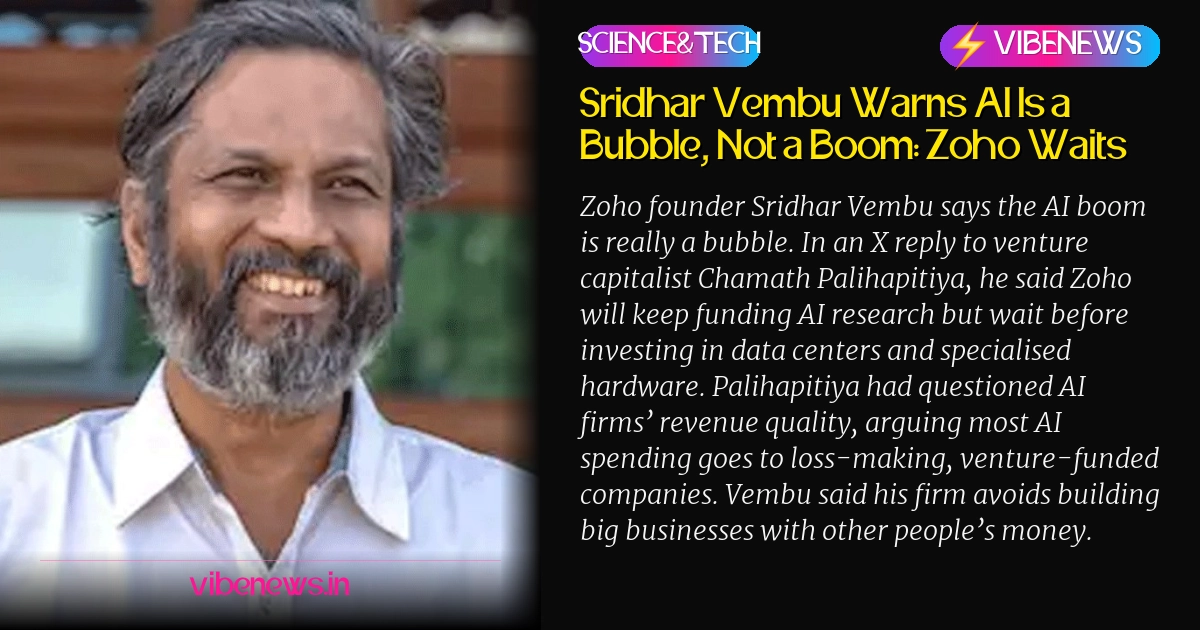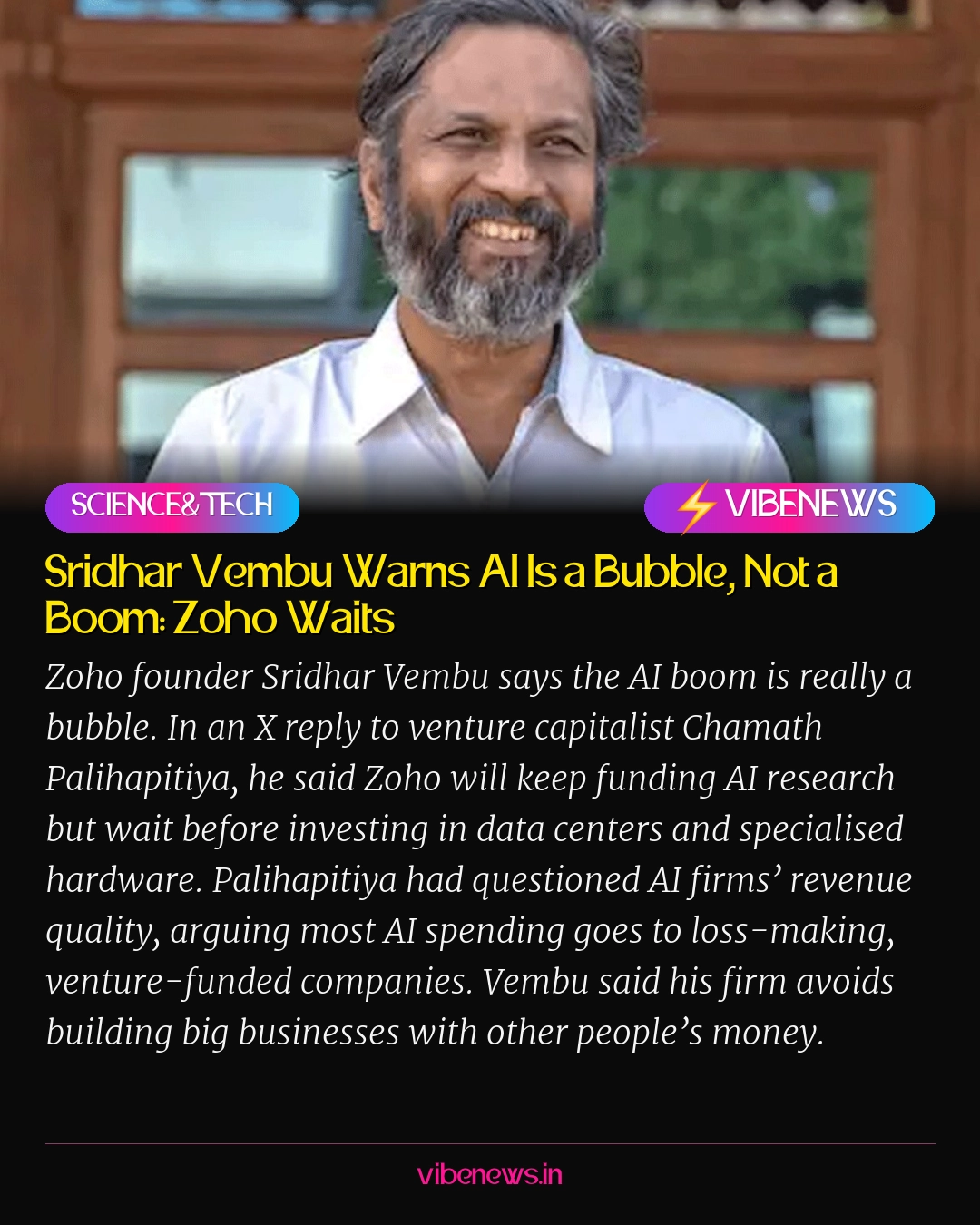
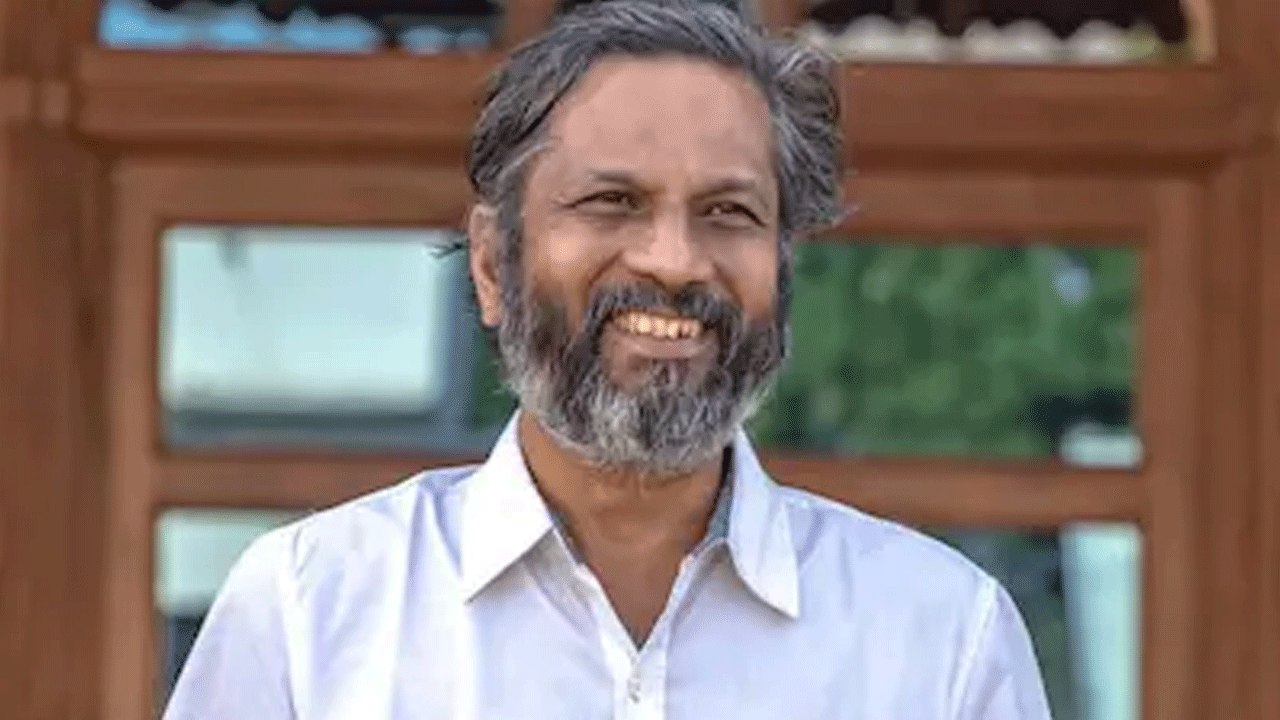
Zoho founder Sridhar Vembu said on October 24, 2026 that the artificial intelligence sector is not experiencing a boom. He calls it a bubble. The software founder also said his company will not commit to heavy AI infrastructure spending for now.
Vembu made the remarks in a reply on X to American venture capitalist Chamath Palihapitiya. Palihapitiya had questioned the quality of revenue at AI companies. He argued that most of the money being spent on AI goes to loss-making companies backed by venture capital.
Vembu shared his own view in response. The argument cuts to the heart of a question investors across the world have been asking for months: how much of the current AI spending is backed by real earnings, and how much rests on other people’s money?
Where Zoho Draws the Line
Zoho, according to Vembu, is investing in fundamental AI research and development. That is the part of the business he is not pulling back on. The company’s research and development work continues.
The line gets drawn at infrastructure. Vembu said Zoho will wait for the bubble-like environment to ease before investing in data centers and specialised hardware. These are the costly assets that make AI expensive to build and run, and they are where many of the largest bets in the sector are being placed.
Read together, the two positions point to one strategy. Zoho wants to strengthen its AI research capability without taking on heavy costs while market conditions remain unsettled. Vembu did not frame this as a retreat from AI. He framed it as patience.
The Argument Behind the Warning
Palihapitiya’s critique is the spark for the exchange. His point was simple and pointed. If most AI spending is flowing to companies that lose money and depend on venture capital, then the revenue that supports the current valuations looks thin.
Vembu’s response leaned on a principle he has long held. According to the post, he said Zoho usually stays away from building large businesses with other people’s money. That is a direct contrast with the model Palihapitiya described, where heavy spending is financed by investors rather than by the companies’ own earnings.
The message is blunt. Vembu is not saying AI has no value. He is saying the current financing pattern is the problem, and that a company with its own resources can afford to wait.
We usually stay away from building big businesses with other people’s money, and we will wait for this bubble-like environment to subside before putting money into infrastructure such as data centers and specialised hardware.
The quote is a translation of Vembu’s remarks, which were originally written in Telugu in the report. It captures the core of his position in a single line.
Why It Matters Right Now
Vembu’s comments landed at a moment when the AI sector draws intense attention from tech enthusiasts and investors. Statements from a founder of an established software company carry weight, especially when they go against the prevailing enthusiasm.
Zoho’s stance also offers a practical example. A company can keep its AI research moving and still refuse to chase the largest infrastructure spending. For investors, that distinction between research and infrastructure may matter as much as the bubble claim itself.
The post itself is short, but the message is sharp. Vembu is telling the market that the money flooding into AI may not be sustainable, and that he would rather wait than follow the crowd. Whether the bubble he describes deflates, and when, remains an open question. Vembu’s point is that his company does not intend to bet heavily until the conditions shift.
Key point: Zoho continues AI research and development, but holds back on data centers and specialised hardware until bubble-like conditions subside.
TL;DR
- Zoho founder Sridhar Vembu says the AI sector is a bubble, not a boom.
- Vembu made the remarks on October 24, 2026, in an X reply to Chamath Palihapitiya.
- Palihapitiya argued most AI spending goes to loss-making, venture-funded companies.
- Zoho will keep investing in AI research and development.
- Zoho will wait before investing in data centers and specialised hardware.