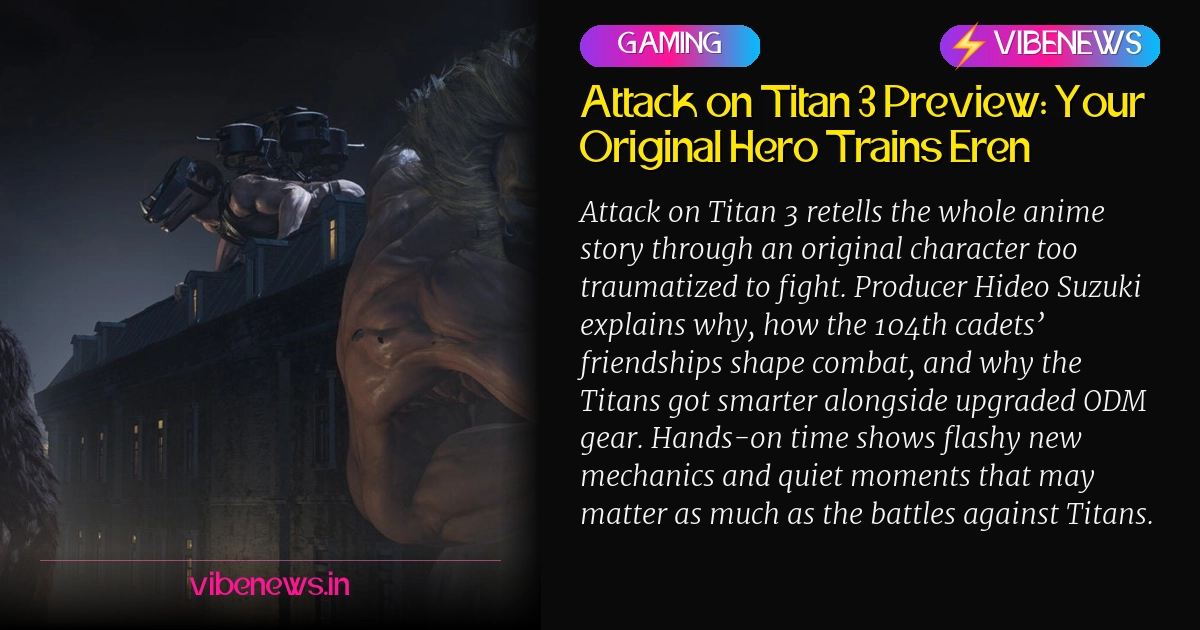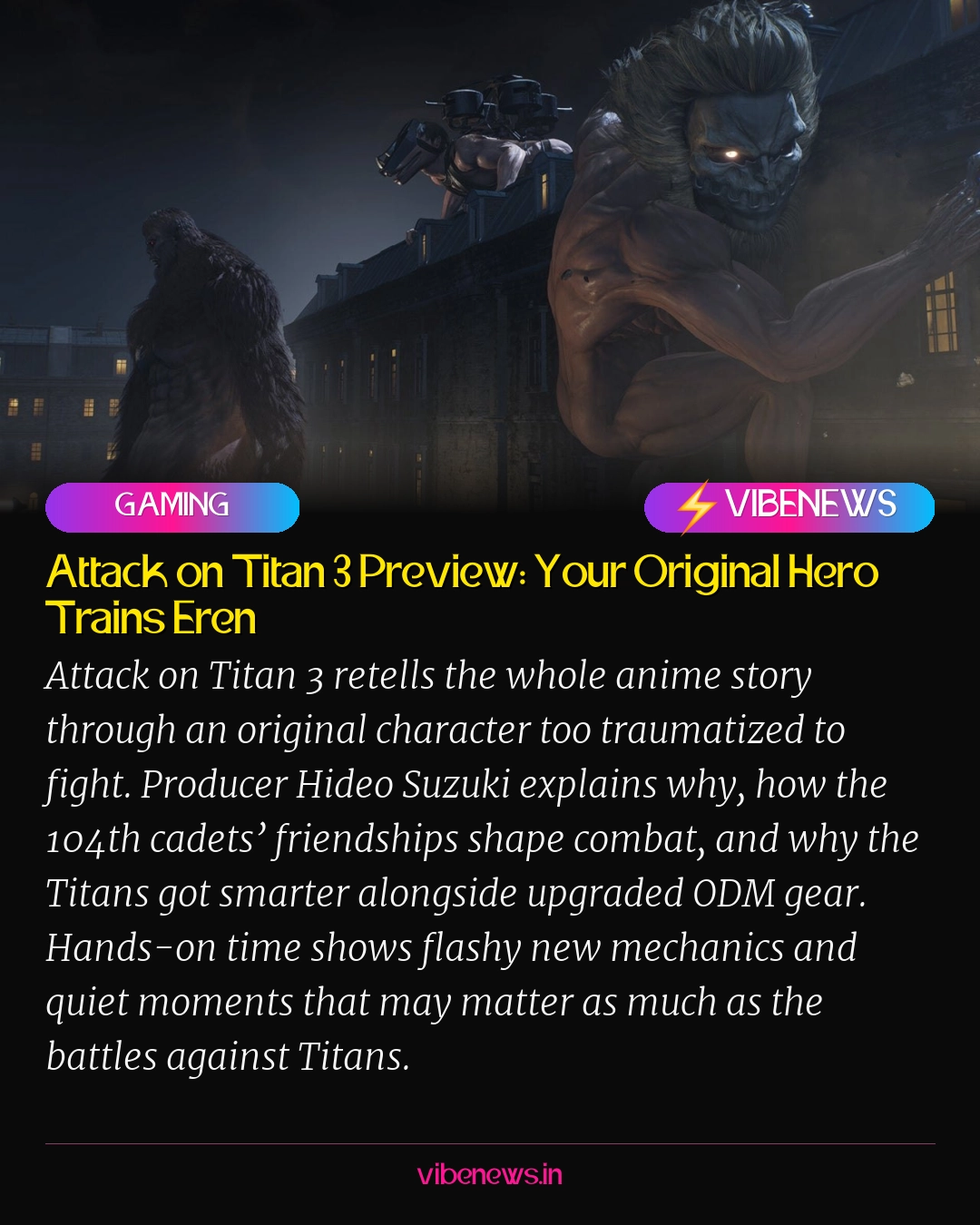
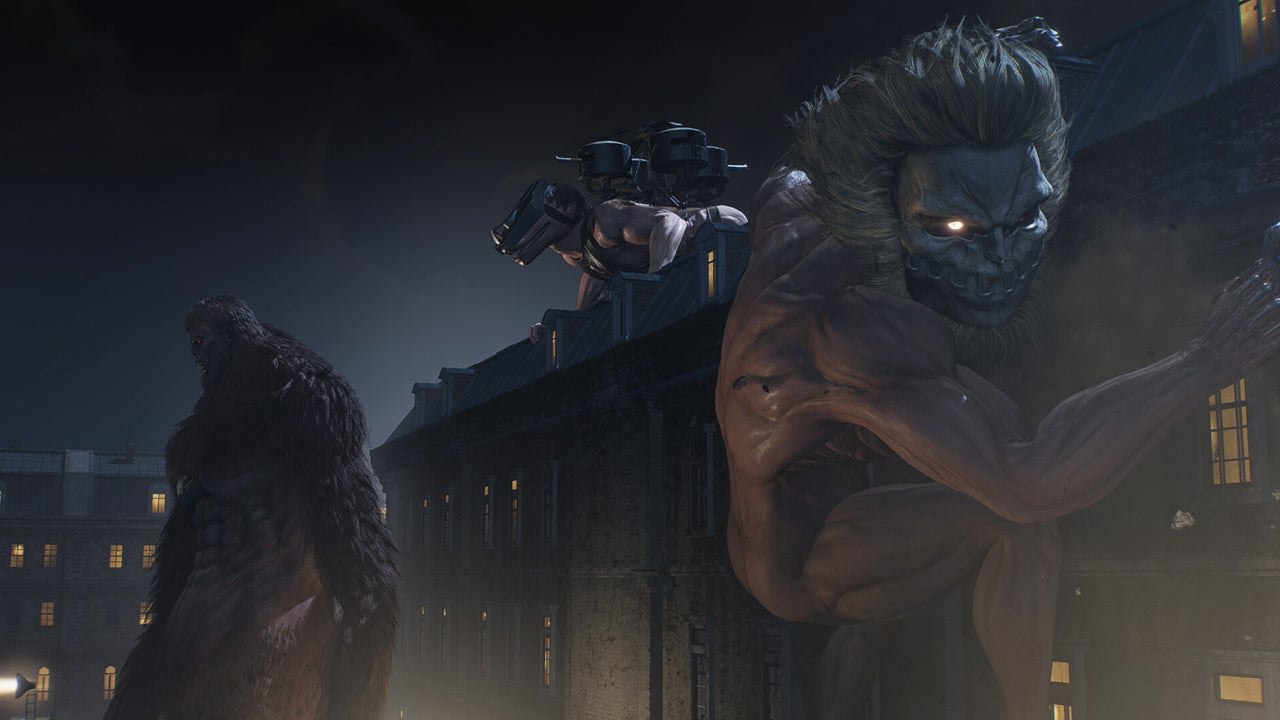
Attack on Titan 3 is not a straight sequel, and its producer says the team chose to retell the entire anime story from start to finish. Players take on an original squad leader who is broken by the first mission, then gets pulled back into the fight to train Eren Jaeger and the 104th cadets.
Producer Hideo Suzuki said the team began discussing a follow-up right after Attack on Titan 2: Final Battle, while the anime was still airing. Seven years later, the studio decided that covering only the new anime episodes would not be enough for a full game. Instead, the developers at Omega Force chose to follow the story from the beginning to the end.
A hero who starts at rock bottom
The original character’s backstory is the sharpest break from the anime. After the squad is wiped out on the first mission as a squad leader, the protagonist is too traumatized and afraid of Titans to keep fighting. Because they are also a talented engineer and a gifted ODM gear user, they stay on to repair equipment and train recruits.
That setup was deliberate. Suzuki explained that the story needed the Titans to be clearly humanity’s enemy, and the trauma gives the character a reason to return with a stronger resolve. The character is also positioned as a senior to Eren and the others, so the game can turn them into mentors who grow alongside their students.
“The reason that we had that kind of story in the beginning is we needed to establish that the Titans are the humans’ enemy.”
Breaking the recruits before building them
After character creation, the player is assigned to the 104th cadets. They work alongside another instructor named Keith, and the job is to turn Eren Jaeger, Armin Arlett, Mikasa Ackerman and others into proper soldiers. The game’s own framing is blunt: the recruits have to be broken first.
The cadets are not passive. Right after the initiation ceremony, Eren starts pressing the instructor with questions about why there are not more scouting missions and why the walls are not being retaken. That kind of pushback is part of the design, and it puts the player’s character face to face with their own past shame.
Friendship changes the fight
Attack on Titan may be known for high-flying battles and Titan-on-Titan brawls, but the team is leaning hard into the human side of the story. Players can build relationships with cadets by giving gifts, eating together in the mess hall and inviting characters into their rooms for conversations.
Those bonds have a direct impact on the action. Suzuki said stronger relationships lead to better combat outcomes, and the characters you befriend can join you on exterior missions and scouts outside the walls. There, players and their allies can trigger Buddy Arts, special moves that rely on teamwork.
Suzuki also said the quieter scenes are intentional. The Attack on Titan world is built on heavy stakes, but the characters have depth, and showing their everyday lives gives fans a reason to care. He compared the approach to the comedy and release found in manga and anime, arguing it makes the tension in battle hit harder.
ODM gear that finally feels like control
Learning the ODM gear comes first. Grappling onto rocks and trees and flinging yourself across the map is a rush, and the controls give players a lot of say over their movement. The new features include anchoring to buildings or trees, precisely controlling altitude and sliding under arches.
The redesign was meant to keep pace with how games have evolved since Attack on Titan 2. Suzuki said the earlier game was easy for almost anyone to play, while this one is built to reward advanced players with a stronger sense of achievement when they bring down a Titan. The studio also had to upgrade the enemies. Titan algorithms and battle patterns were improved so they remain dangerous even as players gain more control.
A War Hammer Titan fight built on patience
The hands-on section jumps ahead in the story and throws the player into a fight against the War Hammer Titan. Unlike the earlier tutorial Titan, this one cannot be damaged directly. Players need to fill its Break Gauge first, which means dodging, parrying and landing hits while staying alive.
Healing Tonics restore health after heavy hits, fresh blades replace dull ones, and Combat Arts unlock as damage builds up. The Buddy Arts stand out as the flashiest tools in the kit. Even with them, the fight is a test of endurance, and the reviewer’s own run ended just short of victory.
Sub-stories, a new anime opening and what comes next
Beyond the main campaign, the game includes original content, including many sub-stories and events. Suzuki said the team worked closely with Kodansha, the IP holder, and packed a large number of these extra stories into the game so players can enjoy every part of it.
Suzuki also revealed that MAPPA, the creator of the anime, will produce the game’s opening sequence. He said he had watched a work-in-progress version of the opening and called the quality phenomenal.
The preview leaves one big question open: will the game win over people who dropped the anime? Suzuki hopes the new protagonist will help longtime fans see the story from a new angle while giving newcomers a way in. For players curious about the franchise, Attack on Titan 3 makes a strong case that the human drama is worth the trip.
TL;DR
- Attack on Titan 3 retells the entire anime story through an original squad leader who is too traumatized to fight.
- Producer Hideo Suzuki says the game follows the story from beginning to end, not just the new anime episodes.
- Players train Eren Jaeger, Armin Arlett, Mikasa Ackerman and the 104th cadets alongside instructor Keith.
- New ODM gear features include anchoring to buildings or trees, precise altitude control and sliding under arches.
- Titans have been upgraded with new algorithms and battle patterns to keep them threatening.
- Buddy Arts and stronger friendships with cadets directly affect combat and exterior missions.